The Robot Economy: Who Wins, Who Gets Left Behind
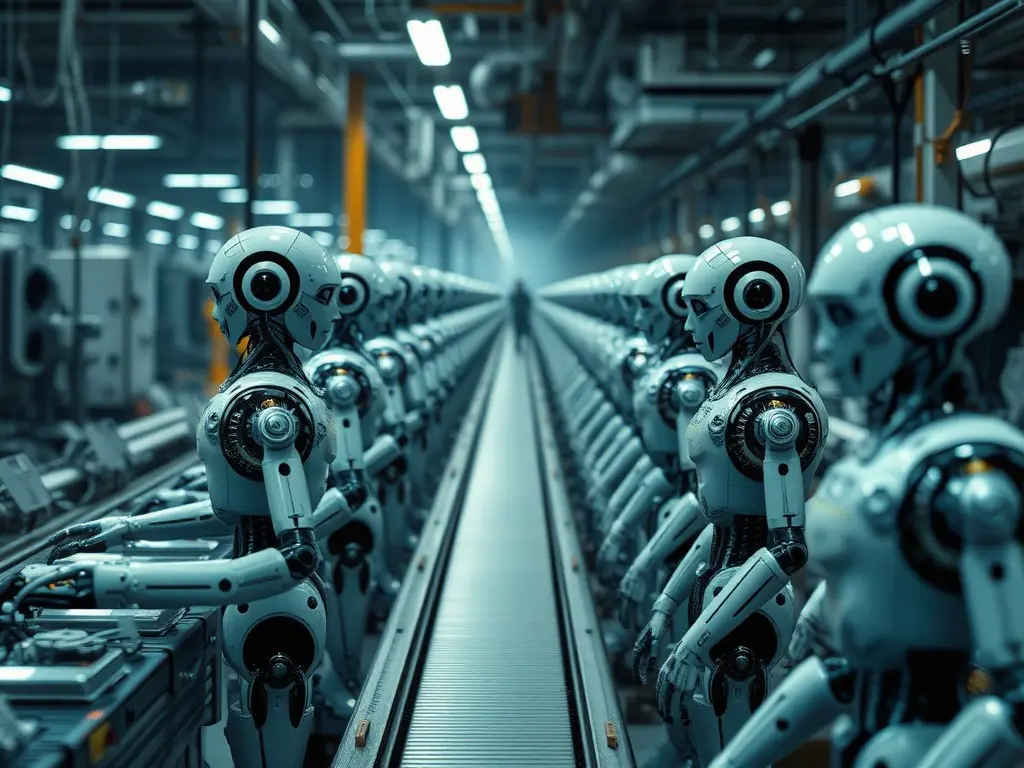
Figure's humanoid robots have achieved 67 consecutive hours of fully autonomous work without error, with a projected lease cost of $10 a day, potentially replacing human labor. The robots' ability to learn from data and propagate knowledge instantly across the fleet makes them 50 times cheaper than human labor.
Robots are increasingly infiltrating various aspects of life, from office work to manufacturing and service work. Figure's latest humanoid robot achieved 67 consecutive hours of fully autonomous work, including kitchen tasks and logistics, without a single error. With a projected lease cost of roughly $10 a day, it's priced to replace human labor, the largest input cost on corporate income statements in America. Figure has replaced over 100,000 lines of handwritten control code with a single neural network, Helix 2, that controls the robot's entire body in real time. At $300 per month to lease, against a U.S. minimum wage of $15 to $20 per hour, a humanoid robot is already 50 times cheaper than the human it displaces. The arrival of humanoid robots at scale may both positively and negatively impact the economy, potentially exacerbating the existing K-shaped economy issue.
This content was automatically generated and/or translated by AI. It may contain inaccuracies. Please refer to the original sources for verification.