The world’s biggest tech companies are betting big on computers that control themselves
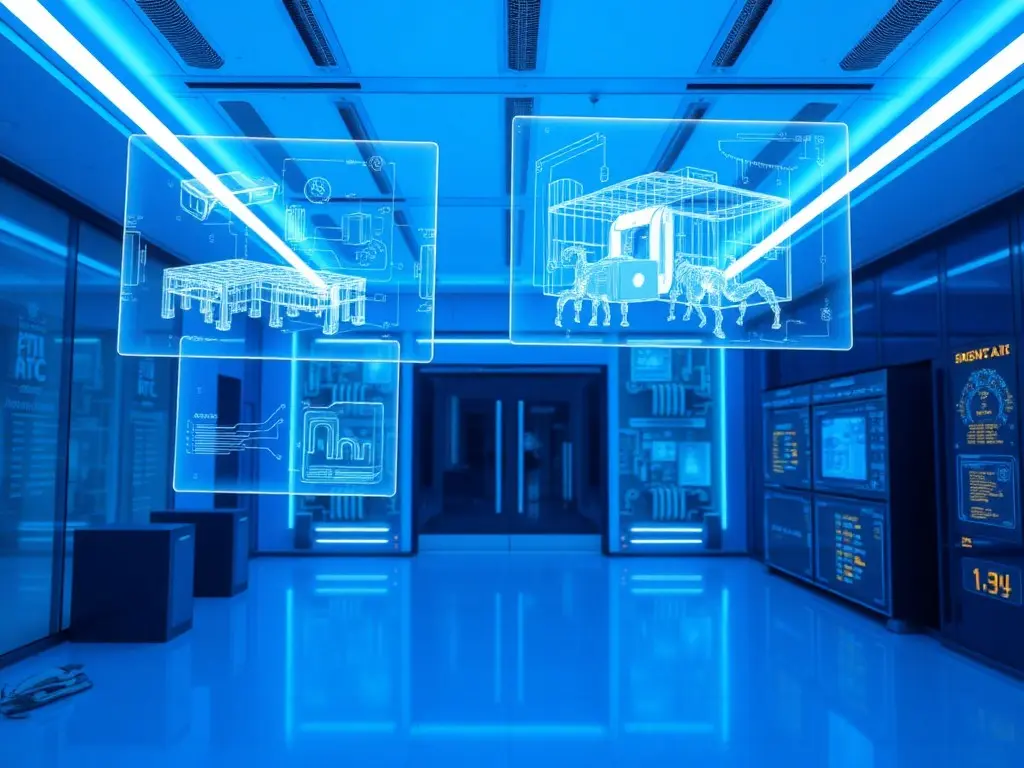
Major tech firms like Nvidia, Microsoft, and Google are accelerating development of autonomous AI agents capable of handling complex tasks, such as designing houses or managing emails, using new chips and software like Nvidia’s RTX Spark and Microsoft’s Scout. These advancements build on progress from tools like OpenClaw, which developers use for research without constant supervision, signaling a shift toward voice-controlled and hands-free computing.
Tech giants are investing heavily in AI-driven systems that can execute tasks independently, reducing reliance on keyboards and mice. Nvidia announced its RTX Spark chip for Windows laptops, enabling AI agents to operate locally without cloud dependence, with Dell, HP, and Lenovo set to release compatible devices this fall. Microsoft introduced Scout, a Microsoft 365 agent powered by OpenClaw technology, designed to manage emails, cloud data, and web-based apps like Outlook and Teams. Google’s upcoming Googlebooks feature will suggest actions—such as scheduling meetings—when users hover over screen elements like dates in emails. The push follows years of failed attempts to create digital assistants capable of multi-step tasks, but recent breakthroughs in large language models, like ChatGPT, have accelerated progress. OpenClaw, a popular AI assistant among developers, exemplifies this shift by autonomously handling research tasks while users monitor progress via messaging apps like WhatsApp or Telegram. Nvidia CEO Jensen Huang demonstrated how AI agents could streamline workflows, such as designing a house by integrating 3D modeling software. Reports indicate some tech employees now issue voice commands to AI agents instead of typing, reflecting broader adoption of tools like ChatGPT and Gemini. Analysts attribute the momentum to growing user familiarity with AI-driven interfaces, though challenges remain in refining task execution and personalization. The new technologies aim to transform computing by enabling users to delegate complex workflows with minimal input. Microsoft’s Scout, for instance, will aggregate data across devices and platforms, while Nvidia’s hardware focuses on on-device processing. These developments mark a potential paradigm shift, where AI agents handle repetitive or technical tasks, freeing users to focus on higher-level objectives.
This content was automatically generated and/or translated by AI. It may contain inaccuracies. Please refer to the original sources for verification.