The world's carmakers are struggling to compete with China
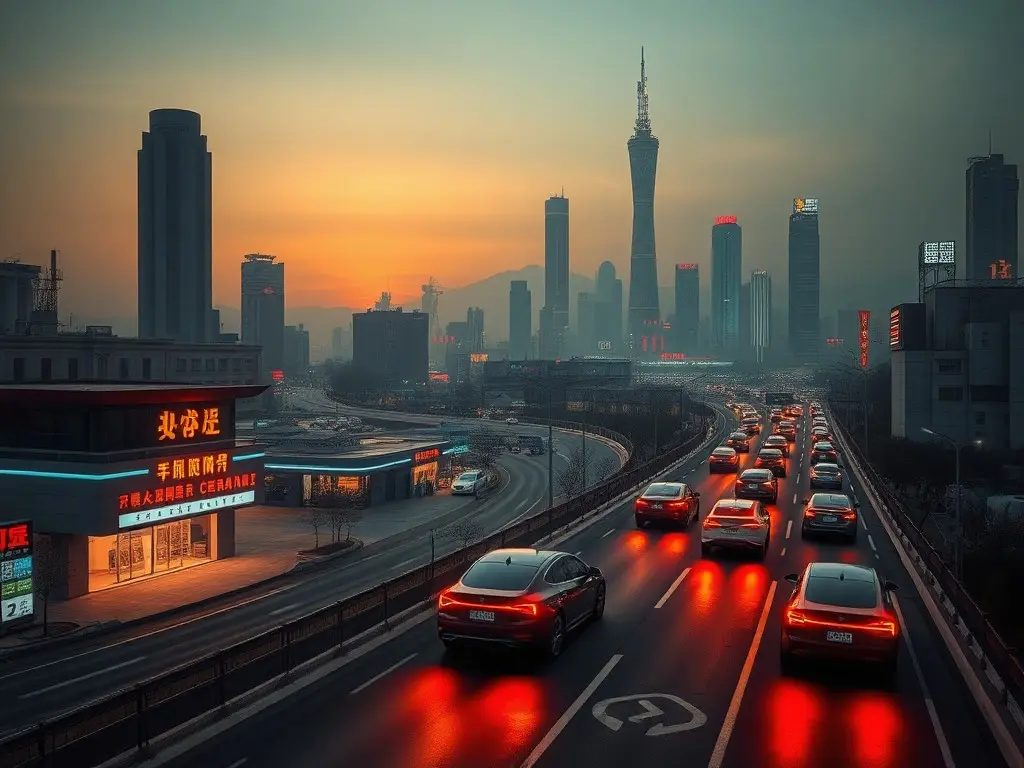
Global automakers like Honda and Ford are losing market share in China as domestic brands such as BYD, Xiaomi, and Nio outpace them in EV innovation, automation, and software integration, while benefiting from state subsidies and aggressive expansion. Foreign brands’ share of China’s car market has dropped from 64% in 2020 to 32% in 2024, prompting Western firms to rethink their strategies amid China’s dominance in EV supply chains and mobility tech.
China’s automakers are rapidly surpassing Western rivals in electric vehicle (EV) technology, automation, and software development, forcing global carmakers to adapt or risk losing ground. At Auto China 2026, the BBC observed highly automated factories in Beijing and Hefei, where Chinese brands like Xiaomi and Nio produce EVs with advanced features like ultra-fast charging (400km range in five minutes) and seamless integration with smartphones and smart-home systems. Honda’s CEO Toshihiro Mibe admitted after visiting a Shanghai factory that his company ‘has no chance’ against Chinese competitors, while Ford’s Jim Farley warned Western automakers are ‘in a fight for our lives.’ The shift began decades ago with foreign carmakers relying on joint ventures in China, but now they must restructure partnerships to stay relevant. Analyst Bill Russo notes the West’s focus on EVs alone is a mistake—China leads in broader mobility tech, including batteries, manufacturing machinery, and software-driven features. State subsidies, estimated in the tens of billions, have slashed production costs by up to 30% for small EVs compared to Western markets, according to the International Energy Agency. Chinese brands like BYD and XPeng are also diversifying into robotics and flying cars, with XPeng’s CEO He Xiaopeng stating, ‘In the next decade, any car company will also be a robotics company.’ Foreign brands’ market share in China has plummeted from 64% in 2020 to 32% this year, hitting profits for General Motors and German manufacturers. Even luxury segments are under pressure, as Huawei’s Maextro S800 outsells imports like Porsche Panamera and BMW’s i7. Meanwhile, Chinese tech giants like Xiaomi, Huawei, and Alibaba are entering the EV market, accelerating innovation through fierce domestic competition. Xiaomi’s EV factory near Beijing produces a car every 76 seconds, while Nio’s Hefei plant features near-total automation. The dominance extends beyond cars: China now leads in 315 product categories tied to EV supply chains, per Rhodium Group, including batteries and manufacturing equipment. Western automakers still rely on China for global production—Tesla exports Shanghai-built Model 3s to Europe, and BMW sells Chinese-made electric Minis overseas—but their struggle at home reflects a broader tech gap. With software becoming central to modern vehicles, Chinese firms’ rapid development in AI and connectivity gives them a critical edge, reshaping the global automotive industry.
This content was automatically generated and/or translated by AI. It may contain inaccuracies. Please refer to the original sources for verification.