There aren’t enough rockets for space data centers. Cowboy Space raised $275 million to build them.
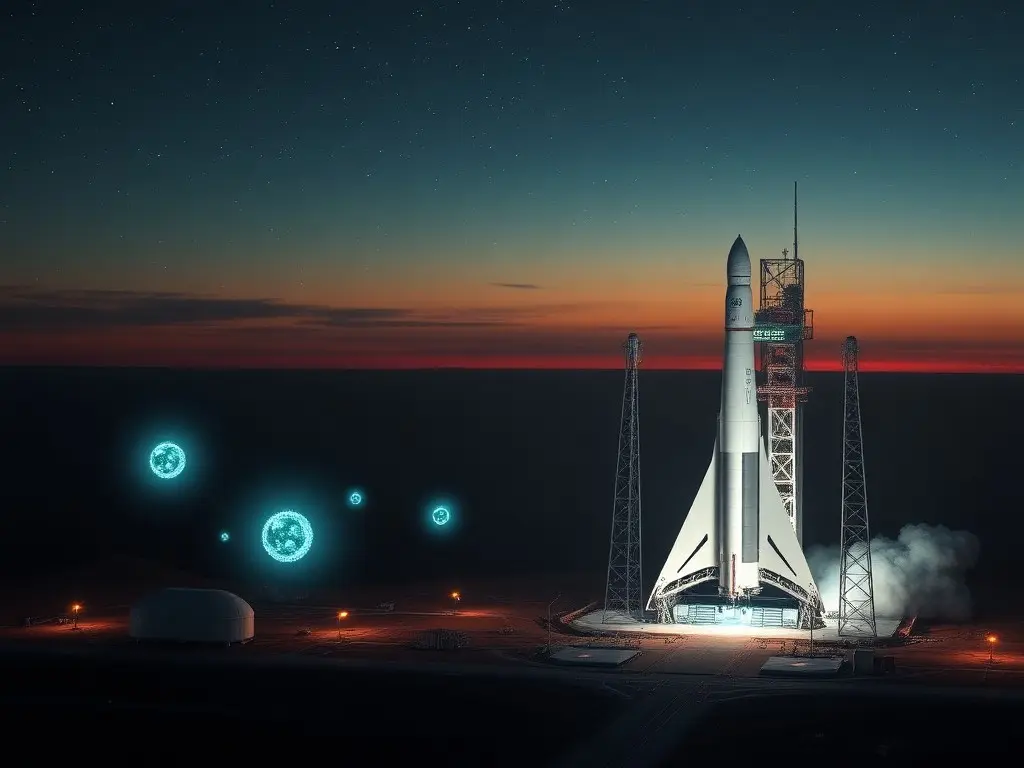
Cowboy Space Corporation raised $275 million in Series B funding to develop its own rocket program for orbital data centers, citing insufficient launch capacity from existing providers like SpaceX and Blue Origin. The company, led by Baiju Bhatt, plans its first launch by the end of 2028 and pivoted from solar energy projects to address the lack of scalable space-based AI infrastructure.
Cowboy Space Corporation, founded by Baiju Bhatt, has secured $275 million in Series B funding at a $2 billion valuation to advance its rocket development program. The company aims to launch its first rocket by the end of 2028, addressing a critical bottleneck in the space data center industry: a shortage of available launch capacity. Despite expectations for SpaceX’s Starship and Blue Origin’s New Glenn to eventually provide solutions, these rockets remain years away from commercial viability, leaving projects like Google’s Suncatcher and Starcloud targeting mid-2030s timelines or focusing on edge processing for space sensors. Bhatt, a co-founder of Robinhood, originally launched the startup in 2024 as Aetherflux to harness solar energy in space. However, the company pivoted after realizing the economic challenges of orbital AI infrastructure, including the lack of launch options that could compete with terrestrial alternatives. Existing launch providers, including SpaceX, Rocket Lab, and Arianespace, face limited capacity, while competitors like Blue Origin and United Launch Alliance struggle with development delays. Startups such as Stoke Space, Firefly Aerospace, and Relativity Space also remain years away from operational systems. Cowboy Space’s decision to build its own rocket program positions it in direct competition with industry leaders like SpaceX and Blue Origin. The company’s investors include Index Ventures, Breakthrough Energy Ventures, Construct Capital, IVP, and SAIC. Bhatt noted that while new rockets are emerging, launch capacity remains scarce over the next three to four years, forcing many providers to prioritize their own payloads over third-party needs. The funding will support Cowboy Space’s transition from satellite development to full-stack rocket production, a high-risk but necessary move to scale orbital data centers. The company’s first launch is targeted for late 2028, marking a pivotal step toward making space-based AI infrastructure a viable alternative to Earth-bound data centers. Without dedicated launch solutions, orbital data center projects risk remaining constrained by the availability and cost of existing rocket fleets.
This content was automatically generated and/or translated by AI. It may contain inaccuracies. Please refer to the original sources for verification.