There’s a new threat to the World Cup. FIFA might not be ready.
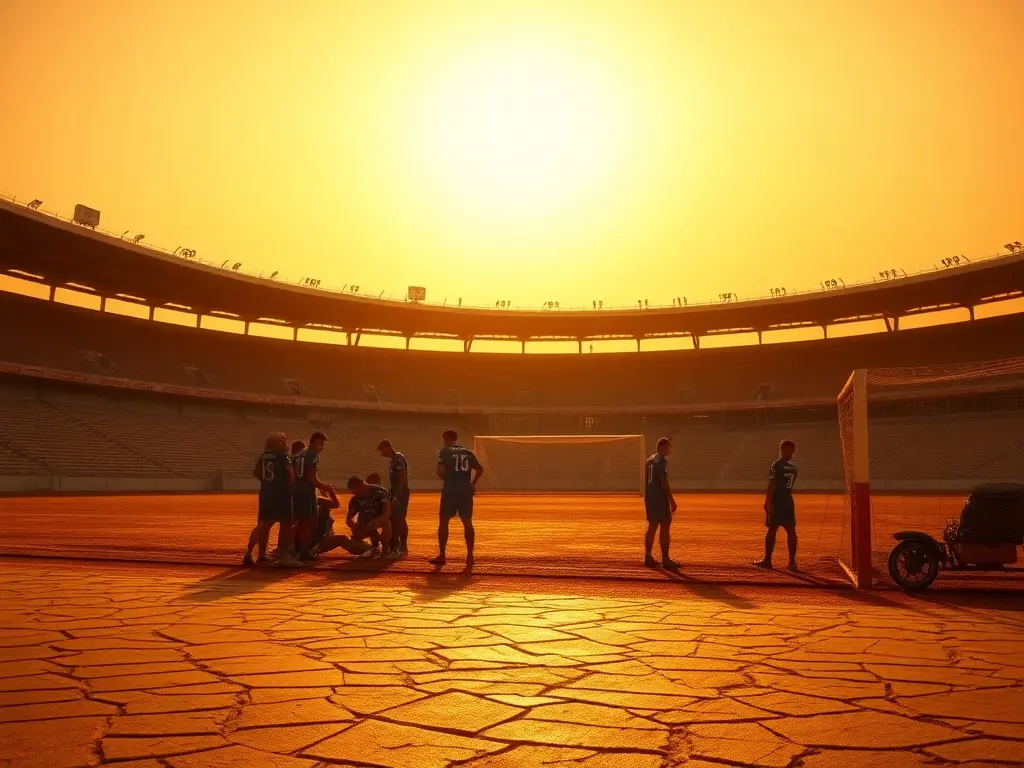
Researchers warn the 2026 FIFA World Cup in the US, Mexico, and Canada faces heightened heat risks due to climate change, with five potential games exceeding unsafe wet bulb globe temperatures of 28°C (83°F). Current FIFA guidelines only mandate postponements at 32°C (90°F), while 60 professional soccer players urge stricter safety measures and climate action from the organization.
A new study from Imperial College London predicts that the 2026 FIFA World Cup, hosted across 16 cities in the US, Mexico, and Canada, could see five matches played under unsafe heat conditions due to climate change. Using wet bulb globe temperatures—a measure accounting for humidity, sun, and wind—the report estimates a higher risk of extreme heat compared to the 1994 US World Cup, where three games faced similar dangers. FIFA currently postpones matches only if temperatures exceed 32°C (90°F), but researchers and players argue the threshold should be lowered to 28°C (83°F), as recommended by FIFPRO, the players’ union. The final match, scheduled for July 19 at MetLife Stadium in New Jersey, has a 3% chance of reaching 28°C (83°F) and a 12.5% chance of exceeding 26°C (79°F), according to the study. Chris Mullington, an anesthetist at Imperial College London, explained that high humidity and direct sunlight reduce players’ ability to cool down through sweat, increasing risks of fatigue, dizziness, and heatstroke. Players like Sávio Bortolini Pimentel, who competed in the 1994 World Cup, recall extreme heat during matches, with temperatures reaching 32°C (90°F) in the Rose Bowl final. Sixty current and former professional soccer players signed an open letter urging FIFA to update its heat guidelines and adopt climate-friendly measures, such as dropping fossil fuel sponsors and adjusting travel schedules. Friederike Otto, a climate scientist at Imperial College London, emphasized that climate change is making summer World Cups increasingly unviable, with rising temperatures threatening player safety and tournament integrity. The report highlights a growing disconnect between scientific warnings and FIFA’s current protocols, raising concerns about the 2026 event’s preparedness for extreme weather.
This content was automatically generated and/or translated by AI. It may contain inaccuracies. Please refer to the original sources for verification.