This app lets users control robotic arms from anywhere using a phone
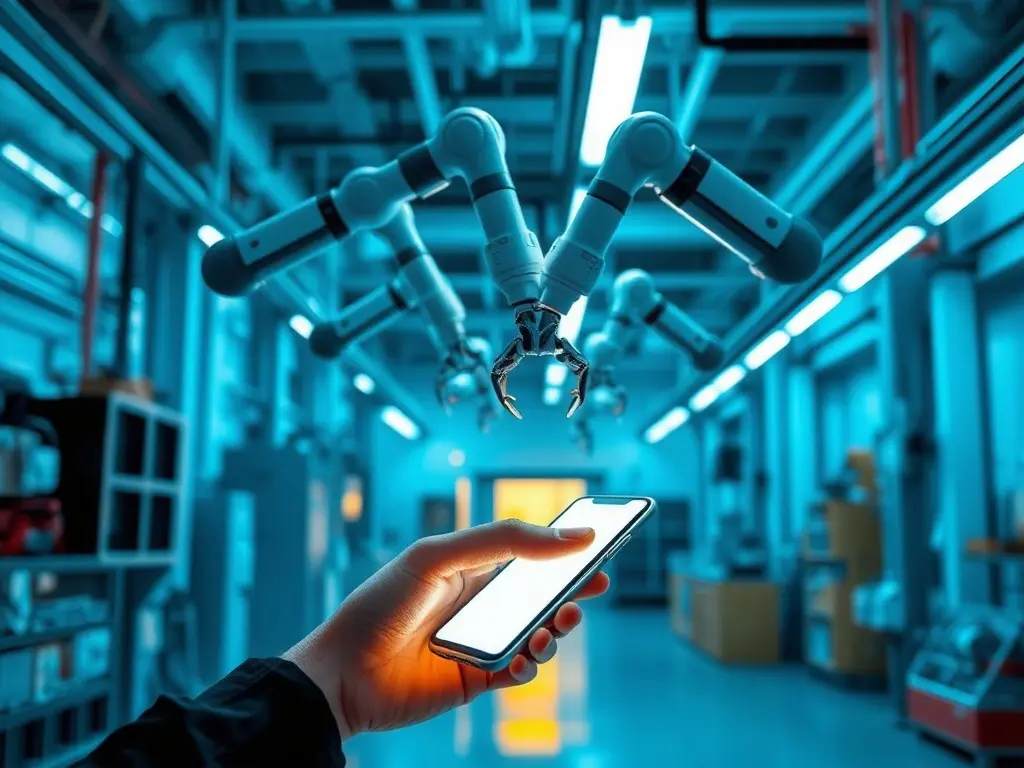
Researchers at Georgia Tech developed COBALT, a smartphone-based system enabling non-technical users to control robotic arms remotely via an internet connection, aiming to democratize robotics and streamline AI training data collection. The platform was tested globally, including with users in India, Indonesia, and Pakistan, and showcased at the IEEE International Conference on Robotics and Automation in Vienna, with potential applications in education and commercial sectors.
A team of researchers at Georgia Tech’s People, AI & Robotics (PAIR) Lab has created COBALT, a system that allows users to control robotic arms using only a smartphone and internet connection. The platform transforms a smartphone into a motion controller, mirroring its movements in real time through simple on-screen controls. Users can perform basic actions like picking up, moving, and releasing objects without prior robotics experience, as demonstrated in tests involving participants from India, Indonesia, and Pakistan controlling arms located at Georgia Tech. The project addresses two key challenges in robotics: accessibility and AI training data collection. COBALT eliminates the need for technical expertise, making robotics more inclusive, while its global user network helps gather the vast datasets required to train AI algorithms. Researchers envision a future where smartphone users worldwide contribute to refining robotic capabilities by providing real-time control data. Georgia Tech has already explored educational applications, using COBALT to let high school students operate robotic arms remotely, potentially expanding robotics training in schools lacking specialized equipment. Commercial uses could include remote assistance for robots in factories, warehouses, or homes, where humans intervene only when tasks exceed autonomous capabilities. User feedback favored smartphone controls over alternatives like virtual reality headsets or keyboards, citing natural movement and high-quality responsiveness. The system leverages WebRTC technology—similar to video conferencing platforms—to minimize delays and ensure smooth robot movements. This approach was presented at the IEEE International Conference on Robotics and Automation in Vienna, where the team also highlighted the scalability of their remote operation network. Beyond immediate applications, COBALT could redefine how people interact with robotics, bridging gaps in accessibility and collaboration between humans and machines. The project’s success hinges on its simplicity, global adaptability, and potential to accelerate AI-driven robotic advancements through crowdsourced data.
This content was automatically generated and/or translated by AI. It may contain inaccuracies. Please refer to the original sources for verification.