This Dutch reactor turns ANY plastic waste into virgin-quality oil in just 30 minutes
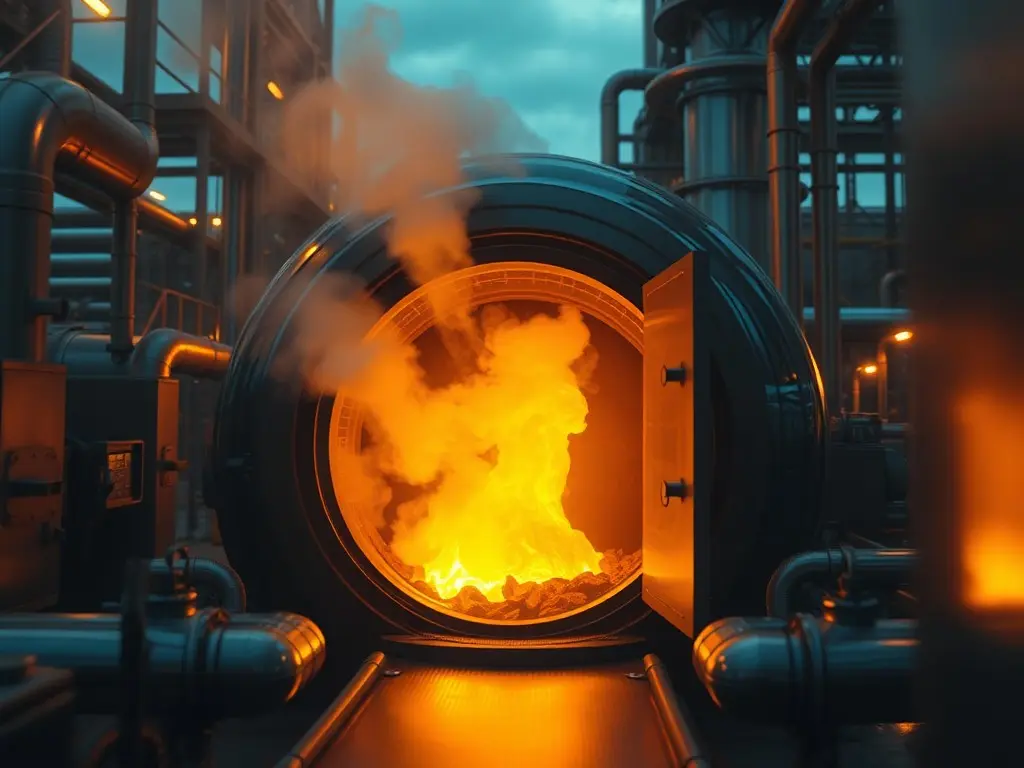
Researchers at the University of Amsterdam have developed a 25-litre pilot reactor using solvothermal liquefaction (STL) to convert mixed, unsorted plastic waste into virgin-quality oil in under 30 minutes, with a first real-world test planned in Spain this summer. The process, funded by the €20 million EU PLASTICE project, bypasses the need for plastic sorting and produces oil with energy quality comparable to gasoline, containing monomers for new plastic production.
A team of researchers at the University of Amsterdam has created a mobile, 25-litre pilot reactor that converts mixed plastic waste into reusable oil in under 30 minutes using solvothermal liquefaction (STL). The technology, developed by the Catalysis Engineering Group at the Van 't Hoff Institute for Molecular Sciences under Associate Professor Dr Shiju Raveendran, breaks down plastic using a combination of solvent, heat, and pressure with nanostructured solid catalysts. The process yields gas for system power, char as a byproduct, and a dark brown oil with a heating value comparable to gasoline, containing monomers for virgin-quality plastic production. The pilot reactor will undergo its first real-world test in Spain this summer, marking a potential breakthrough in global plastic waste management. Current recycling rates remain low at 9%, with most plastic waste incinerated or landfilled, according to a 2025 study in *Nature Communications Earth & Environment*. The STL method eliminates the need for sorting, which is the primary bottleneck in traditional mechanical recycling, as it accepts mixed, contaminated plastic streams directly. The technology was developed as part of the €20 million EU-funded PLASTICE project, which aims to close the plastics recycling loop. The process has been validated through kinetic studies, Computational Fluid Dynamics modeling, and techno-economic analyses, confirming its feasibility from bench-scale research to pilot-stage deployment. A 2022 study in the *Chemical Engineering Journal* further supported the energy quality of the oil produced by STL. The reactor’s ability to handle all types of plastics simultaneously makes it uniquely suited for municipal waste streams, which are typically mixed and contaminated. This innovation could significantly reduce the volume of plastic waste sent to incineration or landfills, addressing one of the world’s most persistent pollution challenges. The upcoming field test in Spain will be critical in assessing the technology’s scalability and real-world effectiveness.
This content was automatically generated and/or translated by AI. It may contain inaccuracies. Please refer to the original sources for verification.