This New Robot Could Be The Next Step In Replacing Humans For Manual Labor
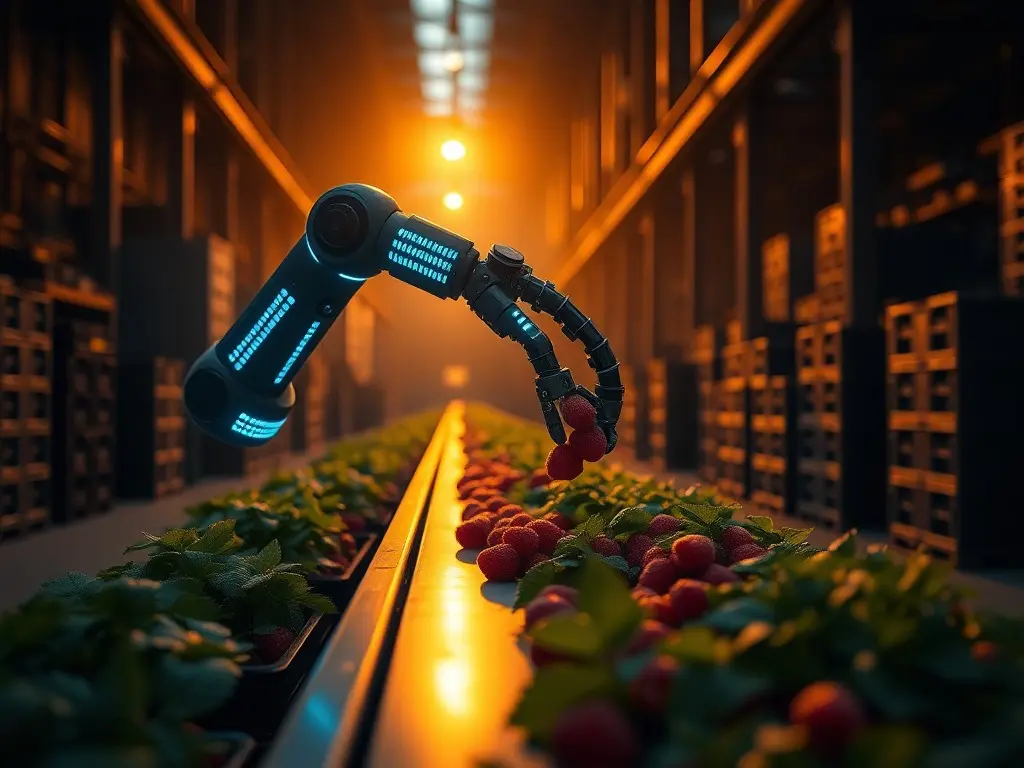
Startup Eka, founded by MIT professor Pulkit Agrawal and ex-Google DeepMind researcher Tuomas Haarnoja, has developed a robotic arm using a Vision Force Action (VFA) learning model to handle complex, delicate tasks like sorting chicken nuggets or picking raspberries. The technology aims to overcome traditional robotic limitations by simulating natural forces like mass and inertia, potentially revolutionizing industrial automation and labor markets globally.
A new robotic arm from startup Eka, based in Cambridge, Massachusetts, claims to solve one of robotics' biggest challenges: dexterity. Founded by MIT professor Pulkit Agrawal and former Google DeepMind researcher Tuomas Haarnoja, Eka uses a Vision Force Action (VFA) learning model to teach AI systems complex movements. Unlike traditional vision-language-action models, VFA simulates thousands of hours of interactions, incorporating physics like mass and inertia to adapt to unpredictable objects, such as malformed berries or wet keys. The technology could disrupt industries reliant on manual labor, particularly in China, where robots already operate alongside workers in farms and factories. While AI-powered automation has advanced—including 'dark factories' producing smartphones 24/7—dexterous tasks remained out of reach. Eka’s system, however, demonstrates progress by handling delicate items like chicken nuggets and keys, suggesting broader applications for industrial and agricultural sectors. Traditional robotic training relies on vast datasets of visual inputs, but this approach struggles with real-world variability. For example, a strawberry’s shape, ripeness, or moisture can alter how a robot grips it, requiring endless data collection. Eka’s VFA model bypasses this by simulating forces directly, allowing the AI to learn adjustments dynamically. This method mirrors Google’s Alpha Zero, which mastered complex tasks through self-play simulations. The potential impact extends beyond factories. If Eka’s robots can reliably perform delicate tasks, industries like food processing, logistics, and even healthcare could see automation expand. Agrawal has described the system as a foundation for 'capable robots in everyone’s hands,' hinting at broader accessibility. While still in development, the technology signals a shift toward more adaptable, human-like robotic labor solutions. Critics note that automation threatens jobs, but Eka’s focus on precision tasks—like handling fragile or irregular objects—could create new roles in robot oversight and maintenance. The startup’s approach may also accelerate the trend of 'dark factories,' where human workers are replaced entirely by machines. For now, Eka’s robotic arm remains a prototype, but its success could redefine labor markets worldwide.
This content was automatically generated and/or translated by AI. It may contain inaccuracies. Please refer to the original sources for verification.