This tiny claw in a 500-million-year-old fossil just rewrote the origin of spiders
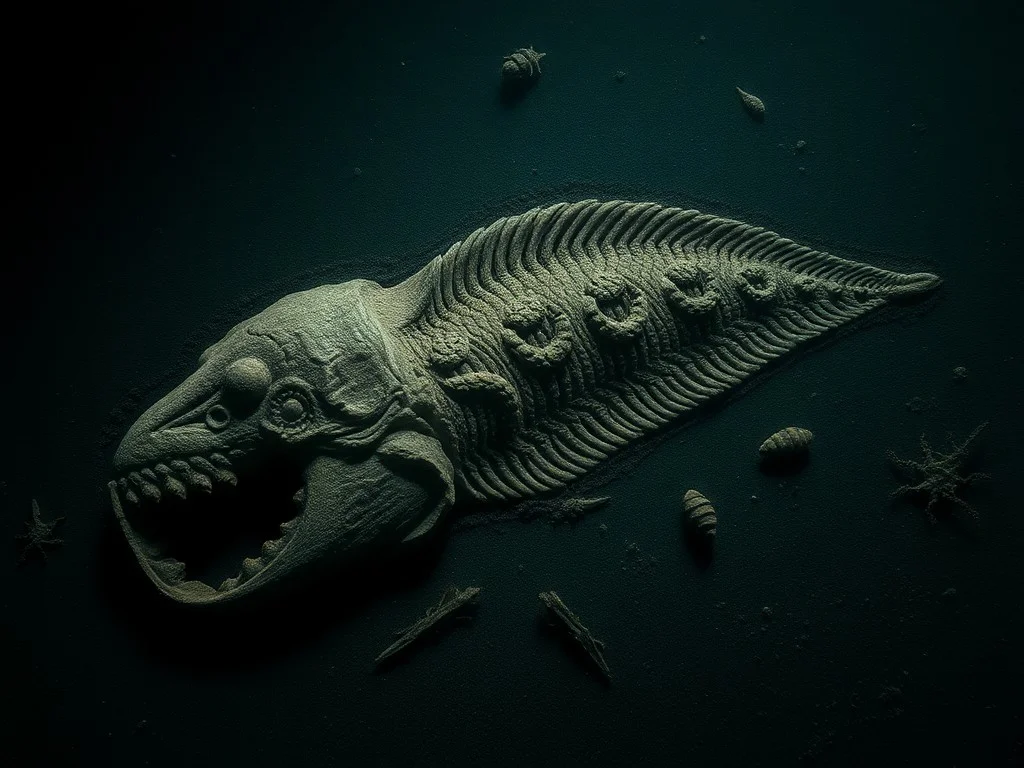
Researchers at Harvard University have discovered a 500-million-year-old fossil with a tiny claw, rewriting the origin of spiders and pushing their emergence back by 20 million years. The fossil, named Megachelicerax cousteaui, is the oldest known relative of spiders and shows that key features of modern spiders and horseshoe crabs were already emerging during the Cambrian Explosion.
A 500-million-year-old fossil has been found with a tiny claw, revealing the oldest known relative of spiders. The fossil, Megachelicerax cousteaui, was discovered in Utah's West Desert. It is a marine predator that measures over 8 centimeters long. The animal has a dorsal exoskeleton with a head shield and nine body segments. The head shield carries six pairs of appendages used for feeding and sensing. The body has plate-like respiratory structures that resemble the book gills seen in modern horseshoe crabs. The most striking feature is the chelicera, a pincer-like appendage that defines chelicerates. This discovery fills a gap in the evolutionary history of spiders and their relatives.
This content was automatically generated and/or translated by AI. It may contain inaccuracies. Please refer to the original sources for verification.