This Volcano Is Cleaning up Its Own Environmental Disaster
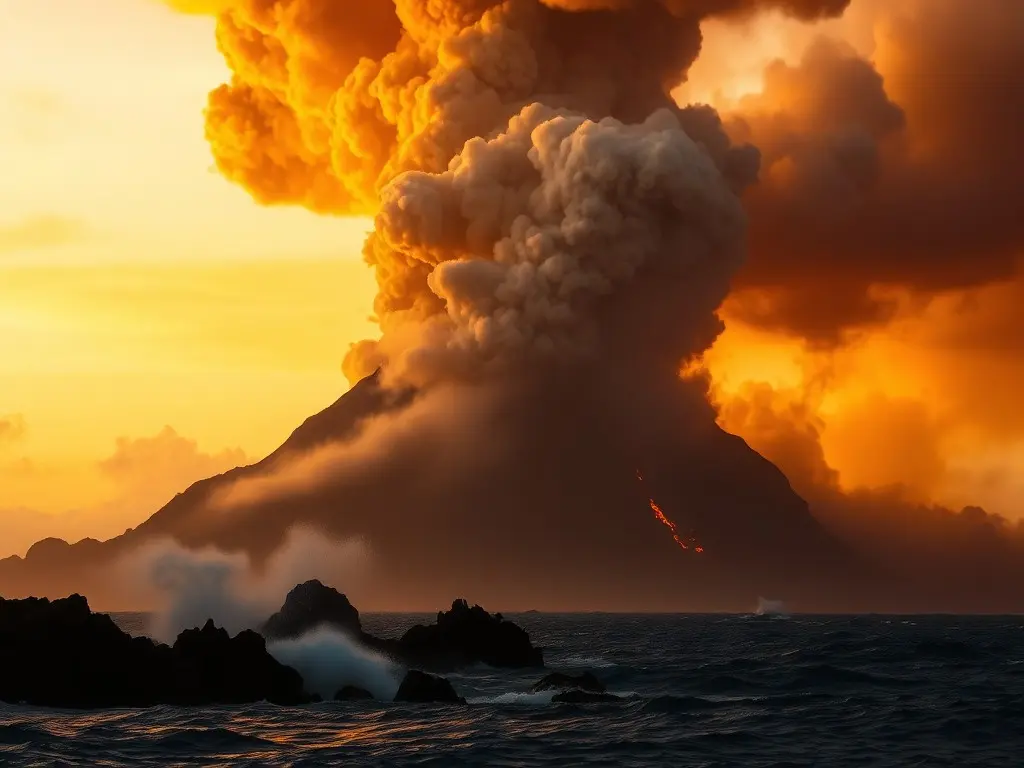
The 2022 Hunga Tonga–Hunga Haʻapai eruption, the largest in the 21st century, unexpectedly destroyed methane in its stratospheric plume through a chlorine reaction triggered by seawater and volcanic ash. A study in *Nature Communications* found formaldehyde in the plume, indicating continuous methane breakdown over a week, a rare self-cleaning effect from volcanic activity.
The January 15, 2022, eruption of Hunga Tonga–Hunga Haʻapai in Tonga sent ash 40 miles into the air, reaching the mesosphere—the highest volcanic plume ever recorded. While eruptions typically release methane, a greenhouse gas 80 times more potent than carbon dioxide, this eruption instead triggered an unexpected cleanup process. Researchers analyzing data from the European Space Agency’s Sentinel-5P satellite discovered high concentrations of formaldehyde in the plume. Formaldehyde, a short-lived compound, forms when methane breaks down in the atmosphere, indicating the eruption destroyed methane continuously for over a week. The cleanup mechanism involved seawater and volcanic ash lifted into the stratosphere, where sunlight converted them into reactive chlorine. This chlorine then broke down methane in the plume, a process not previously documented in volcanic eruptions. Lead author Maarten van Herpen noted that while volcanoes emit methane, this eruption demonstrated volcanic ash could partially offset pollution. The study, published in *Nature Communications*, marks the first evidence of a volcano naturally reducing its own methane emissions through atmospheric chemistry. The findings suggest volcanic eruptions may have a more complex role in climate regulation than previously understood. However, the scale of this effect remains unclear, as most eruptions do not reach the stratosphere where such reactions occur.
This content was automatically generated and/or translated by AI. It may contain inaccuracies. Please refer to the original sources for verification.