To teach social-emotional skills, does a robot need to pretend to be human?
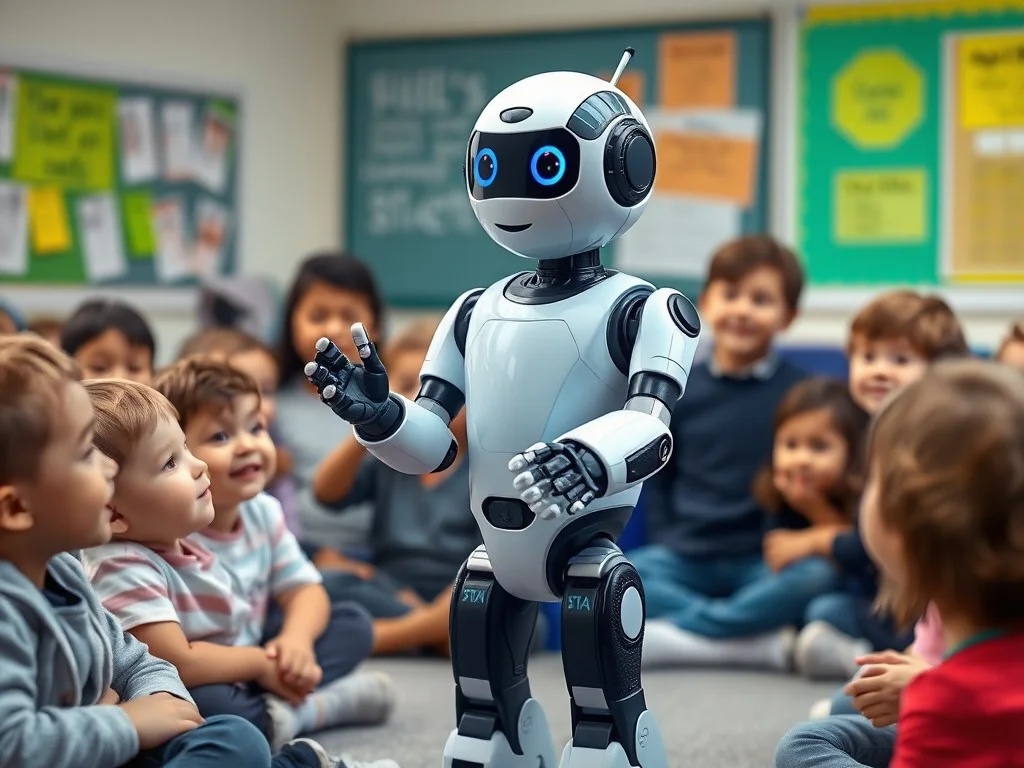
Researchers at the University of Chicago have found that robots can effectively teach social-emotional skills to children without pretending to be human. The study, which involved 52 students in a Chicago classroom, showed that straightforward robots encouraged deeper engagement with lesson vocabulary and problem-solving language.
A new study at the University of Chicago explores the use of robots in teaching social-emotional skills to children. The research, led by graduate student Lauren Wright, found that honest and factual robots can supplement classroom instruction. The study involved 52 students in a Chicago classroom, divided into three groups. Two groups learned from robots, one with fictional emotions and one with factual dialogue. The third group received regular classroom instruction. Both robot groups showed improvement in social-emotional learning concepts. The researchers found that the factual robots encouraged deeper engagement with lesson vocabulary and problem-solving language. This challenges conventional wisdom that robots need to pretend to be human to be effective in teaching social-emotional skills.
This content was automatically generated and/or translated by AI. It may contain inaccuracies. Please refer to the original sources for verification.