Tokyo summit wows audience with humanoids and robotic hands that can thread a needle
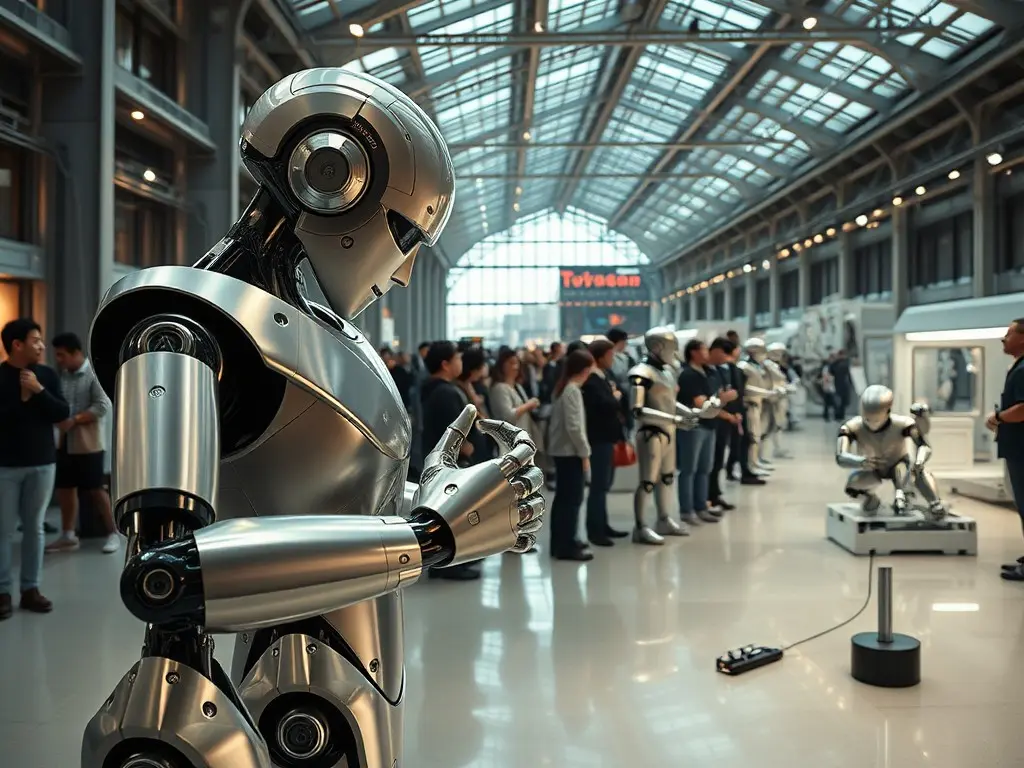
The Humanoids Summit 2026 in Tokyo showcased advanced robotic technology, including Honda’s dexterous robotic hand capable of threading needles and tightening bolts, while Chinese firms like Unitree and Booster Robotics demonstrated cost-effective humanoid systems. The event highlighted Japan’s focus on precision engineering amid labor shortages and an aging population, alongside rising global competition from Chinese robotics companies pushing commercialization at scale.
The Humanoids Summit 2026 in Tokyo, held May 28-29, featured cutting-edge robotic technology from global leaders, emphasizing Japan’s precision engineering alongside China’s rapid commercialization efforts. Honda displayed a highly dexterous robotic hand capable of threading needles and tightening tiny bolts, underscoring Japan’s expertise in delicate manipulation tasks. Chinese companies, including Unitree and Booster Robotics, showcased humanoid robots and quadruped machines designed for lower-cost production, reflecting a shift in global robotics leadership. The summit also highlighted a Japanese AI firm’s humanoid robot, developed in partnership with Unitree, for airport cargo handling using camera-based vision systems. This aligns with Japan’s push for automation amid labor shortages and an aging workforce, with 28.7% of its population aged 65 or older. A Japanese university recently opened a robotics lab where 10 robots, including Maholo LabDroid, conduct medical experiments autonomously, aiming for full automation in research. Japanese robotics firms demonstrated compact bipedal robots, service humanoids, and robotic avatars for logistics, caregiving, and industrial applications. Experts noted a growing global competition, with Japan prioritizing precision and reliability while Chinese firms focus on rapid commercialization. The event underscored Japan’s challenges in scaling early innovations amid demographic pressures, including a projected population decline from 127 million in 2015 to 88 million by 2065. Chinese companies like LimX Dynamics and Unitree gained attention for refining humanoid technology, signaling a leadership transition in the robotics industry. The summit’s exhibits included robots designed for exploration, mobility, and public interaction, reflecting diverse industry applications. Japan’s adoption of AI and humanoid robots is accelerating to address labor shortages and support sectors like tourism and healthcare.
This content was automatically generated and/or translated by AI. It may contain inaccuracies. Please refer to the original sources for verification.