Top electric vehicle companies in Nigeria in 2026 and their owners
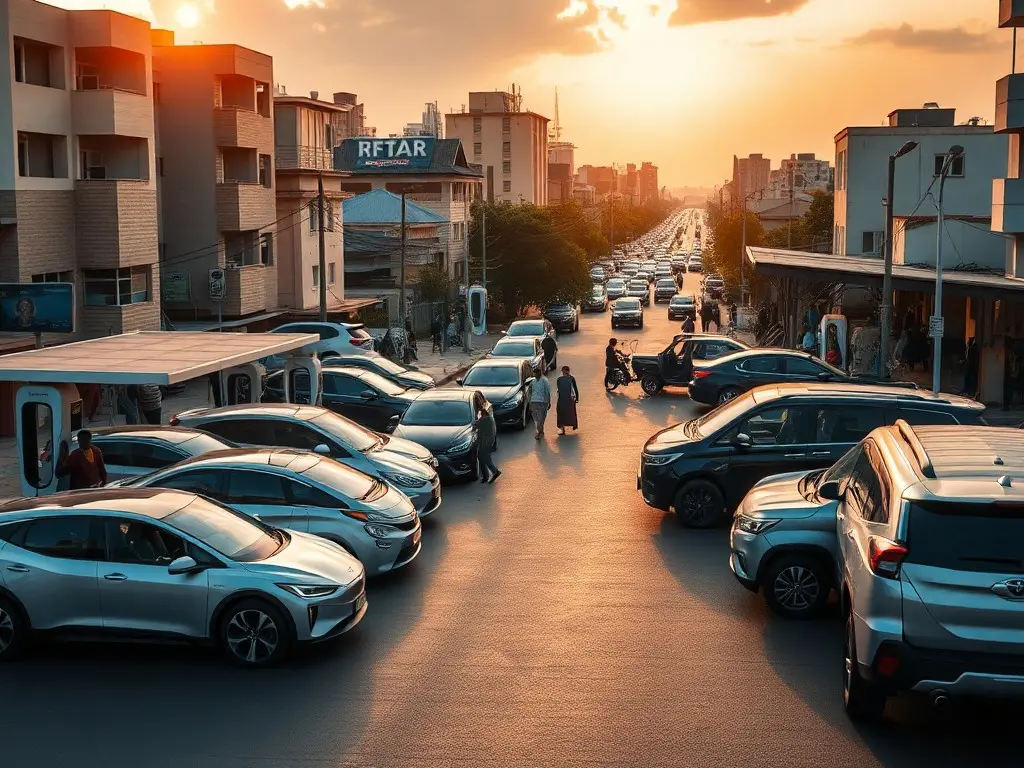
Nigeria’s electric vehicle market is expanding in 2026, with local assemblers like Roxettes Motors and Saglev Electromobility leading adoption despite challenges like charging infrastructure and battery reliability. Prices range from N12 million for compact sedans to over N200 million for high-end SUVs, while companies partner with Chinese OEMs for technology and focus on local assembly and fleet solutions.
Nigeria’s electric vehicle (EV) market is growing in 2026, driven by local assembly firms, charging infrastructure development, and government-backed mobility initiatives. Despite challenges like limited charging access and electricity reliability, early adopters report EVs are practical for urban commuting, with ranges between 280km and 420km per charge. Prices vary widely: compact sedans cost N12 million to N22 million, larger sedans N31 million to N42 million, mid-size SUVs N55 million, high-end SUVs over N200 million, and EV pickups/trucks N40 million to N60 million. Local assemblers dominate the market, partnering with Chinese OEMs for technology while focusing on assembly, road adaptation, and after-sales support. Companies like Roxettes Motors and Saglev Electromobility produce passenger cars, buses, motorcycles, and commercial vehicles, alongside expanding charging networks and fleet services. Roxettes Motors, led by Dr. Kaycee Orji, operates from Obuaku Industrial City, Abia State, with a planned annual capacity of 40,000 vehicles. Its lineup includes the SURGE-X SUV, VOLTA-X compact EV, and the ROXETTES E85 electric bus, alongside charging infrastructure projects. Saglev Electromobility, founded by Dr. Sam Olugbenga Faleye, assembles models like the Naomi 01 (330km–430km range) and the Saglev City Bus (310km–360km range) at its Imota, Lagos plant, with a capacity of 2,500 units annually. Both companies emphasize scaling production and charging solutions to support wider EV adoption. Roxettes’ focus includes public charging stations and highway corridors, while Saglev invests in battery variants and logistics vehicles. The market’s growth reflects Nigeria’s push toward sustainable mobility, though challenges like battery longevity and electricity stability remain unresolved.
This content was automatically generated and/or translated by AI. It may contain inaccuracies. Please refer to the original sources for verification.