Tracing a neutrino ghost to distant 'shadow blaster' galaxy
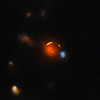
Astronomers using the Gemini North telescope on Maunakea, Hawai‘i, identified a distant galaxy nicknamed 'Shadow Blaster' as a potential source of a high-energy neutrino detected by IceCube in 2021, offering new clues about cosmic neutrino origins. The galaxy, located 11 billion light-years away, was discovered through follow-up observations with telescopes on Maunakea after initial alerts failed to pinpoint a counterpart in gamma-ray, X-ray, or optical signals.
Astronomers have traced a high-energy neutrino detected in 2021 to a distant galaxy nicknamed 'Shadow Blaster,' located 11 billion light-years away. The neutrino, named IC 210922A, was first detected by the NSF IceCube Neutrino Observatory in Antarctica and originated from the constellation Eridanus. Initial follow-up observations across multiple wavelengths—including gamma-ray, X-ray, and optical—did not reveal a clear source, leaving scientists puzzled. The breakthrough came when a team led by Yuji Urata used the James Clerk Maxwell Telescope (JCMT) and the Submillimeter Array (SMA) on Maunakea, Hawai‘i, to identify Shadow Blaster as a promising candidate. The galaxy’s location and brightness aligned with the neutrino’s trajectory, prompting further study with the Atacama Large Millimeter/submillimeter Array (ALMA). Observations from the Gemini North telescope, part of the International Gemini Observatory and funded by the U.S. National Science Foundation (NSF), confirmed the galaxy’s role. Shadow Blaster sits behind a bright red galaxy, whose gravitational lensing effect distorted its light into multiple arcs, making it detectable despite its distance. The discovery suggests that distant, star-forming galaxies like Shadow Blaster may contribute significantly to the cosmic neutrino background, a long-standing mystery in astronomy. These findings were published in *Nature Astronomy* and highlight the importance of multi-wavelength observations in unraveling the universe’s most elusive particles.
This content was automatically generated and/or translated by AI. It may contain inaccuracies. Please refer to the original sources for verification.