Trees Emit Tiny Lightning Flashes During Storms and Scientists Finally Prove It
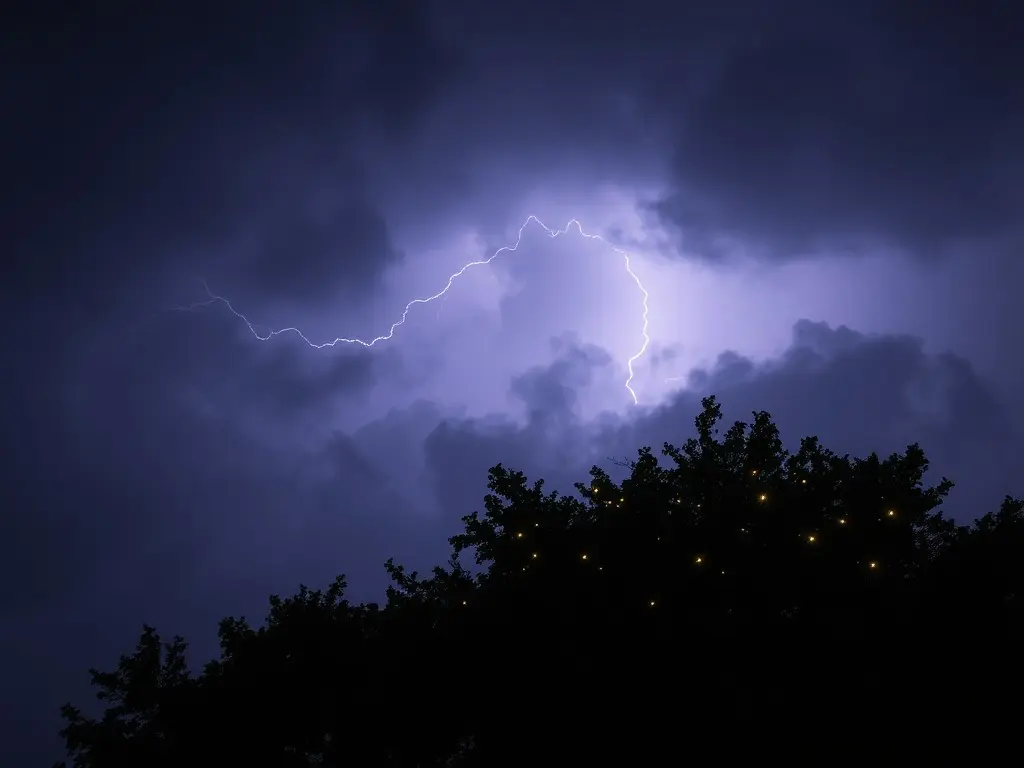
Researchers from Penn State captured the first real-world evidence of tiny electrical flashes, known as corona discharges, emitted by treetops during thunderstorms. The observations, made in Florida and North Carolina, suggest that these discharges may help clean the air by producing hydroxyl, a key oxidizer.
A team of Penn State researchers, led by William Brune and Patrick McFarland, set out to capture evidence of corona discharges during thunderstorms. They used a modified 2013 Toyota Sienna equipped with a custom telescopic weather instrument. The team observed corona discharges on a sweetgum tree and a long needle loblolly pine during a storm near the University of North Carolina at Pembroke. The discharges occur when strong electrical imbalances during thunderstorms cause positive charges to concentrate at the tips of leaves, producing a faint glow. This glow generates hydroxyl, a crucial oxidizer that helps cleanse the air by reacting with pollutants and chemicals. The findings were published in Geophysical Research Letters.
This content was automatically generated and/or translated by AI. It may contain inaccuracies. Please refer to the original sources for verification.