Trolling, memes, and deepfakes: How AI is thickening the fog of war
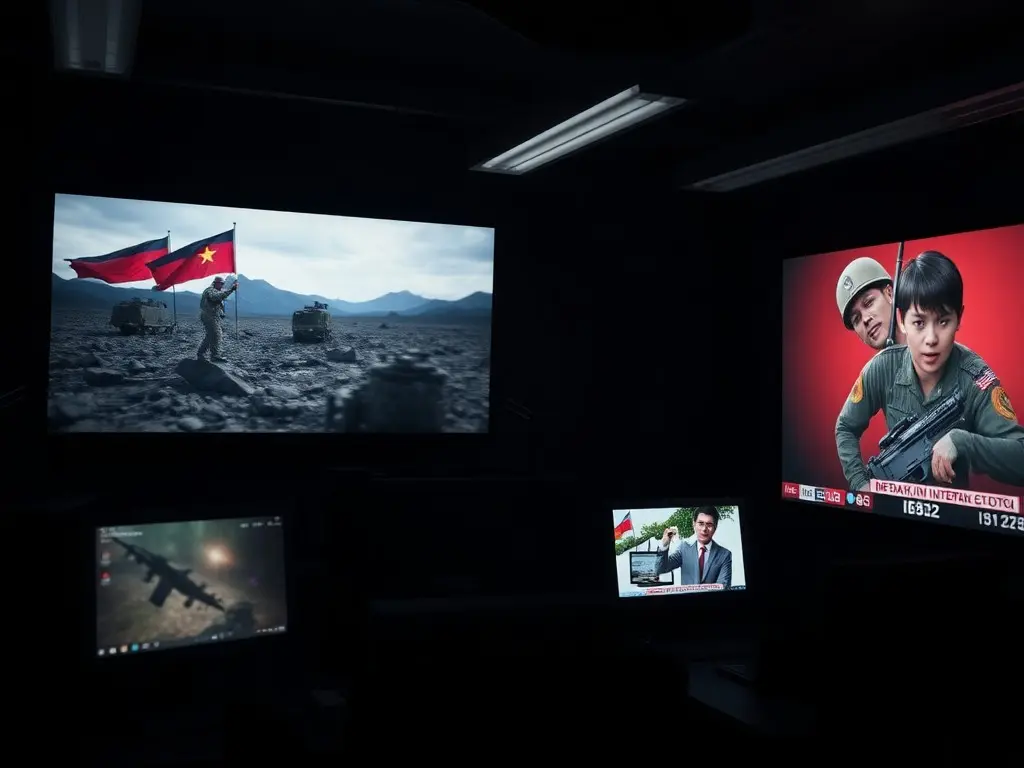
AI-generated content, including deepfakes and fabricated media, is intensifying the information war between the U.S. and Iran, complicating war reporting and public perception. Both sides use AI tools—such as Lego-style videos and edited clips—to shape narratives, with the U.S. emphasizing military dominance and Iran employing humor and parody to undermine American authority.
The U.S.-Iran conflict is unfolding in a digital battleground where AI-generated content is reshaping how wars are perceived. Fake drone footage, deepfakes, and synthetic statements now flood social media, making it harder to distinguish reality from manipulation. This marks the first major conflict where generative AI plays a central role in spreading disinformation, with both sides weaponizing narratives to influence global opinion. The U.S. leverages official channels like the White House to post edited videos combining real drone strikes with clips from films like *Top Gun* and *Braveheart*, reinforcing a message of military superiority. Meanwhile, Iran adopts a more satirical approach, using AI-generated Lego-style animations, exaggerated deepfakes, and recycled memes to mock U.S. policies, particularly targeting former President Trump. These tactics blur the line between deception and spectacle, prioritizing narrative control over factual accuracy. Experts warn that the rise of AI-driven disinformation is thickening the ‘fog of war,’ a term originally describing battlefield uncertainty now extended to digital misinformation. Earlier conflicts relied on miscaptioned footage, but today’s AI tools allow for entirely fabricated content—from fabricated satellite images to synthetic statements—spread at unprecedented scale. Journalists and researchers tracking these trends describe a treacherous environment where even official sources distribute false content. The U.S. strategy emphasizes dominance through visual spectacle, while Iran’s approach combines humor and parody to undermine credibility. Both methods exploit social media’s algorithmic amplification, ensuring messages reach millions regardless of veracity. As AI tools evolve, the challenge for war reporters and fact-checkers grows, requiring new methods to verify authenticity in an era where digital manipulation is as much a weapon as a drone or missile.
This content was automatically generated and/or translated by AI. It may contain inaccuracies. Please refer to the original sources for verification.