Trump links Abraham Accords to any Iran deal
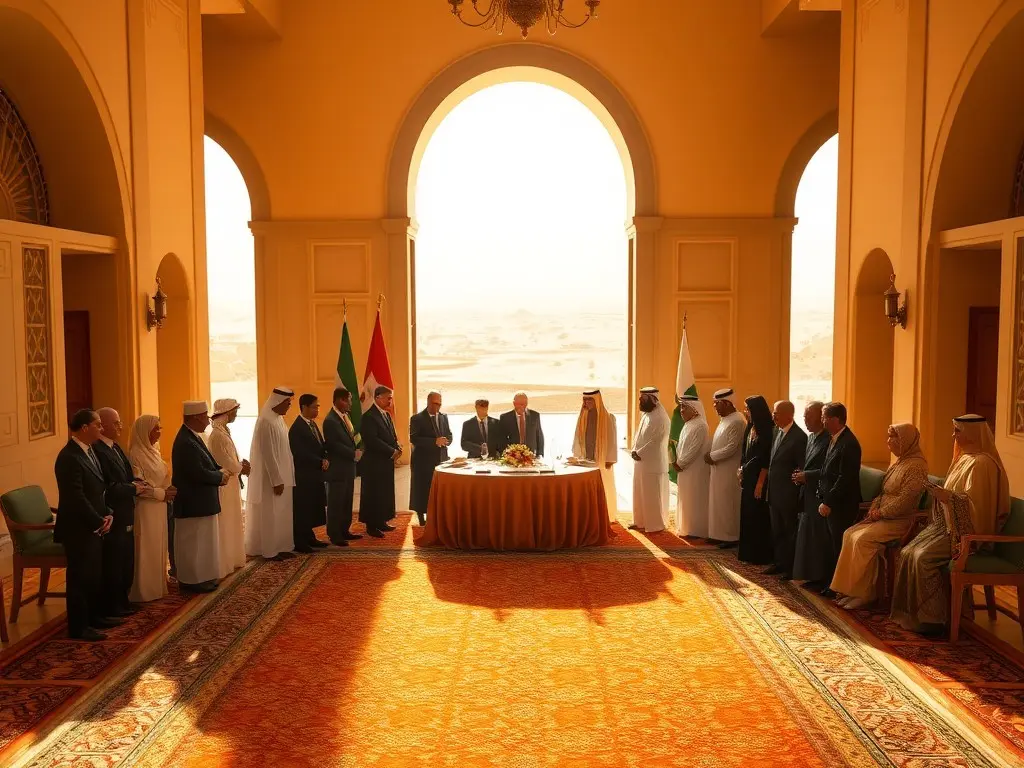
US President Donald Trump urged Qatar, Saudi Arabia, Pakistan, Egypt, Jordan, and Turkey to join the Abraham Accords, tying their participation to a potential Iran deal, while claiming negotiations with Iran are progressing. Trump highlighted the accords as a 'World Coalition' to normalize relations with Israel and praised the initiative as historic, though responses from regional leaders remain pending.
US President Donald Trump on May 25 called on countries including Qatar, Saudi Arabia, Pakistan, Egypt, Jordan, and Turkey to join the Abraham Accords, framing their participation as a prerequisite for an Iran deal. He stated he had spoken with leaders of these nations, as well as the UAE and Bahrain—already signatories to the accords—to encourage mass adoption. Trump wrote on Truth Social that he was 'mandatorily requesting' their involvement, suggesting Iran’s inclusion in a potential agreement would honor the coalition’s significance. The Abraham Accords, brokered by Trump during his first term, normalized relations between Israel and UAE, Bahrain, Morocco, and Sudan, breaking decades of regional isolation. Trump emphasized the 'unparalleled World Coalition' as a unifying force, though Saudi Arabia, a key regional player, has not yet joined despite earlier optimism. Egypt and Jordan already maintain diplomatic ties with Israel, while others like Turkey and Pakistan have not signaled readiness. Trump claimed negotiations with Iran were 'proceeding nicely' but avoided specifying a timeline for a deal. His strategy aligns with efforts to position an Iran agreement as a regional diplomatic milestone, though critics argue it risks oversimplifying complex geopolitical dynamics. Senator Lindsey Graham, a Trump ally, called the approach 'beyond transformative,' while analysts like Ali Vaez of the International Crisis Group warned of unrealistic expectations. The UAE and Bahrain signed the accords in 2020, marking the first Arab-Israeli normalization agreements in 25 years. Trump had previously expressed hope Saudi Arabia would join after Gaza’s 2023 ceasefire, but Riyadh has not acted. Responses from the countries Trump mentioned remain unconfirmed, with some reportedly hesitant due to regional sensitivities. Trump’s push reflects his broader goal of expanding the accords, framing them as a cornerstone of Middle East stability. However, skepticism persists about Iran’s willingness to engage and the feasibility of linking its participation to broader regional normalization.
This content was automatically generated and/or translated by AI. It may contain inaccuracies. Please refer to the original sources for verification.