Trump signs an executive order that invites vetting of top AI models for national security risks
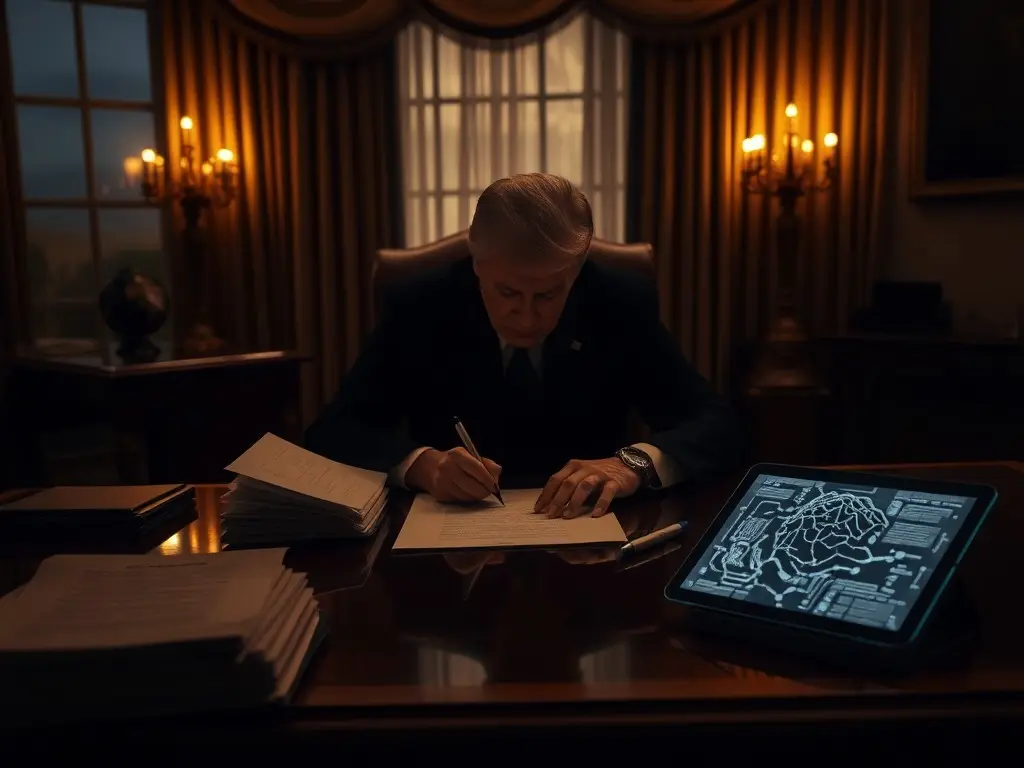
President Donald Trump signed an executive order establishing a voluntary 30-day vetting process for advanced AI models by federal agencies, focusing on national security risks. The move follows his cancellation of a previous AI policy signing and comes amid concerns about AI capabilities like Anthropic’s Claude Mythos, which has raised cybersecurity alarms among Wall Street executives and government officials.
President Donald Trump signed an executive order on Tuesday creating a framework for the federal government to review advanced AI systems for national security risks before their public release. The process, which is voluntary for developers, grants up to 30 days for federal agencies to assess AI models, a shorter timeline than some industry experts anticipated. The order follows Trump’s decision to cancel a May 21 White House ceremony for a similar AI policy, citing concerns that stricter oversight could hinder U.S. technological leadership. The White House emphasized that the new directive targets only the most cutting-edge AI systems, referred to as 'frontier labs,' including companies like Anthropic, OpenAI, and Google. The policy aims to secure critical infrastructure and strengthen government cyber defenses without imposing broad restrictions on innovation. Trump had previously stated that he did not want measures that could 'dull America’s technological edge,' particularly amid competition with China. The order assigns oversight responsibility to the director of the National Security Agency (NSA), though critics like Juan Londoño of the Cato Institute warn of potential overreach. Londoño expressed concern that vague criteria for model selection and 'trusted partner' access could enable the government to target companies politically, such as Anthropic, which is currently involved in a legal dispute with the Trump administration over a Pentagon contract. The announcement coincides with growing unease over AI advancements, particularly Anthropic’s Claude Mythos model, which Treasury Secretary Scott Bessent and Federal Reserve Chair Jerome Powell discussed with Wall Street executives in an urgent meeting. The model’s ability to identify cybersecurity vulnerabilities has raised alarms, prompting Anthropic to expand access to a select group of 150 organizations, including major tech firms and banks. Anthropic, OpenAI, and Google have all welcomed the policy, framing it as a step toward ensuring U.S. leadership in AI development. The White House clarified that the review process will not apply to all new models, aiming to avoid 'chilling effects on free speech and innovation.' The executive order marks the first formal U.S. government effort to address AI risks while balancing national security with industry growth.
This content was automatically generated and/or translated by AI. It may contain inaccuracies. Please refer to the original sources for verification.