Trump vows US "must respond" after Iran shoots down Apache helicopter
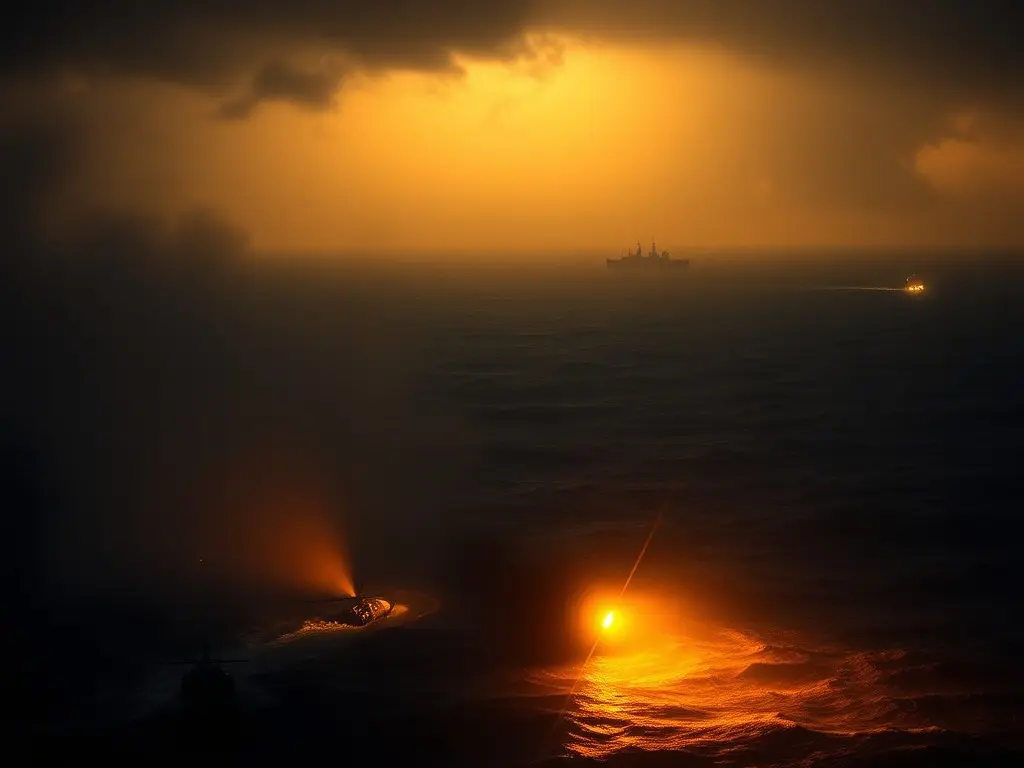
Iran shot down a US Army Apache helicopter in the Strait of Hormuz on Monday, with both pilots rescued by a US uncrewed surface drone in a first-of-its-kind operation. Former President Trump vowed a US response, while war-risk insurance premiums for the region surged to 10% of hull value amid escalating tensions.
Iran downed a US Army Apache helicopter near the Strait of Hormuz on Monday, with both pilots surviving and rescued by a US uncrewed surface drone operated by the 5th Fleet’s Task Force 59. This marked the first such rescue by US forces. The pilots were confirmed stable by 19:33 EDT Monday, though the cause of the downing—whether hostile fire or mechanical failure—remains under investigation. Former President Trump announced the incident on social media, calling it an attack on a 'highly sophisticated Apache Helicopter' and stating the US 'must respond.' His statement followed earlier remarks where he described the pilots as 'fine,' though his later post signaled a hardened stance. The downing occurred amid severe disruptions in marine insurance, with war-risk premiums for Strait of Hormuz transits climbing to 10% of hull value, up from 0.15–0.25%. Global oil trade through the strait has dropped 62%, and analysts estimate the conflict could trigger $2 billion to $3 billion in insurance claims, exceeding annual premium volumes. The US International Development Finance Corporation has assembled a $40 billion maritime reinsurance facility involving Chubb, AIG, Berkshire Hathaway, Travelers, Liberty Mutual, and Starr to mitigate risks. Meanwhile, the Lloyd’s Market Association redesignated the Arabian Gulf as a conflict zone after February 28 airstrikes by US and Israeli forces. Underwriters now face heightened uncertainty over potential US retaliation and Iranian responses. The Strait of Hormuz remains a critical maritime chokepoint, with disruptions causing supply chain strain. Richard Miller of Howden Re noted that any escalation could worsen rerouting pressures and global oil market instability.
This content was automatically generated and/or translated by AI. It may contain inaccuracies. Please refer to the original sources for verification.