Trump-Xi Beijing Summit: What the two leaders agreed and disagreed upon
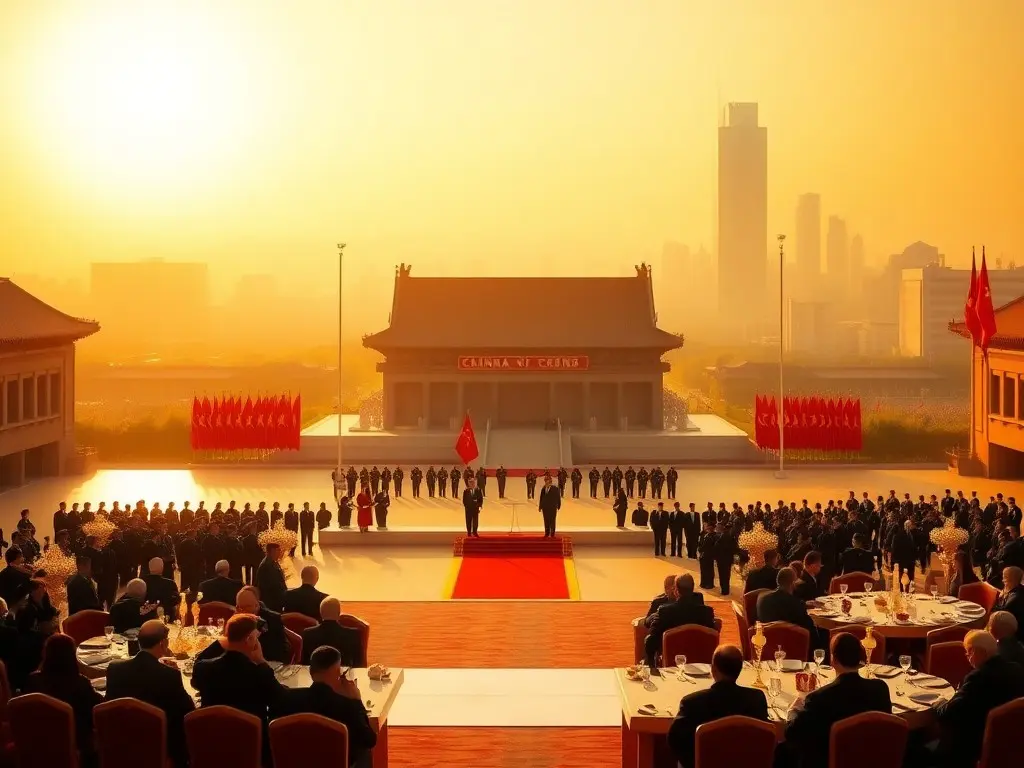
U.S. President Donald Trump and Chinese President Xi Jinping held a high-profile summit in Beijing, addressing strained relations over Taiwan, trade, Iran conflict, and technology competition during two hours of talks. The visit included a grand welcome ceremony with military displays and a state banquet, while a U.S. delegation featuring corporate leaders like Elon Musk and Tim Cook emphasized economic priorities.
U.S. President Donald Trump arrived in Beijing for a summit with Chinese President Xi Jinping, marking the first visit by a sitting U.S. president in nearly a decade. The meeting took place amid rising tensions over Taiwan, trade disputes, and competition in advanced technologies like artificial intelligence and semiconductors, alongside concerns about the Iran conflict and its impact on global energy markets. The summit began with a ceremonial welcome at Beijing’s Great Hall of the People, featuring a 21-gun salute, national anthems, and a military display. Xi greeted Trump with a handshake, accompanied by hundreds of children holding flowers and flags, while reporters noted the leaders’ warm public interactions. The event underscored China’s projection of national strength amid strategic competition with the U.S. Trump’s delegation included Secretary of State Marco Rubio, Defense Secretary Pete Hegseth, Treasury Secretary Scott Bessent, and economic adviser Scott Bessent, alongside corporate executives like Elon Musk, Tesla CEO, and Nvidia CEO Jensen Huang. Musk’s presence highlighted China’s admiration for his innovations, despite past political controversies, while Huang’s attendance reflected ongoing disputes over semiconductor exports and AI technology. The closed-door talks focused on critical issues including Taiwan, trade, investment, the Iran war, the Strait of Hormuz, fentanyl trafficking, agricultural purchases, market access, and military communication channels. The summit aimed to stabilize bilateral relations amid escalating global challenges, with both sides signaling a deliberate approach to diplomacy. A state banquet hosted by China followed the discussions, reinforcing the formal diplomatic engagement. The visit’s commercial focus was evident through the inclusion of top U.S. business leaders, though broader disagreements on trade and technology remained unresolved. Analysts noted the symbolic importance of the summit in addressing long-standing disputes between the world’s two largest economies.
This content was automatically generated and/or translated by AI. It may contain inaccuracies. Please refer to the original sources for verification.