Trump-Xi summit comes with high stakes for Taiwan, the island democracy that China claims as its own
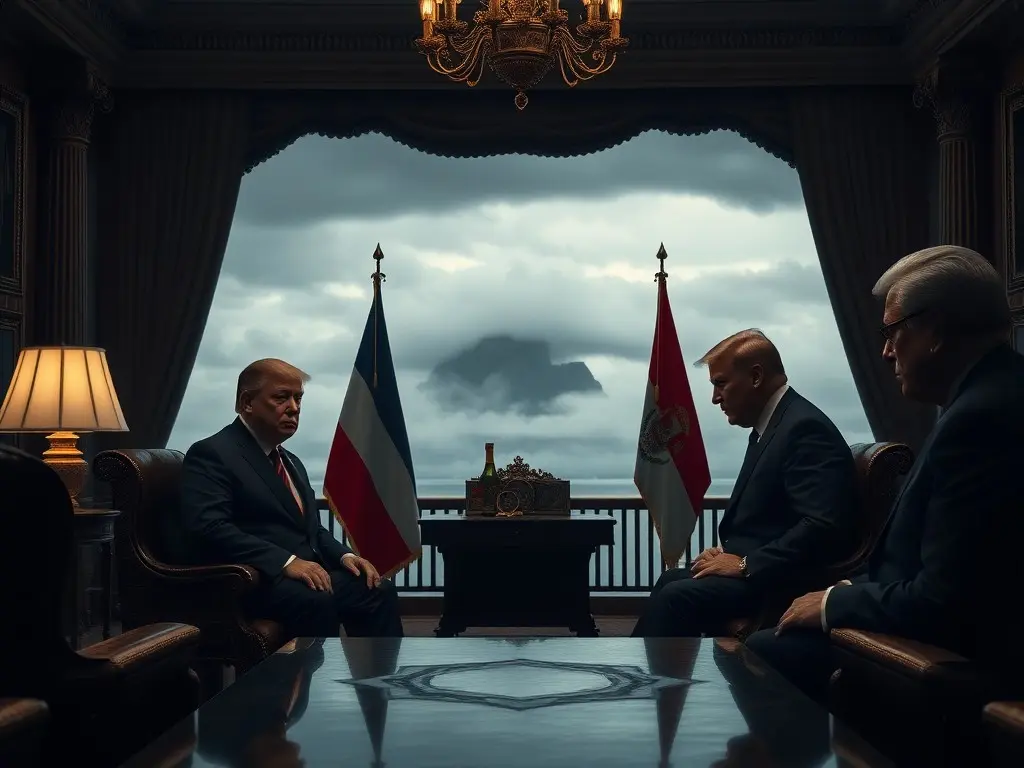
President Donald Trump’s shifting stance on Taiwan, including discussions with China’s Xi Jinping about arms sales and demands for economic concessions, has raised concerns about U.S. commitment to the island’s defense ahead of their summit. While Trump has authorized record military aid to Taiwan, his transactional rhetoric and pressure on Taipei to invest in the U.S. have fueled speculation that he may compromise long-standing U.S. policy during talks with Xi, though officials like Marco Rubio insist policy remains unchanged.
President Donald Trump’s return to the White House has introduced uncertainty about U.S. support for Taiwan, a self-governing island democracy China claims as its territory. Despite authorizing an $11 billion arms package—the largest ever for Taiwan—in December, Trump has not advanced delivery and has discussed the sale with Chinese President Xi Jinping. He has also pressured Taiwan to invest heavily in U.S. semiconductor manufacturing and purchase billions in American energy products, framing the relationship as transactional. Trump’s rhetoric has heightened concerns in Beijing, Taipei, and Washington about whether he could weaken U.S. backing for Taiwan’s defense during their upcoming summit. Retired U.S. Navy Rear Adm. Mark Montgomery warned that Trump’s approach risks leaving Taiwan vulnerable, describing the president as transactional and potentially open to concessions. The Foundation for Defense of Democracies, where Montgomery works, advocates for strong U.S. support for Taiwan’s security. Chinese officials have signaled Taiwan will be a key topic in Trump-Xi talks, with Foreign Minister Wang Yi urging the U.S. to ‘make the right choices’ to maintain stability. During a call with Secretary of State Marco Rubio, Wang emphasized the need for U.S. policy adjustments to avoid destabilizing relations. Rubio, however, dismissed suggestions of a policy shift, stating that Taiwan would not be a ‘feature’ of the trip but would likely be discussed. He reiterated that forced changes to Taiwan’s status would be ‘destabilizing to the world.’ White House officials have highlighted that Trump has already approved more military sales to Taiwan in his first year—$11 billion plus $330 million in aircraft parts—than the roughly $8.4 billion approved during his first term. Despite this, Trump’s past comments, including accusing Taiwan of ‘stealing’ U.S. semiconductor business and demanding it ‘pay’ for protection, have fueled doubts about his long-term commitment to the island’s defense. The uncertainty comes as China intensifies military drills near Taiwan and reaffirms its stance that the island is part of its territory. Analysts warn that any perceived U.S. retreat could embolden Beijing to escalate pressure, while Taiwan’s allies fear abandonment. Rubio’s reassurances notwithstanding, Trump’s unpredictable approach leaves room for speculation about whether he will prioritize economic or strategic interests in his discussions with Xi.
This content was automatically generated and/or translated by AI. It may contain inaccuracies. Please refer to the original sources for verification.