Trump, Xi to huddle in China as AI race heats up
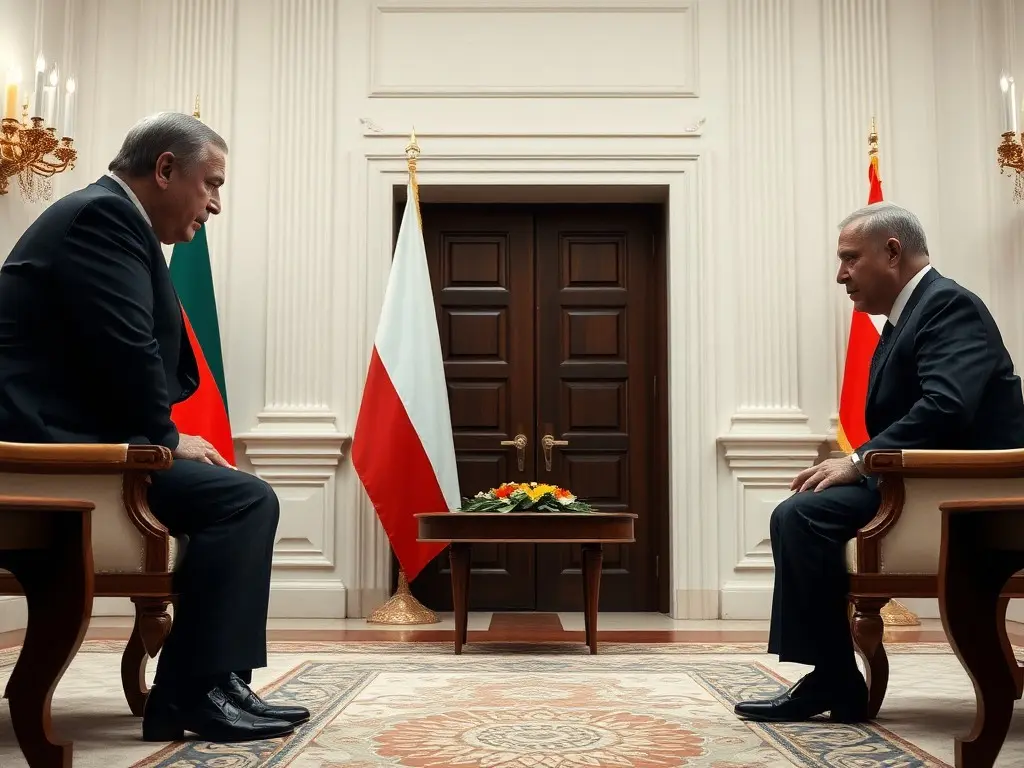
President Donald Trump and Chinese President Xi Jinping will meet this week to discuss artificial intelligence as both nations compete to lead the field, with the U.S. now prioritizing AI safety risks amid advances like Anthropic’s Mythos model. The talks may establish a new U.S.-China communication channel on AI, following a shift in Trump’s administration toward balancing innovation with risk management, though experts question China’s willingness to engage in good faith." "article": "President Donald Trump and Chinese President Xi Jinping will meet this week in China, where artificial intelligence will be a key focus as both countries vie for dominance in the sector. The White House has shifted its AI policy approach, moving from a pro-innovation stance to one that emphasizes managing risks posed by rapidly advancing models like Anthropic’s recently released Mythos, which has heightened cybersecurity concerns. The meeting marks a significant pivot for Trump’s administration, which has grown more cautious about AI’s potential dangers. White House officials confirmed discussions will include establishing a formal communication channel between the U.S. and China to address AI developments, a first under Trump’s presidency. The Biden administration had launched a similar dialogue in 2023, but experts remain skeptical about China’s willingness to engage constructively. Technology policy analysts, including Ryan Fedasiuk of the American Enterprise Institute, note that AI’s capabilities have evolved dramatically since Trump’s last state visit to China in 2017. At that time, AI models struggled with basic tasks like generating grammatically correct sentences, whereas today’s systems threaten to replace large volumes of human labor. Fedasiuk called the timing of the meeting “inopportune,” given the real-world cybersecurity risks now associated with AI advancements like Mythos. A White House official stated that Trump plans to assert U.S. leadership in the AI race during his visit. However, former Biden administration official Chris McGuire, now at the Council on Foreign Relations, warned that China’s past focus on U.S. export controls rather than shared risks suggests negotiations may remain contentious. McGuire urged the Trump administration to explore effective strategies for engaging China in meaningful dialogue, despite historical distrust. The potential establishment of an AI communication channel could set a precedent for future cooperation, though its success depends on mutual commitment. For now, the U.S. and China appear locked in a competitive dynamic, with AI serving as both a strategic priority and a source of growing global concern.
President Donald Trump and Chinese President Xi Jinping will meet this week in China, where artificial intelligence will be a key focus as both countries vie for dominance in the sector. The White House has shifted its AI policy approach, moving from a pro-innovation stance to one that emphasizes managing risks posed by rapidly advancing models like Anthropic’s recently released Mythos, which has heightened cybersecurity concerns. The meeting marks a significant pivot for Trump’s administration, which has grown more cautious about AI’s potential dangers. White House officials confirmed discussions will include establishing a formal communication channel between the U.S. and China to address AI developments, a first under Trump’s presidency. The Biden administration had launched a similar dialogue in 2023, but experts remain skeptical about China’s willingness to engage constructively. Technology policy analysts, including Ryan Fedasiuk of the American Enterprise Institute, note that AI’s capabilities have evolved dramatically since Trump’s last state visit to China in 2017. At that time, AI models struggled with basic tasks like generating grammatically correct sentences, whereas today’s systems threaten to replace large volumes of human labor. Fedasiuk called the timing of the meeting “inopportune,” given the real-world cybersecurity risks now associated with AI advancements like Mythos. A White House official stated that Trump plans to assert U.S. leadership in the AI race during his visit. However, former Biden administration official Chris McGuire, now at the Council on Foreign Relations, warned that China’s past focus on U.S. export controls rather than shared risks suggests negotiations may remain contentious. McGuire urged the Trump administration to explore effective strategies for engaging China in meaningful dialogue, despite historical distrust. The potential establishment of an AI communication channel could set a precedent for future cooperation, though its success depends on mutual commitment. For now, the U.S. and China appear locked in a competitive dynamic, with AI serving as both a strategic priority and a source of growing global concern.
This content was automatically generated and/or translated by AI. It may contain inaccuracies. Please refer to the original sources for verification.