TZ posts strong growth, eyes 6.3pc in 2026
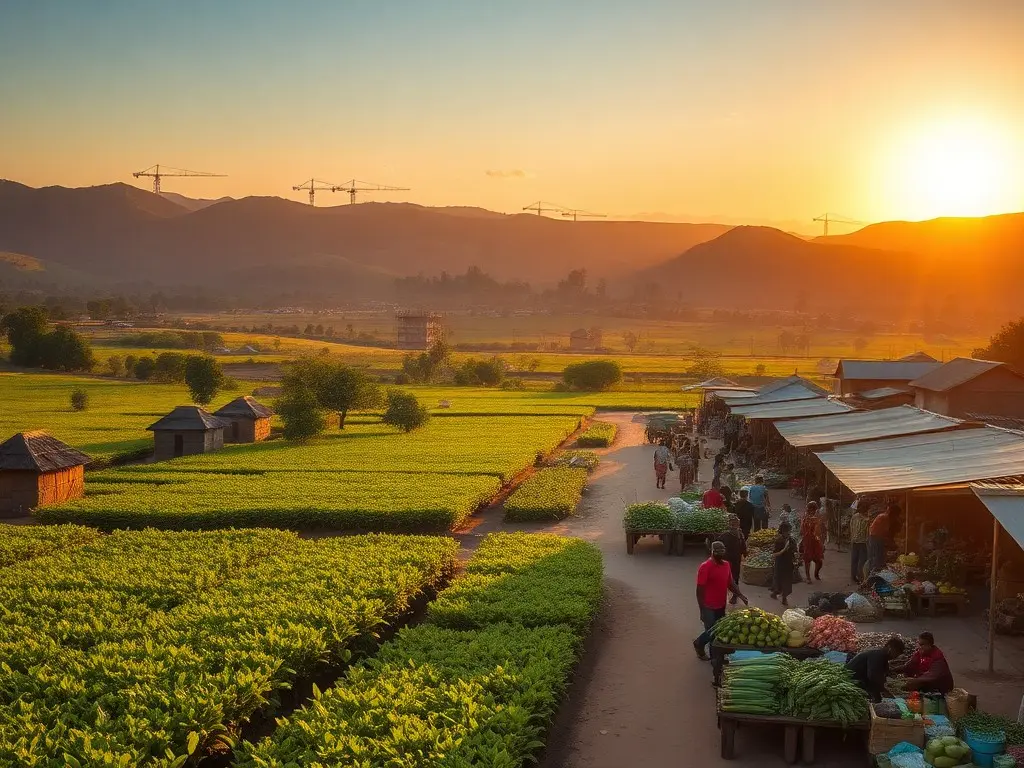
Tanzania’s economy grew by 5.9 percent in 2025, with GDP reaching 234.1 trillion Tanzanian shillings ($91.81 billion) and a projected 6.3 percent expansion in 2026, driven by reforms and public investments. Agriculture remains the largest sector at 24.3 percent of GDP, while inflation held steady at 3.3 percent, and poverty declined to 25.1 percent in 2025.
Tanzania’s economy recorded strong growth in 2025, expanding by 5.9 percent, up from 5.6 percent in 2024, according to a report presented by Minister of State in the President’s Office (Planning and Investment), Prof Kitila Mkumbo. The real Gross Domestic Product (GDP) reached 234.1 trillion Tanzanian shillings ($91.81 billion) in 2025, up from 212.0 trillion shillings ($81.2 billion) in 2024, following a GDP rebasing exercise by the National Bureau of Statistics (NBS). Agriculture led economic output at 24.3 percent of GDP, followed by construction (11.9 percent), mining and quarrying (10.3 percent), and trade (8.6 percent). The fastest-growing sectors included finance and insurance (15.7 percent), electricity and gas (11.8 percent), and mining (9.4 percent). GDP per capita rose by 7.4 percent to 3.5 million shillings ($1,390) in 2025, while inflation remained stable at 3.3 percent, within the 3–5 percent target range. The government also reported a decline in basic needs poverty, with 25.1 percent of the population living below the poverty line in 2025, down from 34.4 percent in 2007. The National Bureau of Statistics completed a 2025 Household Budget Survey, covering both Mainland Tanzania and Zanzibar for the first time. For 2026, Tanzania aims to accelerate GDP growth to 6.3 percent, maintain inflation within 3–5 percent, and increase domestic revenue to 17.1 percent of GDP. The government also targets a budget deficit of no more than 3 percent of GDP and job creation for 1.7 million people in 2026. Foreign exchange reserves must cover at least four months of imports.
This content was automatically generated and/or translated by AI. It may contain inaccuracies. Please refer to the original sources for verification.