ULA closes out doubleheader launch day in Florida, following Blue Origin mishap
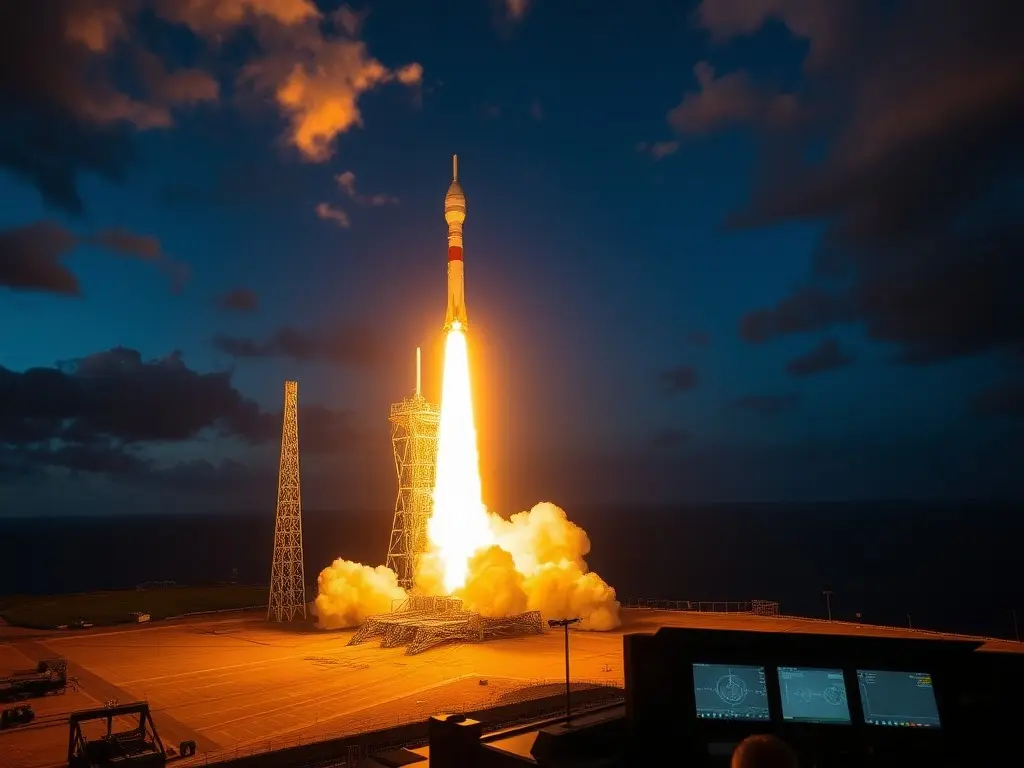
United Launch Alliance (ULA) successfully launched an Atlas V rocket from Cape Canaveral Space Force Station on May 29, deploying 29 Amazon Leo internet satellites, while Blue Origin’s New Glenn rocket suffered an explosion during a static fire test the prior day. The incident raises concerns about Amazon’s satellite launch plans, as New Glenn was set to carry Leo satellites and shares engine technology with ULA’s Vulcan rocket, which also faces flight restrictions due to recent anomalies.
United Launch Alliance (ULA) capped off a busy launch day on May 29 at Cape Canaveral Space Force Station, Florida, by successfully sending an Atlas V rocket into orbit at 7:53 p.m. The rocket carried 29 Amazon Leo internet satellites, part of a constellation that now totals 197 satellites launched across seven ULA missions since 2025. The launch followed a slight weather delay but proceeded without further issues, marking another step toward Amazon’s goal of global connectivity through its Leo satellite network. Amazon Leo satellites were initially part of Project Kuiper before being rebranded in November 2025. The company has already deployed over 300 satellites using launches from SpaceX and Arianespace, with commercial service expected later this year. Select businesses are currently testing the service, which Amazon aims to position as a competitor to SpaceX’s Starlink. The launch came just one day after Blue Origin’s New Glenn rocket suffered a catastrophic explosion during a static fire test on May 28 at Cape Canaveral. The incident heavily damaged the launch pad and raises questions about Amazon’s backup launch options, as New Glenn was scheduled to deploy Leo satellites. The explosion may also impact ULA’s Vulcan rocket, which uses the same BE-4 engine as New Glenn and experienced its own solid rocket booster anomaly in February. Vulcan remains grounded pending further investigation. Amazon has alternative launch providers, including Arianespace’s Ariane 6 rocket from French Guiana. However, the New Glenn explosion and Vulcan’s ongoing issues introduce uncertainty for the company’s satellite deployment plans. The full Amazon Leo constellation will eventually consist of around 3,000 satellites, aiming to provide global broadband coverage. Don Platt, an associate professor of space systems at Florida Institute of Technology, noted that the New Glenn explosion and Vulcan’s engine problems could be linked, given their shared technology. Until the root cause of the New Glenn failure is determined, both rockets may face delays in resuming flights. Amazon continues to work toward commercializing its Leo satellite internet service, but the recent setbacks could affect its timeline.
This content was automatically generated and/or translated by AI. It may contain inaccuracies. Please refer to the original sources for verification.