ULA successfully launches batch of Amazon’s Leo satellites
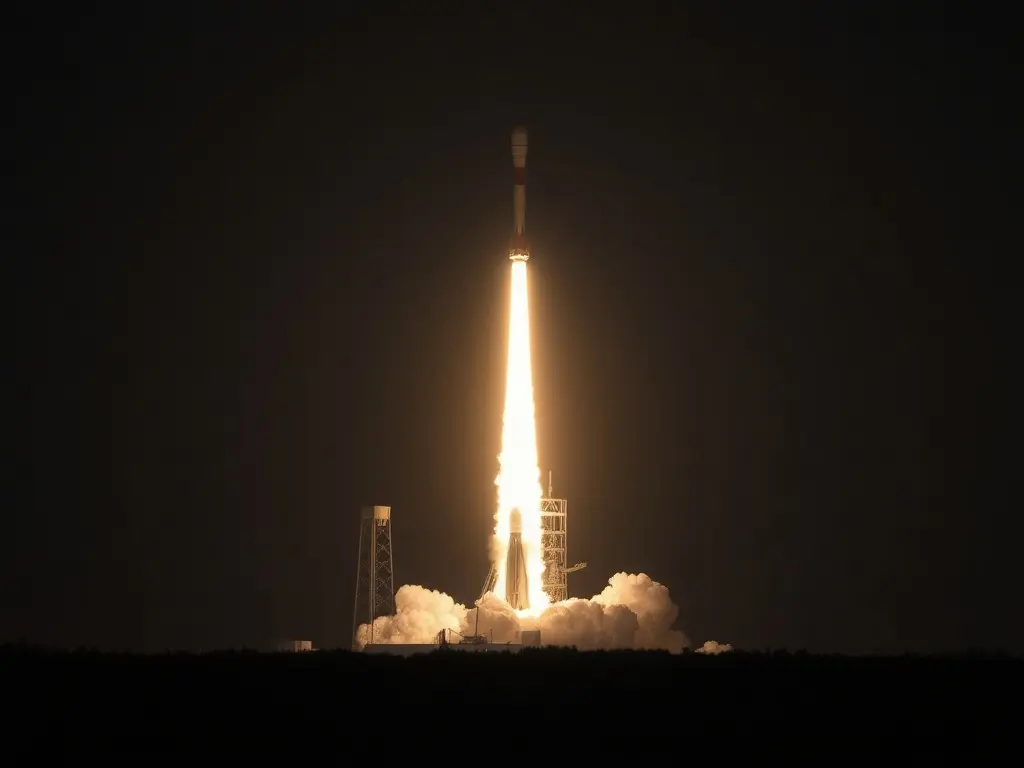
United Launch Alliance (ULA) successfully launched 29 Amazon Project Kuiper satellites aboard an Atlas V 551 rocket from Cape Canaveral Space Force Station on Friday evening. The mission marks the 12th launch for Amazon’s low-Earth orbit satellite network, which aims to deploy over 3,000 satellites globally for internet service, with 302 already in orbit." "article": "United Launch Alliance (ULA) successfully deployed 29 Amazon Project Kuiper satellites into low-Earth orbit on Friday night, using an Atlas V 551 rocket from Space Launch Complex-41 at Cape Canaveral Space Force Station. The launch occurred at 7:53 p.m. after a 29-minute weather delay, with conditions improving from an initial 30% chance of favorable liftoff due to cumulus and anvil clouds. Unlike SpaceX’s Falcon 9, the Atlas V 551’s first-stage booster separated and fell into the Atlantic Ocean, where it was recovered. This mission, Amazon Leo 7, is the 12th for Amazon’s Project Kuiper, a global satellite internet network competing with SpaceX’s Starlink. The satellites will expand Amazon’s existing constellation of 302, with plans to reach over 3,000 in total. Project Kuiper aims to provide broadband internet access worldwide, leveraging low-Earth orbit for lower latency and higher reliability. ULA’s Atlas V 551 rocket was chosen for its proven capability in heavy-lift missions, though it differs from reusable rockets like SpaceX’s Falcon 9. The launch window required precise timing, and the 45th Weather Squadron monitored conditions closely. Despite weather concerns, the mission proceeded smoothly, marking another step in Amazon’s ambitious satellite infrastructure. Amazon’s Project Kuiper has faced delays but continues progressing toward operational service. The company has invested billions in satellite development and partnerships to ensure scalability. This latest launch brings the network closer to its goal of delivering high-speed internet to underserved regions globally. The recovery of the Atlas V booster from the Atlantic highlights ULA’s focus on mission success over reusability. While SpaceX’s droneship landings have become standard, ULA’s approach prioritizes payload delivery. The launch underscores growing competition in the satellite internet sector, with both Amazon and SpaceX racing to expand coverage.
United Launch Alliance (ULA) successfully deployed 29 Amazon Project Kuiper satellites into low-Earth orbit on Friday night, using an Atlas V 551 rocket from Space Launch Complex-41 at Cape Canaveral Space Force Station. The launch occurred at 7:53 p.m. after a 29-minute weather delay, with conditions improving from an initial 30% chance of favorable liftoff due to cumulus and anvil clouds. Unlike SpaceX’s Falcon 9, the Atlas V 551’s first-stage booster separated and fell into the Atlantic Ocean, where it was recovered. This mission, Amazon Leo 7, is the 12th for Amazon’s Project Kuiper, a global satellite internet network competing with SpaceX’s Starlink. The satellites will expand Amazon’s existing constellation of 302, with plans to reach over 3,000 in total. Project Kuiper aims to provide broadband internet access worldwide, leveraging low-Earth orbit for lower latency and higher reliability. ULA’s Atlas V 551 rocket was chosen for its proven capability in heavy-lift missions, though it differs from reusable rockets like SpaceX’s Falcon 9. The launch window required precise timing, and the 45th Weather Squadron monitored conditions closely. Despite weather concerns, the mission proceeded smoothly, marking another step in Amazon’s ambitious satellite infrastructure. Amazon’s Project Kuiper has faced delays but continues progressing toward operational service. The company has invested billions in satellite development and partnerships to ensure scalability. This latest launch brings the network closer to its goal of delivering high-speed internet to underserved regions globally. The recovery of the Atlas V booster from the Atlantic highlights ULA’s focus on mission success over reusability. While SpaceX’s droneship landings have become standard, ULA’s approach prioritizes payload delivery. The launch underscores growing competition in the satellite internet sector, with both Amazon and SpaceX racing to expand coverage.
This content was automatically generated and/or translated by AI. It may contain inaccuracies. Please refer to the original sources for verification.