Unfinished business of education
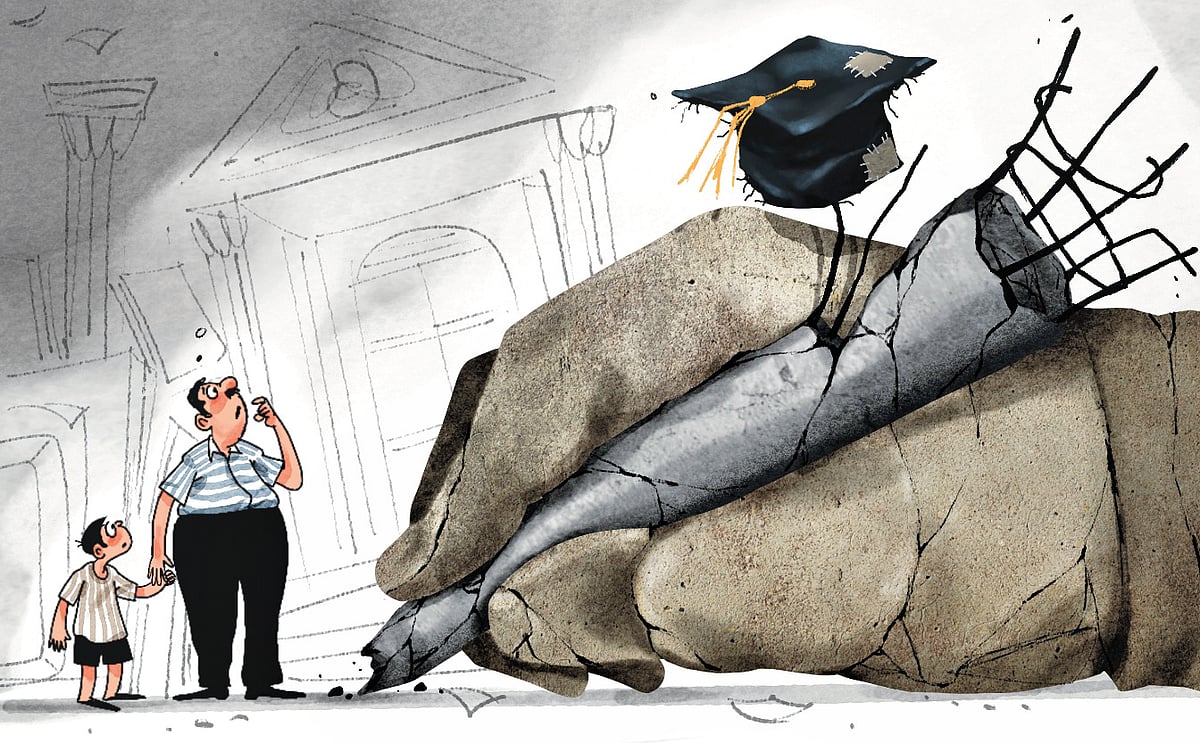
India’s education system faces persistent challenges despite policies like the National Education Policy (NEP) 2020, with low learning outcomes, high dropout rates, and a rigid exam-centric approach hindering student development. Textbook revisions under a 'Bharatiya' framework risk marginalizing diverse perspectives, while uneven implementation of NEP and funding shortages exacerbate systemic failures in schools and universities.
India’s education system remains plagued by systemic issues despite government initiatives. The Sarva Shiksha Abhiyan, Right to Education Act 2009, and NEP 2020 expanded access, but quality, equity, and retention lag. Public spending on education stays below 5% of GDP, far short of NEP’s 6% target, while dropout rates remain high—only half of students entering class 9 reach class 12. Learning outcomes are dismal: 49% of fifth-graders can’t read class 2 texts fluently, and just 31% can perform division, due to rote-learning dominance. The current model stifles creativity and individual growth, prioritizing exams like the Joint Entrance Examination over experiential learning. NEP 2020’s proposed reforms—multidisciplinary curricula, reduced content load, and competency-based education—remain largely unimplemented. Schools still rely on textbook-heavy, one-size-fits-all teaching, ignoring diverse learning styles and fostering stress. Recent textbook revisions under a 'Bharatiya' framework risk deepening divisions by marginalizing regional, linguistic, and minority perspectives. States like Tamil Nadu, Karnataka, and Kerala have resisted the three-language formula, withholding central funds in protest. This ideological shift threatens pluralism, particularly for marginalized groups already struggling with access and quality. Infrastructure gaps and teacher shortages worsen the crisis. Government schools, which educate 50% of students, suffer from uneven progress, with economic pressures and migration pushing children into early labor or dropout. The system’s failure to adapt leaves students ill-prepared for careers, perpetuating cycles of low social mobility. Experts warn that without student-centered reforms and university autonomy, India’s education crisis will persist. The NEP’s potential to foster innovation and equity remains unfulfilled, leaving millions trapped in a flawed, high-stress system.
This content was automatically generated and/or translated by AI. It may contain inaccuracies. Please refer to the original sources for verification.