UN’s El Nino warning amid heatwave: How the climate pattern affected India before
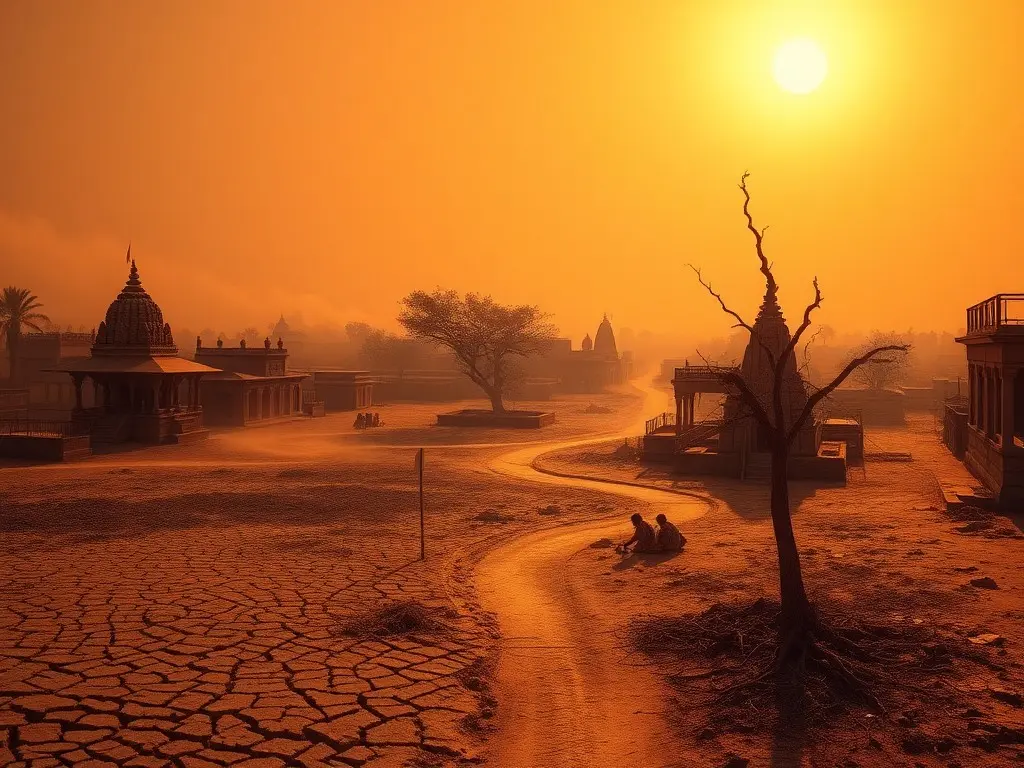
The World Meteorological Organization (WMO) warned of a developing moderate or strong El Niño, citing unusually warm Pacific Ocean temperatures, which could exacerbate India’s current heatwaves and disrupt monsoons. Historical data shows the 1998 El Niño triggered over 2,600 heat-related deaths in India, while climate scientist Zeke Hausfather of Berkeley Earth noted that similar events today would be far deadlier due to human-driven warming." "article": "The United Nations’ World Meteorological Organization (WMO) has issued a warning about the potential development of a moderate or strong El Niño in the coming months, driven by unusually warm ocean temperatures in the Pacific. The WMO forecasts above-average global temperatures from June to August, with impacts likely extending through November. El Niño, a periodic warming of sea surface temperatures in the central and eastern Pacific, typically lasts nine to 12 months and influences global weather patterns, often causing extreme heatwaves, droughts, and erratic rainfall. In India, El Niño has historically been linked to weaker monsoons and hotter summers, with the India Meteorological Department (IMD) reporting a warming trend of 0.62 degrees Celsius per century since 1901. The IMD also notes that heatwaves have become more frequent and intense since the 1950s, with global temperatures between 2011 and 2020 averaging 1.09 degrees Celsius higher than pre-industrial levels. The 1998 El Niño, one of the strongest on record, triggered severe heatwaves across India, resulting in over 2,600 heat-related deaths and malaria outbreaks due to disrupted ecological and health systems. Climate scientist Zeke Hausfather of Berkeley Earth told the BBC that if the 1998 El Niño occurred today, it would likely be far less severe in comparison to recent years due to the already elevated baseline temperatures. The WMO’s warning underscores the potential for heightened risks to food and water systems, as well as public health, if El Niño conditions intensify. The IMD has also observed erratic rainfall patterns during past El Niño events, posing additional stress on agriculture and water resources. Research from the Indian Institute of Tropical Meteorology (IITM) in Pune indicates a high correlation between strong El Niño events and major droughts in India. The phenomenon’s impact on monsoons remains a critical concern, as shifts in rainfall distribution can exacerbate water shortages and agricultural losses. With global temperatures expected to rise further, the WMO’s forecast highlights the need for preparedness to mitigate the potential consequences of El Niño on vulnerable populations.
The United Nations’ World Meteorological Organization (WMO) has issued a warning about the potential development of a moderate or strong El Niño in the coming months, driven by unusually warm ocean temperatures in the Pacific. The WMO forecasts above-average global temperatures from June to August, with impacts likely extending through November. El Niño, a periodic warming of sea surface temperatures in the central and eastern Pacific, typically lasts nine to 12 months and influences global weather patterns, often causing extreme heatwaves, droughts, and erratic rainfall. In India, El Niño has historically been linked to weaker monsoons and hotter summers, with the India Meteorological Department (IMD) reporting a warming trend of 0.62 degrees Celsius per century since 1901. The IMD also notes that heatwaves have become more frequent and intense since the 1950s, with global temperatures between 2011 and 2020 averaging 1.09 degrees Celsius higher than pre-industrial levels. The 1998 El Niño, one of the strongest on record, triggered severe heatwaves across India, resulting in over 2,600 heat-related deaths and malaria outbreaks due to disrupted ecological and health systems. Climate scientist Zeke Hausfather of Berkeley Earth told the BBC that if the 1998 El Niño occurred today, it would likely be far less severe in comparison to recent years due to the already elevated baseline temperatures. The WMO’s warning underscores the potential for heightened risks to food and water systems, as well as public health, if El Niño conditions intensify. The IMD has also observed erratic rainfall patterns during past El Niño events, posing additional stress on agriculture and water resources. Research from the Indian Institute of Tropical Meteorology (IITM) in Pune indicates a high correlation between strong El Niño events and major droughts in India. The phenomenon’s impact on monsoons remains a critical concern, as shifts in rainfall distribution can exacerbate water shortages and agricultural losses. With global temperatures expected to rise further, the WMO’s forecast highlights the need for preparedness to mitigate the potential consequences of El Niño on vulnerable populations.
This content was automatically generated and/or translated by AI. It may contain inaccuracies. Please refer to the original sources for verification.