US calls Iranian missile launch toward Kuwait an ‘egregious ceasefire violation’
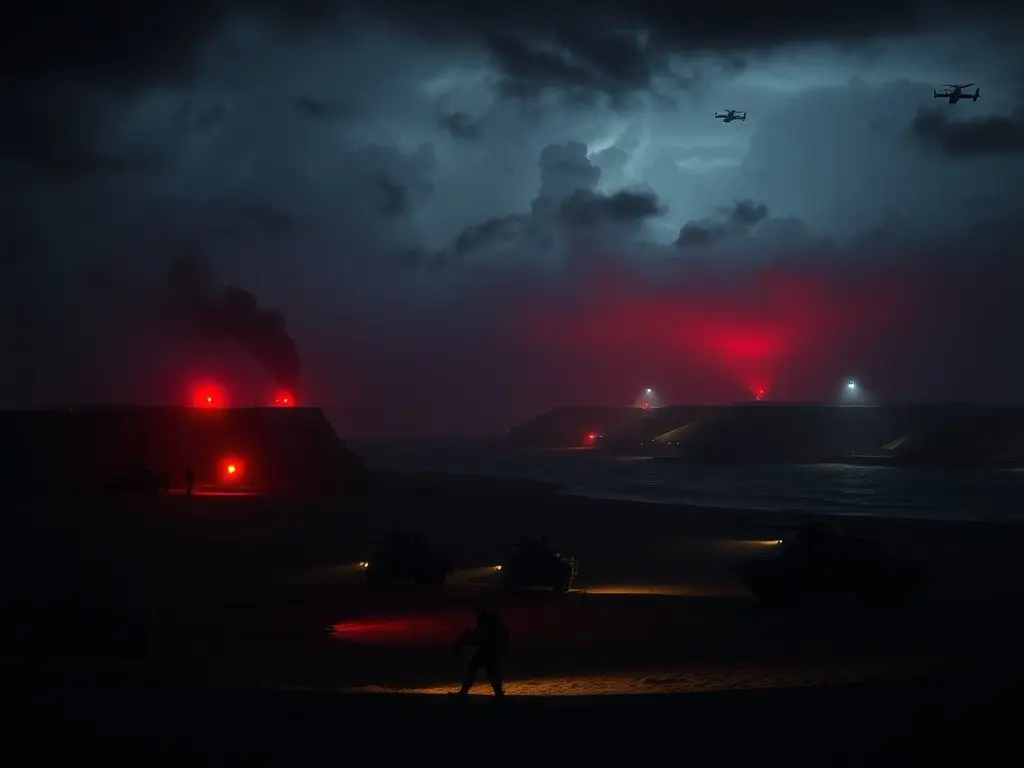
The US condemned Iran’s ballistic missile launch toward Kuwait as a ceasefire violation, while Israel struck a Hezbollah commander in Beirut, killing dozens. Israeli Prime Minister Benjamin Netanyahu ordered military control over 70% of Gaza, escalating tensions amid US threats against Oman for potentially aiding Iran in the Strait of Hormuz.
The US Central Command confirmed Iran launched a ballistic missile toward Kuwait overnight, which was intercepted, calling it an ‘egregious ceasefire violation.’ Iran’s Islamic Revolutionary Guard Corps claimed the attack targeted an American air base in response to US strikes on Iranian drones and a launch site near the Strait of Hormuz, according to a US official. Israel conducted its first strike in Beirut in weeks, targeting a Hezbollah missile unit commander, an Israeli source said. Lebanon’s Health Ministry reported dozens of fatalities from Wednesday’s Israeli strikes, while Israel’s military issued evacuation warnings for more southern Lebanese cities. US Treasury Secretary Scott Bessent warned Oman against supporting Iran’s proposed toll system in the Strait of Hormuz, threatening economic penalties. Earlier, President Donald Trump had vowed to ‘blow up’ Oman if it collaborated with Iran to control the strait. Israeli Prime Minister Benjamin Netanyahu announced plans to direct the military to seize 70% of Gaza’s territory, expanding from the current 60% control. The move risks displacing 2 million Palestinians into a shrinking area, violating the October 2025 ceasefire agreement, which had Israel at roughly 53% of Gaza. Hamas accused Israel of undermining the ceasefire by shifting the ‘yellow line’ demarcation. The escalating strikes between Tehran and Washington highlight three major obstacles to a ceasefire: Iran’s refusal to negotiate without US sanctions relief, Israel’s demand for Hamas’ complete disarmament, and the risk of regional expansion if Hezbollah or Yemen’s Houthis join the conflict.
This content was automatically generated and/or translated by AI. It may contain inaccuracies. Please refer to the original sources for verification.