US-Iran War Live Updates: G7 backs Iran deal, says Tehran 'will never obtain a nuclear weapon'
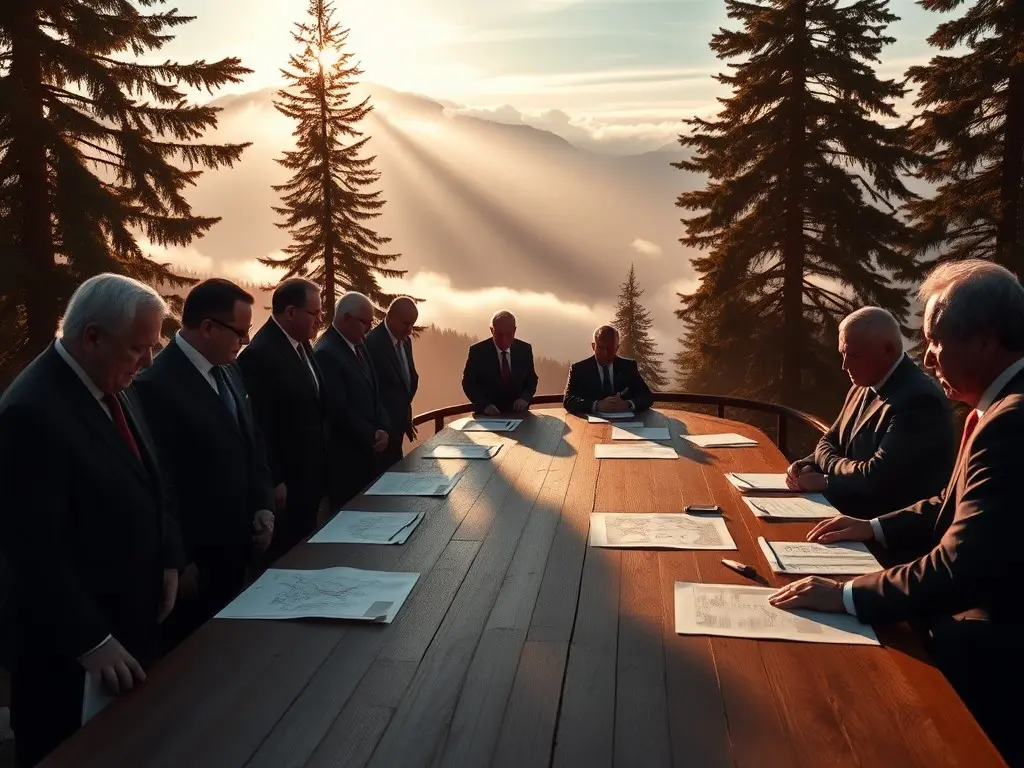
The G7 and US-backed framework for ending the West Asia conflict will be signed at Switzerland’s Burgenstock resort, easing sanctions on Iranian oil exports and freezing nuclear negotiations for two months, while a $300 billion private investment fund aims to revive Iran’s economy. US President Donald Trump warned the memorandum of understanding is provisional, threatening military action if Iran fails to comply, while Iranian Parliament Speaker Mohammad Bagher Ghalibaf urged economic development over confrontation.
A framework to end the West Asia conflict will be formally signed at Switzerland’s Burgenstock resort, triggering immediate sanctions relief for Iranian oil exports and launching a two-month negotiation period focused on Tehran’s nuclear program. The deal also includes provisions to unfreeze some Iranian overseas assets and reopen the Strait of Hormuz, a critical global energy route. A proposed $300 billion private investment fund—backed by commitments from US, Gulf, and other regional firms—aims to boost Iran’s energy, transport, logistics, and manufacturing sectors, though the arrangement remains unofficially announced. Oil prices declined further as investors reacted to easing tensions, with Brent crude falling below $80 a barrel and US benchmark West Texas Intermediate near $77, marking a 15% drop over four sessions. Iranian Parliament Speaker Mohammad Bagher Ghalibaf emphasized shifting focus from conflict to economic growth, calling for reduced financial burdens on citizens and prioritizing national development. He highlighted China as a key strategic partner and urged Beijing to view Iran as a committed ally in potential regional blocs. US President Donald Trump described the deal as a ‘very strong’ memorandum of understanding (MoU) but stressed it is not final, warning that military action could resume if Iran fails to comply. He rejected reports of a US-funded investment vehicle in Iran and predicted oil prices could drop below pre-war levels as energy supplies normalize. Trump also cautioned that the agreement remains provisional, stating, ‘If I don’t like it, we go back to shooting at Iran,’ and ‘If Iran does not comply... we go right back to dropping bombs.’ Pope Leo XIV welcomed the peace agreement, calling it the result of ‘patient work in dialogue and negotiation’ and expressing hope it would strengthen regional trust and stability. The Vatican’s endorsement came as Trump, alongside Egyptian President Abdel Fattah el-Sisi, reiterated the deal’s provisional status and the risk of renewed military action. US Vice President JD Vance outlined the accord’s three core objectives: preventing Iran from acquiring nuclear weapons, reopening the Strait of Hormuz, and securing broader regional stability.
This content was automatically generated and/or translated by AI. It may contain inaccuracies. Please refer to the original sources for verification.