US launches airstrikes on Iran after blaming Tehran for helicopter crash, prompting retaliation
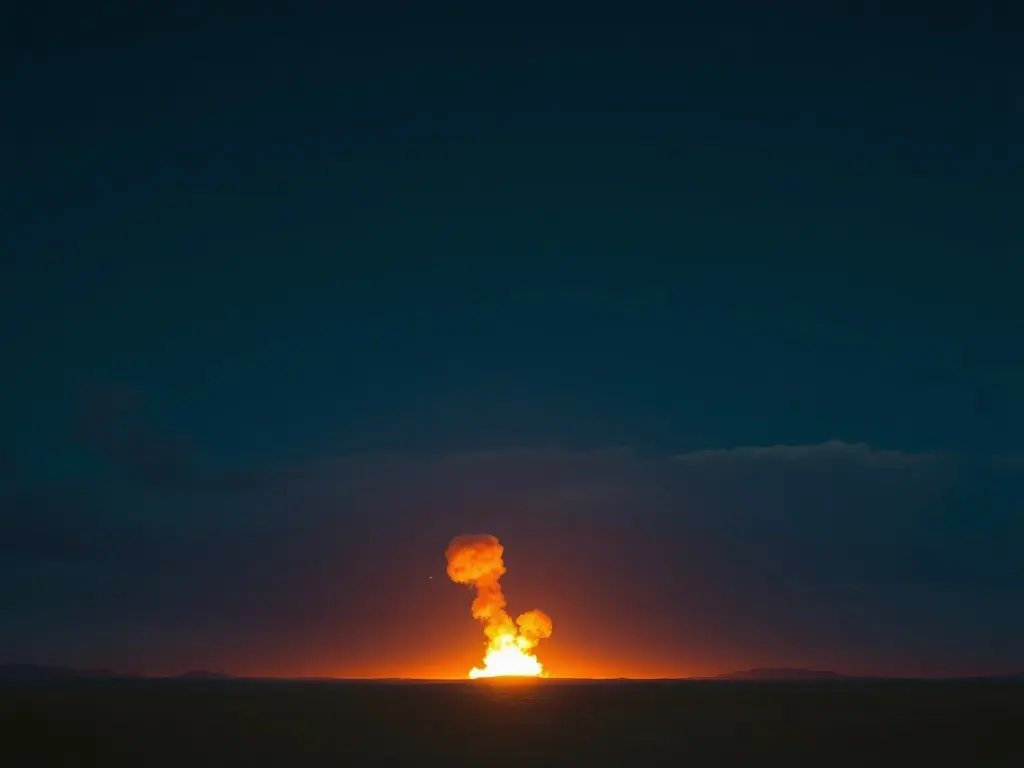
The United States launched airstrikes on Iran early Wednesday after blaming Tehran for the crash of an American attack helicopter in the Strait of Hormuz, which Iran responded to with missile attacks on Bahrain, Kuwait, and a U.S.-hosted base in Jordan. Iran acknowledged strikes in Bandar Abbas and Qeshm Island while U.S. Central Command confirmed targeting Iranian air defense and radar sites, citing proportional retaliation for attacks on U.S. forces and commercial ships.
The United States conducted airstrikes in Iran on Wednesday, targeting air defense, ground control stations, and surveillance radar sites in response to the crash of an American AH-64 Apache attack helicopter near the Strait of Hormuz. A U.S. official stated the helicopter collided with an Iranian drone during a patrol off Oman’s coast, with both crew members rescued unharmed by a drone boat at 3:30 a.m. local time on Tuesday. Iran retaliated by launching missiles at Bahrain, Kuwait, and Jordan’s Muwaffaq Salti Air Base, which hosts U.S. forces. Jordan’s military shot down five missiles, while Bahrain and Kuwait activated air defenses. Iran confirmed strikes near Bandar Abbas and Qeshm Island but provided no details on damage. U.S. Central Command described the operation as a proportional response to recent attacks on U.S. forces and international commercial ships in regional waters. Iranian Foreign Minister Abbas Araghchi warned foreign military forces near Iran’s territory remain at risk and vowed retaliation, urging their withdrawal for safety. The escalation follows a fragile April ceasefire that has yet to yield a lasting deal, particularly as Israel expands its military campaign in Lebanon against Hezbollah, an Iranian-backed militia. Iranian state media reported earlier that Israeli strikes killed at least two members of Iran’s air-defense units, further straining the truce. The conflict has already disrupted global markets, driving up energy and food prices amid growing concerns over regional stability. Officials have struggled to convert the ceasefire into a permanent resolution, with tensions rising following Tuesday’s exchange of fire between Iran and Israel.
This content was automatically generated and/or translated by AI. It may contain inaccuracies. Please refer to the original sources for verification.