US Startup Rovex Launches World’s First Autonomous Patient Transport Robot
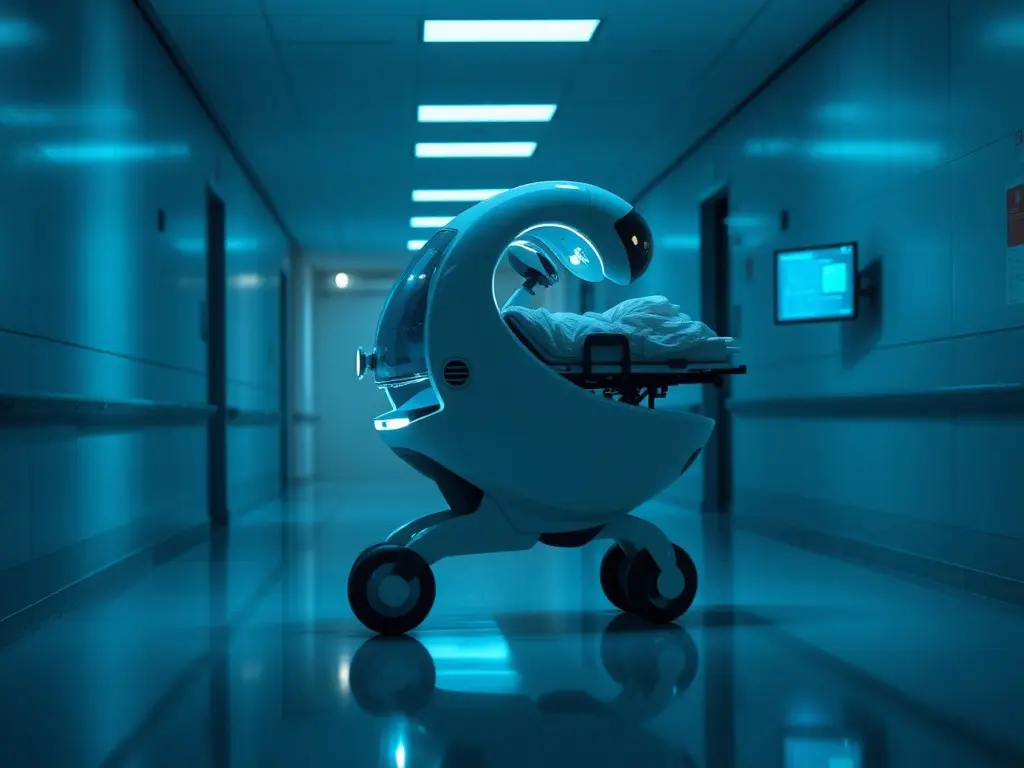
Florida-based startup Rovex launched Rovi, the world’s first autonomous patient transport robot designed to attach to stretchers and navigate hospital corridors independently, aiming to reduce delays and improve efficiency. The robot features 360° obstacle detection, pre-programmed simulations, and efficiency analytics, with plans to expand compatibility to hospital beds and wheelchairs, amid a growing $4.6 billion global hospital robotics market by 2030.
Florida-based startup Rovex has introduced Rovi, the world’s first autonomous patient transport robot. The device attaches to existing stretchers and moves patients through hospital corridors independently, using 360° obstacle detection and computer vision to navigate without major infrastructure changes. Rovi includes a screen to inform patients of their destination and purpose, while also capturing logistics data to identify bottlenecks like imaging delays during peak hours. The robot operates at walking speed, greets patients, and connects them to care teams, prioritizing low-acuity transfers to ensure dignity and comfort. Rovex claims that nine to ten Rovis can handle the transport needs of a large hospital, reducing staff workload and improving bed turnover. Future updates will extend compatibility to hospital beds and wheelchairs. Rovi’s launch aligns with the global hospital robotics market, projected to grow from $2.26 billion in 2025 to $4.6 billion by 2030. Demand is driven by staff shortages, rising surgical volumes, and the need for automation in logistics and infection control. The robot addresses a key gap in healthcare automation, focusing on patient transport rather than supply delivery, positioning Rovex as a first mover in this niche. The system pre-programs virtual transports to learn hospital layouts, ensuring smooth navigation through corridors, elevators, and doors. Safety and efficiency are central to its design, with analytics identifying operational bottlenecks to further optimize workflows. Rovi’s ability to integrate with existing stretchers and its patient-centered features set it apart from competitors like Diligent’s Moxi, which primarily handles non-patient logistics.
This content was automatically generated and/or translated by AI. It may contain inaccuracies. Please refer to the original sources for verification.