US strikes sites after Iran launches drones
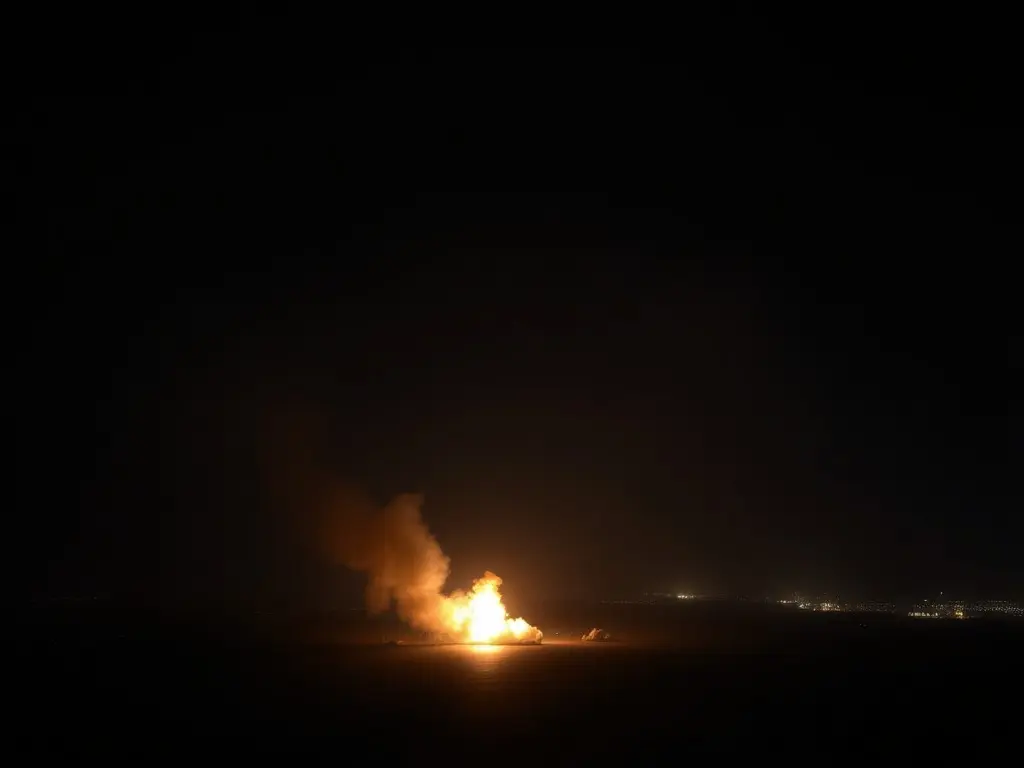
US forces struck Iranian coastal radar sites on Saturday after shooting down four drones launched toward the Strait of Hormuz, escalating tensions. Iran retaliated by targeting US bases in Kuwait and Bahrain with ballistic missiles, though most were intercepted, and blocked tankers from crossing the strait.
US forces conducted strikes on Iranian coastal radar sites in Goruk and Qeshm Island on Saturday after intercepting four Iranian drones heading toward the Strait of Hormuz. A US official stated the drones were targeting regional maritime traffic, marking the latest escalation in the ongoing conflict between the two nations. Iran’s foreign ministry condemned the US action as a violation of an April 8 ceasefire, warning of consequences for further escalation. Iran’s Revolutionary Guard Corps retaliated by launching ballistic missiles at US bases in Kuwait and Bahrain, while also firing at four tankers attempting to cross the Strait of Hormuz without permission. Kuwait’s army reported engaging seven incoming missiles, with debris falling in residential areas but no casualties, while Bahrain issued shelter-in-place alerts. Both countries condemned the attacks, with Kuwait’s foreign ministry calling them 'blatant' aggression threatening regional security. The US military confirmed that six of Iran’s missiles were intercepted, while a seventh did not reach its target. Negotiations for an interim deal to halt the three-month-old war remain stalled amid periodic skirmishes. Iran has demanded access to frozen oil revenues, sanctions relief, and control over the Strait of Hormuz, a critical global shipping route now partially blocked by Tehran. Pakistan’s interior minister, Mohsin Naqvi, traveled to Tehran to deliver a message from Supreme Leader Mojtaba Khamenei, signaling continued mediation efforts. Meanwhile, US President Donald Trump faced domestic pressure to end the war, citing Iran’s retained missile and drone capabilities—estimating they still possess about 21%-22% of their original arsenal. The conflict has disrupted global oil supplies, driving up prices and worsening food insecurity, as highlighted by the UN World Food Programme. Since the US-Israel-led war began on February 28, Iran has targeted Gulf states hosting US bases and restricted shipping through the Strait of Hormuz, exacerbating supply chain disruptions. Iranian officials, including Supreme Leader adviser Mohsen Rezaei, have tied a potential peace deal to broader sanctions relief and economic concessions.
This content was automatically generated and/or translated by AI. It may contain inaccuracies. Please refer to the original sources for verification.