Vasai-Virar turns to nature to restore lakes
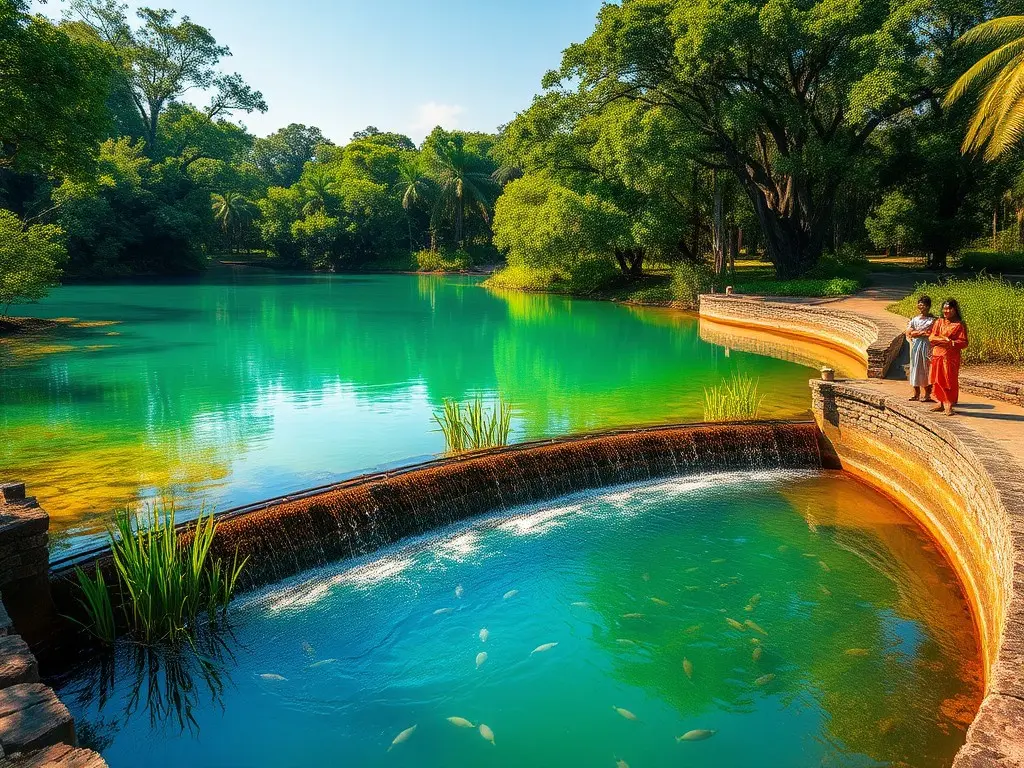
Vasai-Virar City Municipal Corporation (VVCMC) is expanding a pilot programme to restore four polluted lakes using Japanese nature-based technology, after initial success at Satpala Lake in Virar west. The project, funded by the United Nations Development Programme, aims to purify wastewater naturally, rebuild natural embankments, and revive groundwater levels, benefiting local livelihoods like fishing." "article": "The Vasai-Virar City Municipal Corporation (VVCMC) is scaling up a lake restoration initiative after a pilot project at Satpala Lake in Virar west demonstrated promising results. Commissioner Prithviraj PB announced plans to restore four additional lakes—Nirmal Talao, Sambhale Lake, Dhanivbaug Lake, and Chandansar Lake—all in the Virar region, using nature-based solutions. The project follows a 2022 survey by the Society for Promotion of Area Resource Centre (SPARC), which found 122 of the region’s 184 lakes were polluted due to sewage, industrial effluents, and waste dumping. The Satpala Lake pilot, launched in March 2024 with ₹2.46 crore funding, employs Japanese technology to purify contaminated water before releasing it into the lake. A natural embankment made of stone and soil prevents waste dumping while reactivating groundwater and underground springs. Previously, concrete embankments had disrupted ecosystems, drying up springs and halting water circulation. Local villagers, including members of the Satpala Gram Panchayat and a newly formed Natural Restoration Committee, have actively participated in monitoring the project. Umesh Patil, a resident, noted that fish from the lake were unsafe to eat for five years but are now being reintroduced. The initiative also involves constructing a weir to filter sewage naturally before it enters the lake, improving water quality and groundwater levels. VVCMC selected the four new lakes based on their severe pollution levels, aiming to replicate Satpala’s success. The project aligns with broader efforts to restore ecological balance in the region, where most lakes have suffered from decades of neglect. Commissioner Prithviraj PB emphasized that natural purification methods will serve as a model for future lake conservation in Vasai-Virar.
The Vasai-Virar City Municipal Corporation (VVCMC) is scaling up a lake restoration initiative after a pilot project at Satpala Lake in Virar west demonstrated promising results. Commissioner Prithviraj PB announced plans to restore four additional lakes—Nirmal Talao, Sambhale Lake, Dhanivbaug Lake, and Chandansar Lake—all in the Virar region, using nature-based solutions. The project follows a 2022 survey by the Society for Promotion of Area Resource Centre (SPARC), which found 122 of the region’s 184 lakes were polluted due to sewage, industrial effluents, and waste dumping. The Satpala Lake pilot, launched in March 2024 with ₹2.46 crore funding, employs Japanese technology to purify contaminated water before releasing it into the lake. A natural embankment made of stone and soil prevents waste dumping while reactivating groundwater and underground springs. Previously, concrete embankments had disrupted ecosystems, drying up springs and halting water circulation. Local villagers, including members of the Satpala Gram Panchayat and a newly formed Natural Restoration Committee, have actively participated in monitoring the project. Umesh Patil, a resident, noted that fish from the lake were unsafe to eat for five years but are now being reintroduced. The initiative also involves constructing a weir to filter sewage naturally before it enters the lake, improving water quality and groundwater levels. VVCMC selected the four new lakes based on their severe pollution levels, aiming to replicate Satpala’s success. The project aligns with broader efforts to restore ecological balance in the region, where most lakes have suffered from decades of neglect. Commissioner Prithviraj PB emphasized that natural purification methods will serve as a model for future lake conservation in Vasai-Virar.
This content was automatically generated and/or translated by AI. It may contain inaccuracies. Please refer to the original sources for verification.