Vietnam advances space technology with breakthrough in composite materials
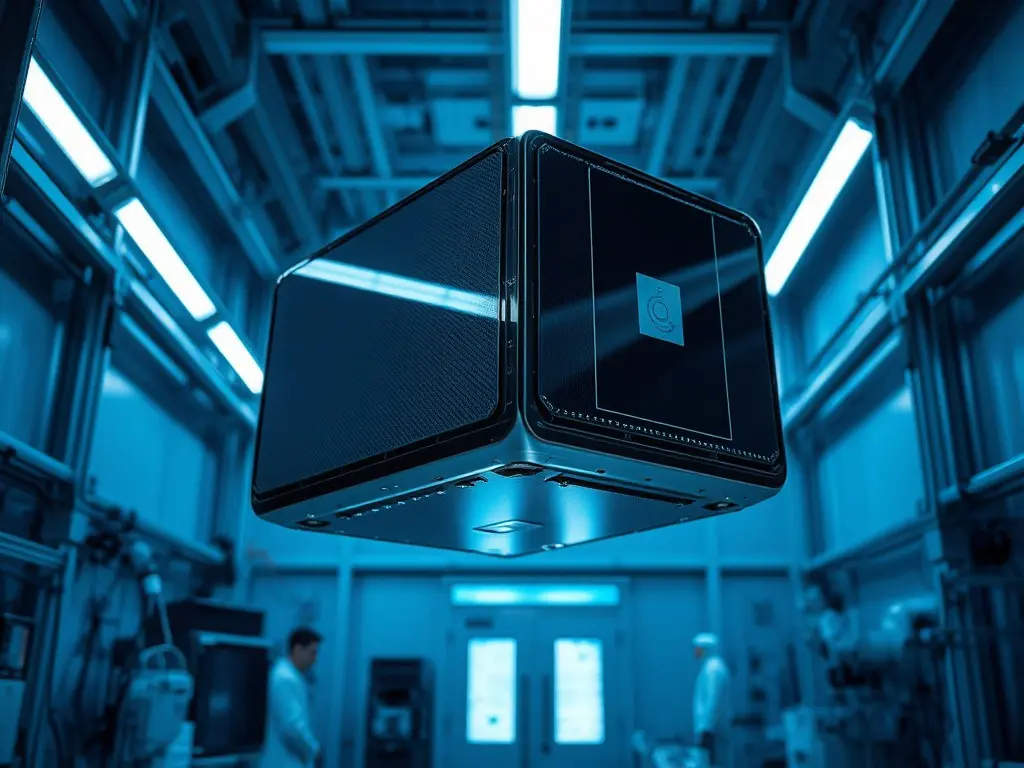
Vietnam’s Vietnam National Space Centre developed carbon fibre-reinforced polymer (CFRP) composites enhanced with carbon nanomaterials for satellite enclosures, reducing weight by 70% compared to aluminium while improving structural stability. The breakthrough, led by Dr To Anh Duc, marks progress toward Vietnam’s goal of autonomous satellite technology and was tested under launch-like vibration conditions from January 2024 to December 2025.
Vietnam has advanced its space technology by successfully developing lightweight composite materials for satellite applications. Researchers at the Vietnam National Space Centre, under the Vietnam Academy of Science and Technology, focused on improving carbon fibre-reinforced polymer (CFRP) composites by addressing the brittleness of epoxy resin used in satellite enclosures. Led by Dr To Anh Duc, the team incorporated chemically modified carbon nanotubes into the resin, achieving uniform dispersion and significantly enhancing structural stability. The project, conducted from January 2024 to December 2025, resulted in a prototype enclosure weighing 65 grams—about 70% lighter than an aluminium equivalent—while maintaining stiffness and structural integrity. Vibration tests simulating launch conditions confirmed the material’s reliability, with minimal deviation from international standards. The treated nanotubes, particularly at a 0.2% concentration, improved load-bearing capacity and deformation tolerance, outperforming untreated materials. The breakthrough supports Vietnam’s long-term goal of building autonomous satellite technology, reducing dependence on foreign components. Dr Le Xuan Huy, Vice Director General of the Vietnam National Space Centre, emphasized that such research is critical for incremental technological self-reliance. The team developed a complete production process, from nano-dispersion to integration, validating the material’s potential for real-world applications. While further testing is required before full deployment, the project provides valuable data and expertise for Vietnam’s broader space ambitions. The composite material’s advantages—reduced weight and optimized performance—highlight its potential for modern satellite design, where efficiency and reliability are key priorities.
This content was automatically generated and/or translated by AI. It may contain inaccuracies. Please refer to the original sources for verification.