Vigilance Without Panic: How Prepared Is India To Handle An Ebola Outbreak?
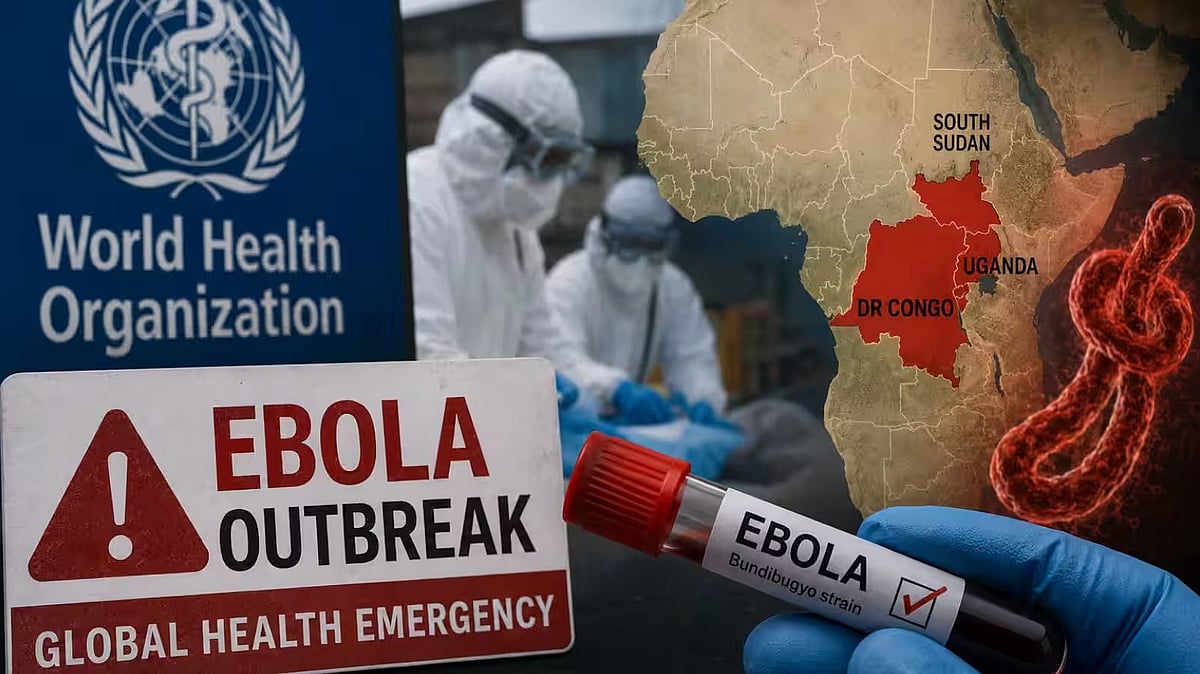
India’s health ministry issued an Ebola preparedness SOP on May 21 and advised avoiding non-essential travel to DRC, Uganda, and South Sudan, while enhancing airport surveillance and state-level protocols to detect and contain potential cases. With no confirmed Ebola cases in India but heightened global alerts, authorities emphasize monitoring without panic, though concerns remain over the country’s ability to manage another deadly viral outbreak after COVID-19.
India’s government has activated nationwide measures to prepare for a potential Ebola outbreak amid rising cases in Africa. On May 21, the Health Ministry released a standard operating procedure (SOP) for Ebola preparedness, including guidelines on hospital infection control, isolation facilities, and safe handling of deceased patients. Union Health Minister Jagat Prakash Nadda reviewed the country’s readiness on May 25 following the World Health Organization’s declaration of the outbreak as a Public Health Emergency of International Concern (PHEIC). The government advises Indians to avoid non-essential travel to the Democratic Republic of Congo, Uganda, and South Sudan until further notice. Enhanced surveillance has been initiated at airports and entry points, with states and Union Territories issued protocols for screening travelers, quarantine, clinical management, and laboratory testing. Agencies including the National Centre for Disease Control (NCDC), Indian Council of Medical Research (ICMR), and Directorate General of Health Services (DGHS) are on alert for tracking and containment. Ebola Virus Disease (EVD) spreads through direct contact with infected bodily fluids, with fatality rates ranging from 25% to 90% depending on the strain. Unlike COVID-19, Ebola does not typically spread before symptoms appear, but transmission risk increases sharply once symptoms develop. Early signs—fever, weakness, headache, and body ache—resemble dengue, malaria, influenza, and COVID-19, making travel history critical for diagnosis in India, where these diseases are common. A senior health official stated that authorities are monitoring the situation to the maximum extent, emphasizing no confirmed Ebola cases in India but urging vigilance. Dr. Neeraj Nischal, an infectious disease specialist at AIIMS New Delhi, warned that global connectivity means outbreaks in Africa can pose risks worldwide. With no approved vaccine for the current Bundibugyo strain and lingering COVID-19 challenges, India’s health system faces scrutiny over its ability to detect and contain another deadly viral threat.
This content was automatically generated and/or translated by AI. It may contain inaccuracies. Please refer to the original sources for verification.