Vijay at the centre of Tamil Nadu battle: Why Khushbu, Kamal Haasan and Chidambaram backing TVK
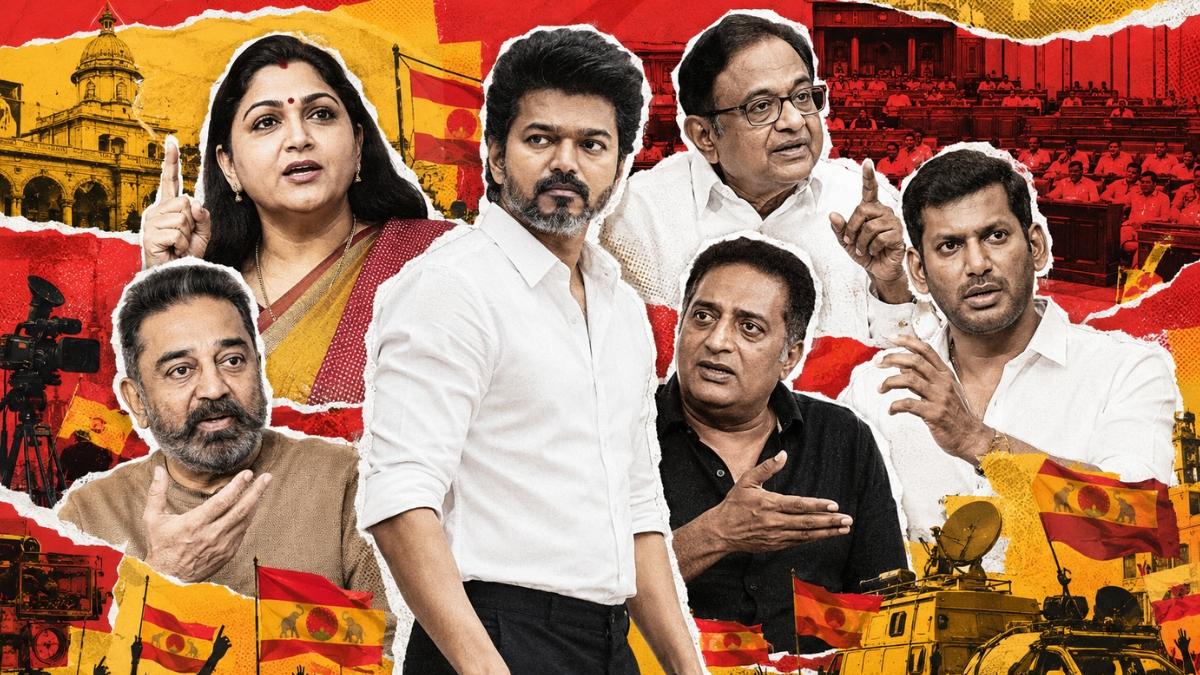
Tamilaga Vettri Kazhagam (TVK), led by actor Vijay, won 108 seats in Tamil Nadu’s Assembly elections but lacks the 118 majority to form government independently, sparking a political deadlock. Key figures like Khushbu Sundar, Kamal Haasan, and P. Chidambaram have backed Vijay’s right to govern, while the Governor has delayed a decision pending clarity on majority support.
Tamil Nadu is facing a political crisis after actor-turned-politician Vijay’s party, Tamilaga Vettri Kazhagam (TVK), emerged as the single largest party in the state’s Assembly elections with 108 seats. Despite the victory, TVK falls short of the 118-seat majority needed to form a government independently, leaving the state in constitutional uncertainty. The Governor, Rajendra Vishwanath Arlekar, has not yet invited Vijay to form the government, citing unresolved questions about majority support. TVK is reportedly preparing to approach the Supreme Court, arguing its right to govern as the largest party. Meanwhile, no alliance has crossed the majority threshold, with Congress and AIADMK refusing to align with TVK, while DMK and AIADMK are reportedly in backchannel discussions. TVK MLAs have threatened to resign if another party is allowed to form the government despite their seat lead. The situation has created a complex standoff, with Vijay’s rapid rise disrupting Tamil Nadu’s long-standing two-party dominance by DMK and AIADMK. Vijay’s campaign leveraged his massive fan base, focusing on youth outreach, anti-corruption messaging, and welfare promises, surprising political analysts who expected opposition rather than outright victory. His party’s performance suggests a shift among first-time voters and urban middle-class voters. Actress and BJP vice-president Khushbu Sundar publicly backed Vijay, arguing that elected leaders should govern regardless of party alliances. Her support, despite her BJP affiliation and personal ties to Vijay, has added another layer to the political maneuvering in the state.
This content was automatically generated and/or translated by AI. It may contain inaccuracies. Please refer to the original sources for verification.