Wall Street is moving its biggest assets onto the blockchain
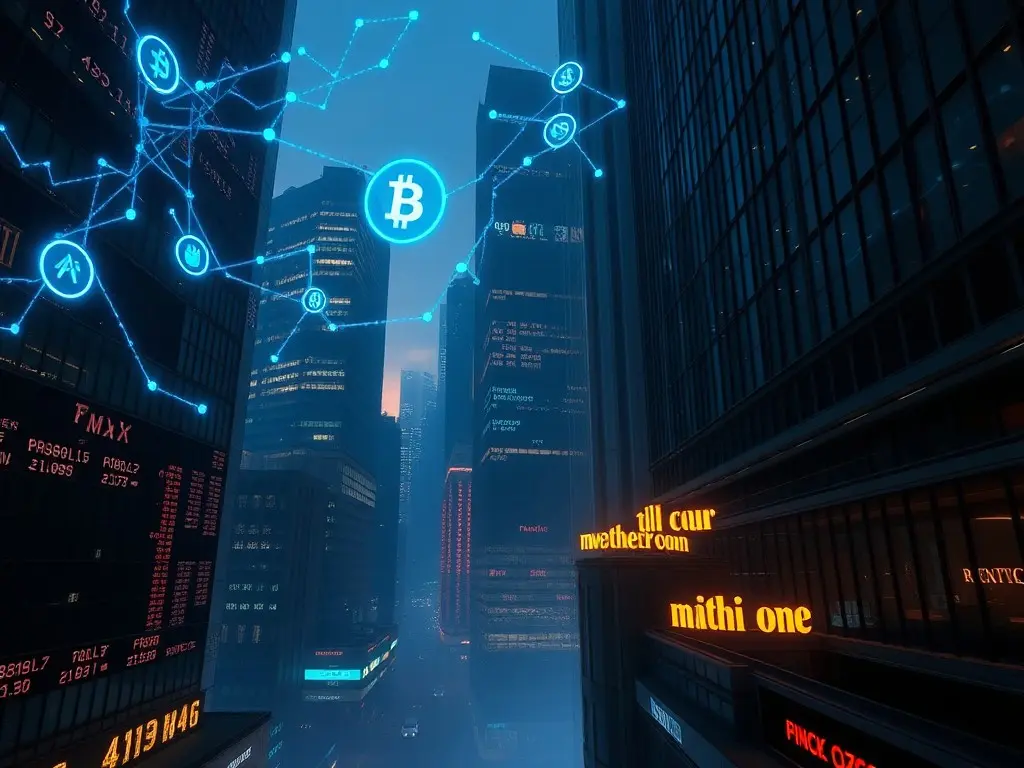
Major financial firms are accelerating the shift of traditional assets like the S&P 500 onto blockchain infrastructure, aiming to enable 24/7 trading and programmable asset management. Industry leaders describe tokenization as a systemic upgrade to financial market infrastructure, though regulatory hurdles and scalability remain key challenges.
Wall Street firms and crypto companies are rapidly advancing the tokenization of traditional financial assets, including the S&P 500, to modernize market infrastructure. Tokenized versions of assets—such as treasury funds and stock indices—could enable 24/7 trading, near-instant settlement, and automated compliance, replacing legacy brokerage systems. Executives compare the shift to the transition from voice to electronic trading, with 360X Co-CEO Michael F. Spitz predicting a hybrid model where traditional participants adopt onchain assets for operations like real-time hedging. The Depository Trust & Clearing Corporation’s (DTCC) recent tokenization initiatives signal growing institutional adoption. Beyond trading hours, programmability is a major focus. Centrifuge’s SPXA, a tokenized S&P 500, aims to function as a programmable asset within lending markets and smart contracts, allowing positions to interact dynamically. Co-Founder Anil Sood argues this could redefine asset utility beyond passive ownership. Regulatory clarity remains the biggest obstacle, particularly around custody, securities laws, and cross-border compliance. Firms like Superstate and Brickken emphasize that tokenization is an infrastructure upgrade, not a new asset class, but scalability and interoperability with existing systems must also be addressed. The race to tokenize assets reflects broader efforts to streamline global financial markets, though widespread adoption hinges on resolving technical, legal, and operational barriers.
This content was automatically generated and/or translated by AI. It may contain inaccuracies. Please refer to the original sources for verification.