Warning climate change could threaten Britain’s beloved cup of tea
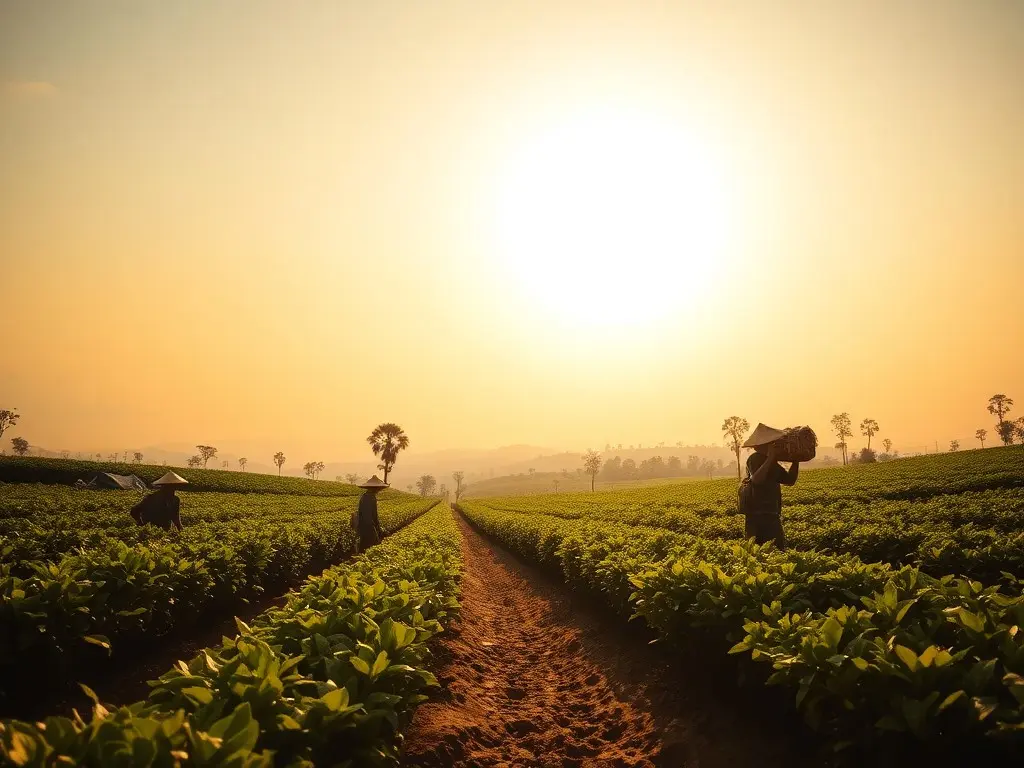
A Christian Aid report warns climate change will alter tea flavor profiles in key producing regions like Kenya, India, and Sri Lanka, leading to bitterer, less consistent brews. Rising temperatures and erratic rainfall disrupt optimal growing conditions, threatening yields, prices, and smallholder farmers' livelihoods while increasing reliance on adaptation measures like shade trees and irrigation systems.
A new report by Christian Aid reveals climate change is threatening the taste and reliability of Britain’s beloved cup of tea. Rising global temperatures and extreme weather patterns are disrupting tea production in key regions such as Kenya, India, and Sri Lanka, where optimal growing conditions—stable temperatures between 13°C and 30°C and consistent rainfall—are increasingly disrupted. Higher temperatures boost astringent compounds, making tea more bitter, while erratic rainfall dilutes flavor profiles, reducing quality and consistency. The charity warns smallholder farmers, who contribute to over 70% of global tea production, face severe financial and operational challenges. Climate-related disruptions are compounded by rising costs of fertilizer and fuel, pushing producers in vulnerable regions further into hardship. Christian Aid urges immediate investment in climate-resilient tea plants, improved irrigation, and shade tree planting to protect crops from extreme heat and droughts. Dr. Neha Mittal, a senior climate scientist at the Met Office, notes that tea brands rely on stable flavor profiles, which are now at risk due to climate variability. Erratic weather also increases pest pressure, further reducing yields and quality. The report highlights that floods, droughts, and unpredictable seasons are already altering tea leaf size and flavor, as seen in Kenya’s Kericho County, where farmer Reuben Korir reports smaller leaves and diminished taste during dry spells. Christian Aid calls for fair pricing, targeted climate adaptation funding, and stronger worker protections to safeguard tea production. Without intervention, the report warns, Britain’s iconic brew could become more bitter, expensive, and unreliable, with smallholder farmers bearing the brunt of a crisis they did little to cause. The charity stresses that protecting tea’s future requires both agricultural innovation and equitable support for producers worldwide.
This content was automatically generated and/or translated by AI. It may contain inaccuracies. Please refer to the original sources for verification.