Watch SpaceX set new rocket reuse record with 35th launch — and landing — of a Falcon 9 booster (video)
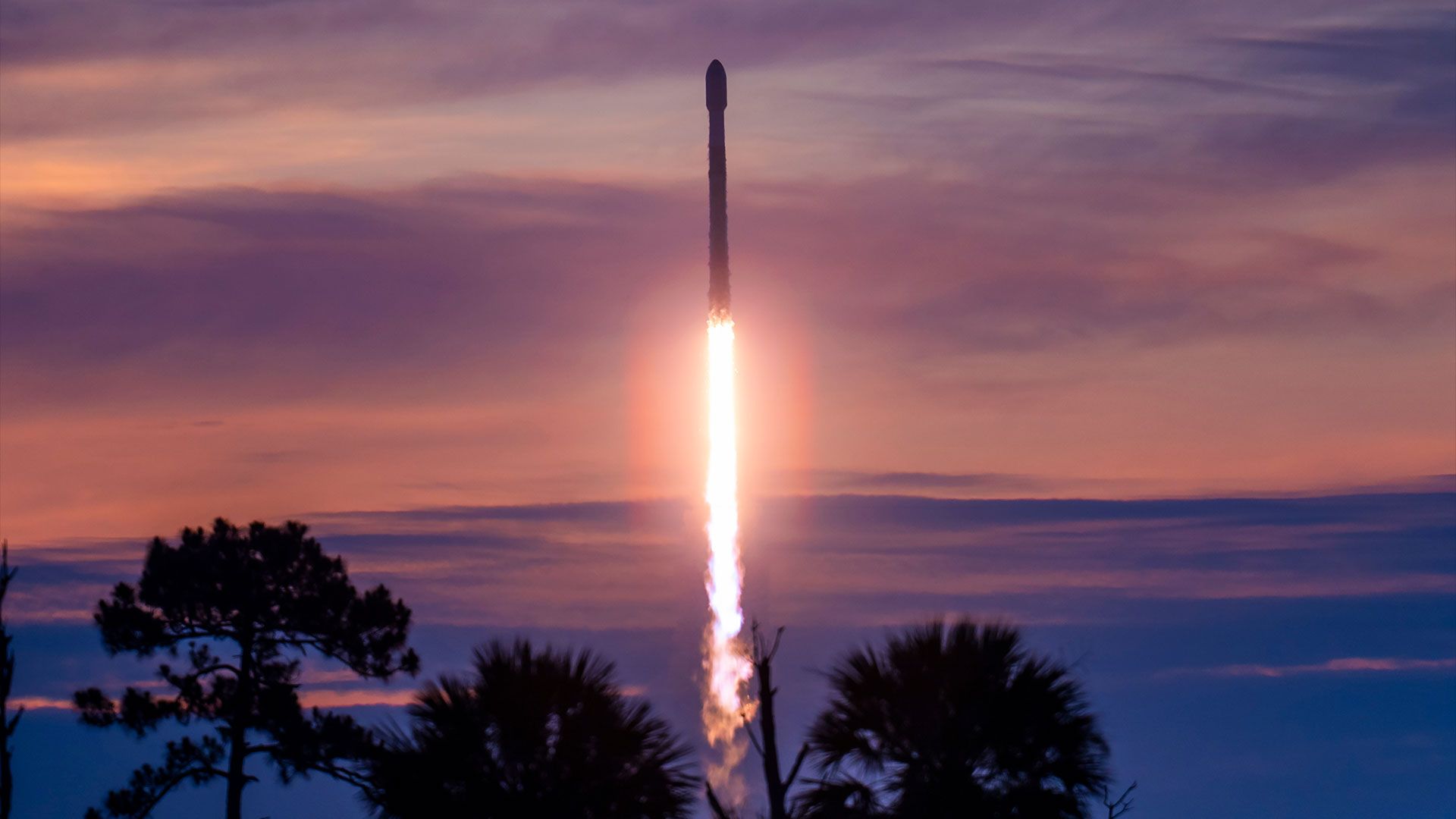
SpaceX launched a Falcon 9 rocket on June 8, marking the 35th flight and landing of Booster 1067, breaking its own rocket reuse record. The mission deployed 29 Starlink satellites, expanding the constellation to over 10,580 active satellites while nearing NASA’s space shuttle reuse record of 39 flights.
SpaceX achieved a new milestone in rocket reuse on June 8, launching a Falcon 9 booster for its 35th time. The mission lifted off at 6:13 a.m. EDT from Cape Canaveral Space Force Station in Florida, carrying 29 Starlink satellites into low Earth orbit. The first stage, Booster 1067, successfully landed on the droneship *A Shortfall of Gravitas* in the Atlantic Ocean, surpassing its previous record and bringing SpaceX closer to NASA’s space shuttle orbiter record of 39 flights. The launch marked SpaceX’s 66th Falcon 9 flight of 2025 and its 660th completed mission overall. The Starlink payload, designated Group 10-35, was deployed approximately an hour after liftoff, expanding the constellation to over 10,580 active satellites, according to satellite tracker Jonathan McDowell. The network continues to grow, providing global broadband internet access, including in-flight connectivity and direct-to-cell services for select carriers. On June 7, SpaceX also launched another Falcon 9 from Vandenberg Space Force Base in California, carrying 21 Starlink satellites alongside two Starshield satellites for the U.S. military. That booster completed its 10th flight, further demonstrating SpaceX’s rapid reusability advancements. The June 8 mission underscores SpaceX’s efficiency in satellite deployment and booster recovery, reinforcing its leadership in reusable launch systems. The company’s focus on reusability has significantly reduced costs and increased launch frequency, enabling rapid expansion of the Starlink megaconstellation.
This content was automatically generated and/or translated by AI. It may contain inaccuracies. Please refer to the original sources for verification.