We can now track animal panic from space. Here's why it matters
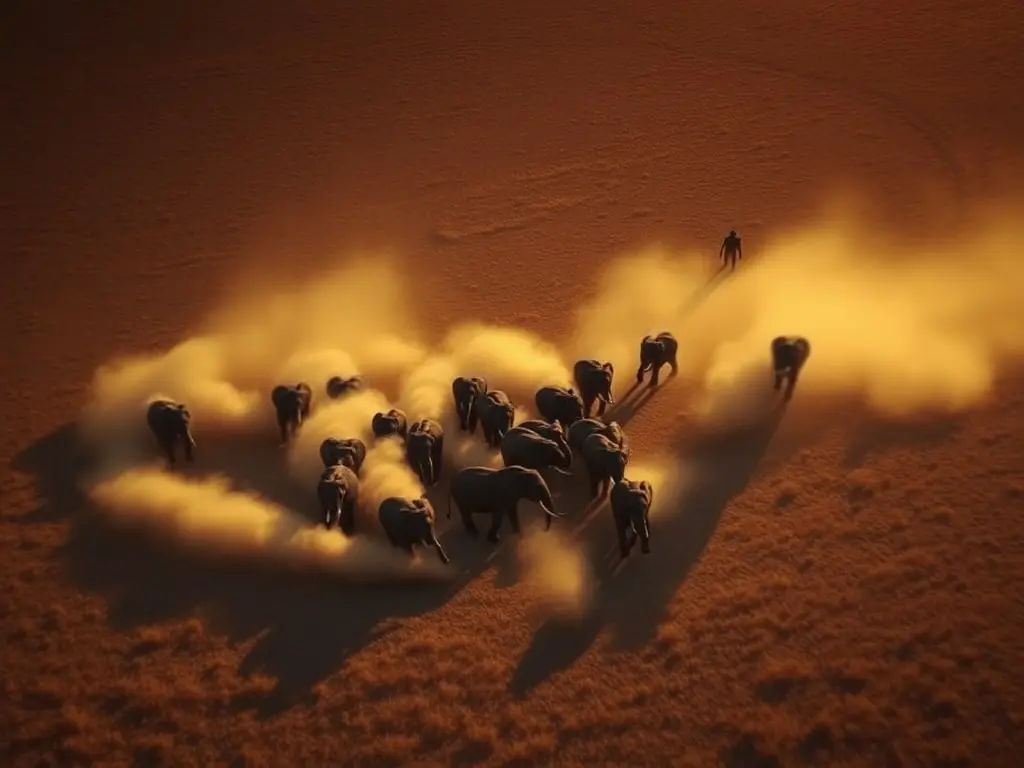
Scientists have developed a satellite-based system called Icarus to track animal panic responses to threats, using GPS-tagged wildlife in Namibia’s Okambara Elephant Lodge to train an AI warning system for poachers. The project, led by Martin Wikelski’s Max Planck Institute, aims to monitor 100,000 animals globally by 2030 to protect endangered species like rhinos and elephants in real time.
A new satellite system called Icarus is now tracking animal behavior from space, enabling scientists to detect panic responses triggered by threats like poachers. In Namibia’s Okambara Elephant Lodge, researchers simulated hunting scenarios using drones and GPS-tagged animals to record how species like wildebeest, zebras, and giraffes react to danger. The data will train an AI algorithm to send real-time alerts to rangers, helping combat poaching in regions like South Africa’s rhino reserves and unmonitored areas such as the Congo Basin. The project, led by ornithologist Martin Wikelski of the Max Planck Institute of Animal Behavior, builds on decades of wildlife tracking technology. Okambara’s 169 sq km reserve serves as a testing ground, where 5% of large animals are fitted with GPS tags to monitor movement patterns. The goal is to expand this system globally, with plans to tag 100,000 animals by 2030 to better understand and protect endangered species. During a three-day experiment in mid-2024, researchers recorded 30 simulated hunting incidents, capturing animal dispersal patterns as they fled from perceived threats. Unlike poachers, the team was unarmed and focused solely on data collection. Giraffes, typically calm, remained unaffected, while other species exhibited distinct panic responses, such as springbok bouncing and zebras galloping. The Icarus satellite, dubbed the ‘Internet of Animals,’ aims to create a worldwide network of real-time alerts for wildlife under threat. Early applications in South Africa’s rhino-heavy national parks show promise, with potential to extend protection to remote, unmonitored regions. The system could revolutionize conservation efforts by providing immediate warnings to rangers when animals exhibit signs of distress.
This content was automatically generated and/or translated by AI. It may contain inaccuracies. Please refer to the original sources for verification.