‘We live with fear’: In Congo, doctors face Ebola with little protection
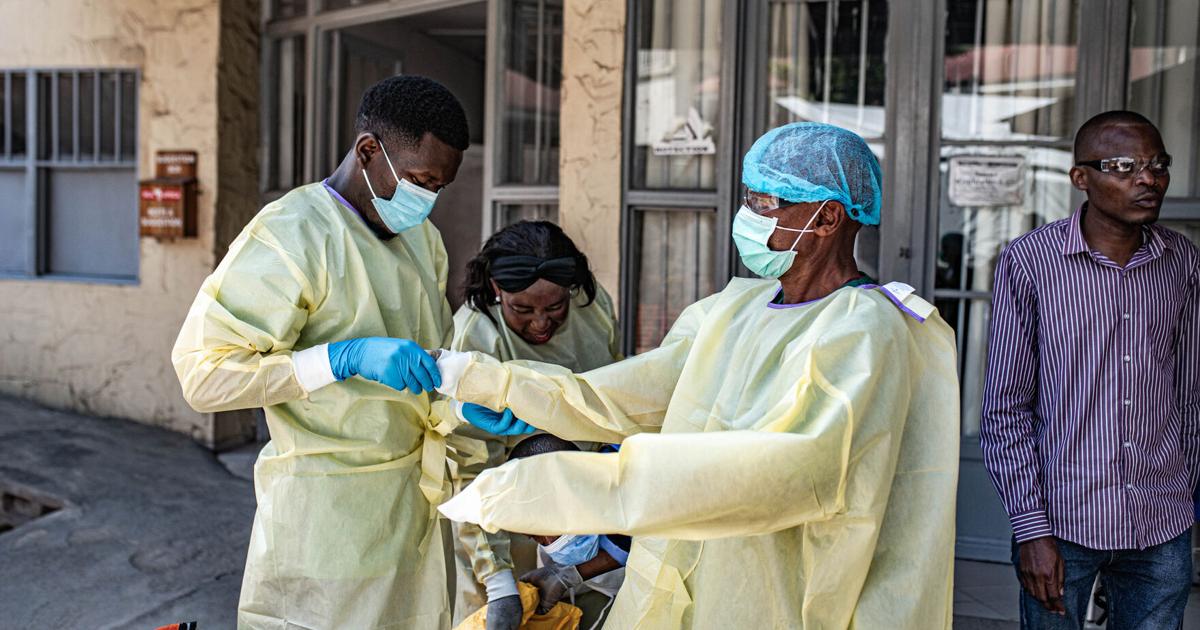
In northeastern Congo’s Ituri province, a 25-year-old midwife and a doctor in their early 30s are showing Ebola symptoms after treating suspected cases in May, but lack testing and protective supplies. The World Health Organization declared the outbreak a global emergency on May 17, with nearly 250 suspected cases and 80 deaths, while health workers warn of worsening shortages due to conflict and logistical delays.
Health workers in the Democratic Republic of Congo’s Ituri province are battling an Ebola outbreak with severe shortages of protective gear and testing capabilities. Elisabeth Furaha, medical director at SOFEPADI’s Karibuni Wa Mama Medical Center, reported that a 25-year-old midwife and a doctor in their early 30s are now showing Ebola symptoms—including fevers and joint pain—after caring for patients with similar symptoms in early May. One of those patients has died, but none of the staff have been tested due to a lack of supplies, including gowns, masks, and Ebola diagnostic tests. The outbreak, confirmed in Congo in late May, has already resulted in nearly 250 suspected cases and 80 deaths, prompting the World Health Organization (WHO) to declare a ‘public health emergency of international concern’ on May 17. The U.S. State Department pledged over $162 million to contain the spread, but health workers say clinics remain critically understocked. Furaha has used personal funds to purchase gloves, masks, and a tarp for a makeshift isolation tent, though she lacks basic supplies like mattresses and reliable testing. Logistical challenges, including suspended flights and roadblocks by armed groups, have delayed medical shipments. Chikwe Ihekweazu, WHO’s Health Emergencies Program director, noted that small humanitarian aircraft are insufficient for large-scale aid distribution. Rafaramalala Volanarisoa, a doctor with Catholic Relief Services, described conditions in Kinshasa as dire, with no medicine, equipment, or disease surveillance. In Goma, Congo’s eastern hub, a molecular biology lab built by the National Institute of Biomedical Research ceased operations after the Rwandan-backed M23 group seized control and closed the airport. Eddy Kinganda-Lusamaki, a microbiologist at the institute, warned that many cities rely on outdated tests that detect only one Ebola strain, complicating early diagnosis. Experts fear the outbreak could escalate without urgent support, risking regional instability. The WHO and UN agencies have sent supplies, but distribution remains inconsistent. Aid workers emphasize the need for sustained funding and improved logistics to prevent further spread. Without better resources, health workers like Furaha continue to operate under extreme risk, treating patients without proper protection.
This content was automatically generated and/or translated by AI. It may contain inaccuracies. Please refer to the original sources for verification.