What kinds of PAI dev kits are available for humanoid robotics?
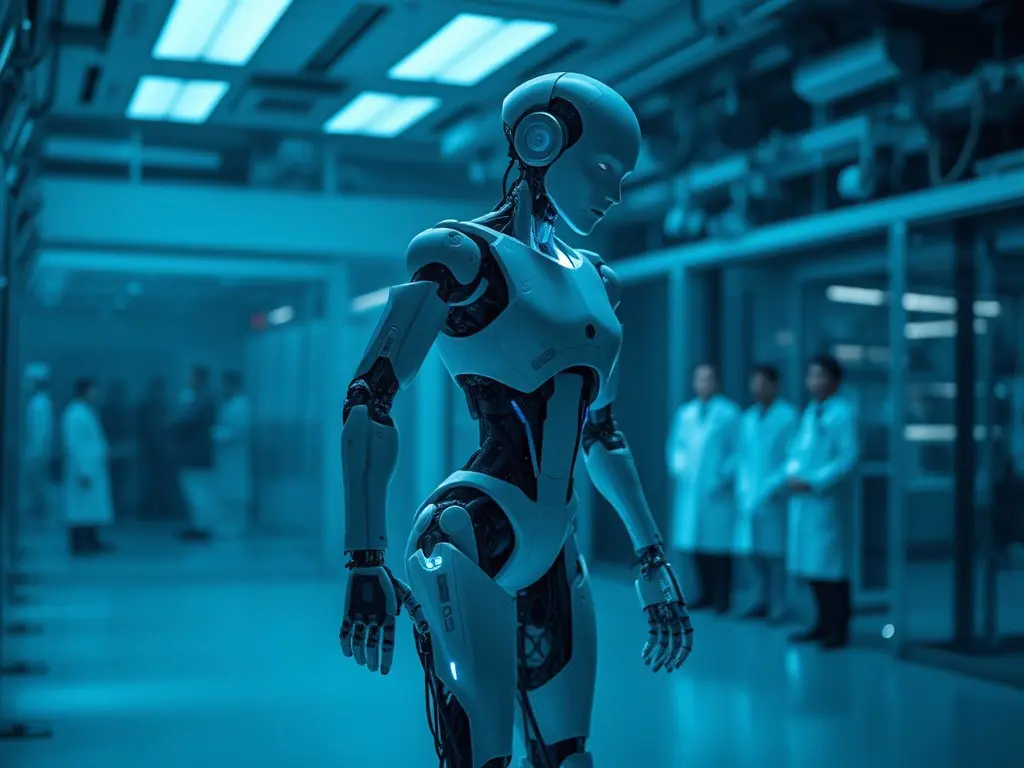
A variety of Physical Artificial Intelligence (PAI) development kits for humanoid robotics are available, ranging from complete platforms like UBTrobot’s human-sized humanoids and semi-humanoid industrial robots to modular, Raspberry Pi-based options and NVIDIA’s AI-focused hardware. These kits support research in motion control, computer vision, reinforcement learning, and ROS-based software ecosystems, catering to both industrial and educational applications.
Physical Artificial Intelligence (PAI) development kits for humanoid robotics span industrial-grade platforms to modular DIY and Raspberry Pi-based options. Complete platforms include UBTrobot’s human-sized humanoids, designed for research in motion control, computer vision, and human-robot interactions. Other examples are the UKit Explore, an Arduino-compatible kit with 16 servos for open-source development, and the Yanshee, an open-source humanoid supporting Python, machine learning, and ROS. Semi-humanoid options like Robotis’s AI Worker combine imitation learning and reinforcement learning for industrial tasks such as logistics and assembly. NVIDIA offers specialized PAI platforms, including the Isaac GR00T for general-purpose humanoid model development and Jetson Thor, delivering up to 2070 FP4 TFLOPS of AI compute with configurable power. These systems accelerate research by providing robust hardware for sensor fusion, navigation, and AI-driven motion control. Robotis also provides a three-tier dev platform family, including a semi-humanoid robot for industrial tasks, a 6-DOF manipulator for research and automation, and a compact 5-DOF manipulator for simpler PAI projects. Software ecosystems play a critical role in integrating these hardware solutions. The Robot Operating System (ROS) and its industrial-grade variant ROSA 2.0 provide open-source frameworks for robotics applications, while NVIDIA’s Isaac Sim enables training in synthetic environments. Additional tools like the QVac AI SDK allow local AI model execution and human-robot interfacing. Sensor streaming and low-latency data processing are essential for PAI development, with technologies like NVIDIA’s Holoscan Sensor Bridge facilitating compatibility across diverse sensor inputs. These tools collectively enable researchers and developers to experiment with humanoid robotics, AI integration, and autonomous systems in both structured and unstructured environments.
This content was automatically generated and/or translated by AI. It may contain inaccuracies. Please refer to the original sources for verification.