What Rolling Back Brexit Would Mean for the UK Economy
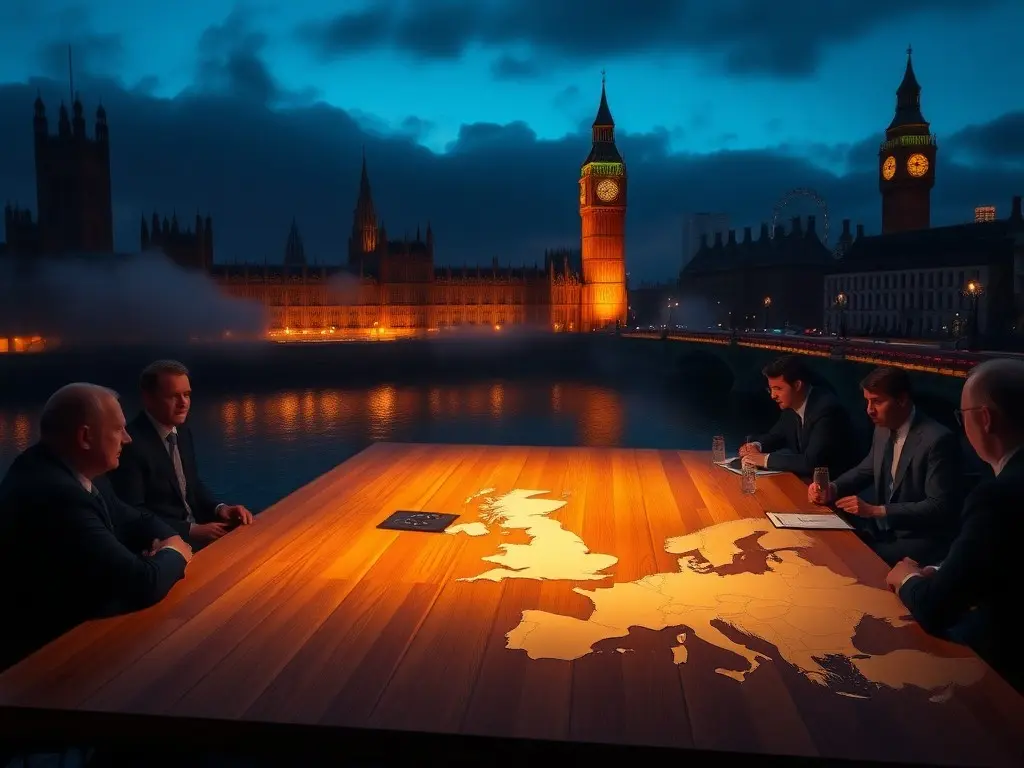
A Bloomberg Economics analysis estimates Brexit has cost the UK between 2% and 4% of its GDP, or about £30 billion annually in lost tax revenue, while Keir Starmer’s Labour government now seeks closer ties with Europe despite political and economic challenges. The study outlines three scenarios for rolling back Brexit effects, all of which avoid restoring full freedom of movement, amid rising support for rejoining the EU and heightened security concerns over Russia and U.S. stability.
A new Bloomberg Economics analysis reveals Brexit has reduced the UK’s gross domestic product by 2% to 4%, equivalent to £30 billion in annual lost tax revenue. The central estimate of 2.5% GDP loss highlights the economic strain of leaving the EU, which accounts for half of the UK’s global goods trade. Keir Starmer’s Labour government, now committed to ‘putting Britain at the heart of Europe,’ faces pressure to reverse Brexit’s economic damage, though polls show a majority now favor rejoining the bloc. Three plausible scenarios for closer EU ties were examined, but none would fully restore pre-Brexit trade levels without reversing key policies like free movement of people. The UK’s political landscape remains divided, with Labour’s leadership under challenge from figures like Andy Burnham and Wes Streeting, while Nigel Farage’s Reform UK leads polls. Former Prime Minister Tony Blair has warned against rushing negotiations before addressing domestic policy questions. Security concerns, including Russia’s invasion of Ukraine and uncertainty over U.S. support under Donald Trump, have intensified calls for compromise within the EU. Economists, including Jonathan Portes of King’s College London, confirm Brexit’s significant economic impact, though closer ties with Brussels come with trade-offs, particularly over immigration. The Leave vote’s opposition to free movement remains a political hurdle, with Starmer ruling out reopening borders amid global immigration backlash. The analysis underscores that even partial reversals of Brexit would require lengthy negotiations and concessions, while public opinion increasingly accepts its economic damage. Geopolitical shifts have weakened the assumptions behind Brexit, yet political and economic barriers persist. The UK’s path forward hinges on balancing trade benefits with domestic priorities, amid ongoing debates over leadership and policy direction.
This content was automatically generated and/or translated by AI. It may contain inaccuracies. Please refer to the original sources for verification.