Who killed Trump's AI order? Musk says it wasn't him
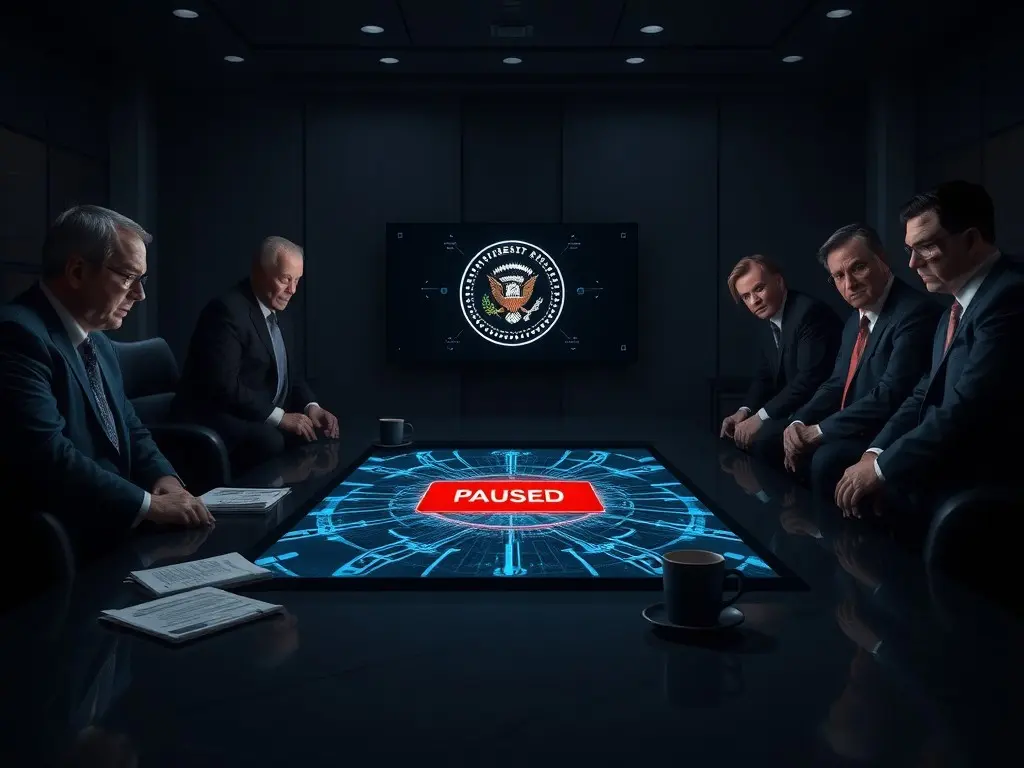
President Donald Trump scrapped a planned executive order on AI oversight after objections from Silicon Valley allies, including David Sacks, Elon Musk, and Mark Zuckerberg, who argued it could hinder innovation. The shelved order would have required 90 days of federal access to powerful AI models before public release and established protocols for AI threats to critical infrastructure.
President Donald Trump abandoned a planned executive order on AI regulation after receiving last-minute objections from key allies in Silicon Valley. A leaked draft revealed the White House intended to grant federal agencies up to 90 days of access to advanced AI models before public release, along with measures to address AI-enabled threats to banks, hospitals, and other critical infrastructure. The order’s collapse followed calls from David Sacks, Trump’s former AI and crypto czar, who reportedly warned that the proposal could slow innovation and weaken the U.S. in its AI competition with China. According to reports, Sacks, Elon Musk, and Mark Zuckerberg urged Trump not to sign, though Musk later denied involvement, stating he had not been consulted before the decision. Meta also disputed claims that Zuckerberg had influenced the outcome, saying his conversation with Trump occurred after the order was rescinded. The draft order explicitly stated it would not impose mandatory licensing or approval requirements for AI models, but tech companies reportedly pushed to shorten the pre-release access window from 90 days to just 14. Concerns over Anthropic’s Mythos model, which the company has delayed releasing due to safety fears, partly triggered the push for oversight. Without the order, the Trump administration lacks a formal plan to manage risks from advanced AI systems, leaving the U.S. without a structured approach. The move reverses a 2023 AI order signed by President Joe Biden, which relied on voluntary safety disclosures from companies—a far less stringent approach than the European Union’s AI Act, which enforces binding rules for high-risk AI systems. The failure to pass the order underscores ongoing divisions in Washington over AI regulation, with Silicon Valley opposing government intervention while safety advocates argue stronger measures are urgently needed. The U.S. now trails Europe and Asia in establishing clear guardrails for AI development.
This content was automatically generated and/or translated by AI. It may contain inaccuracies. Please refer to the original sources for verification.