Why CBSE must re-think its on-screen marking system
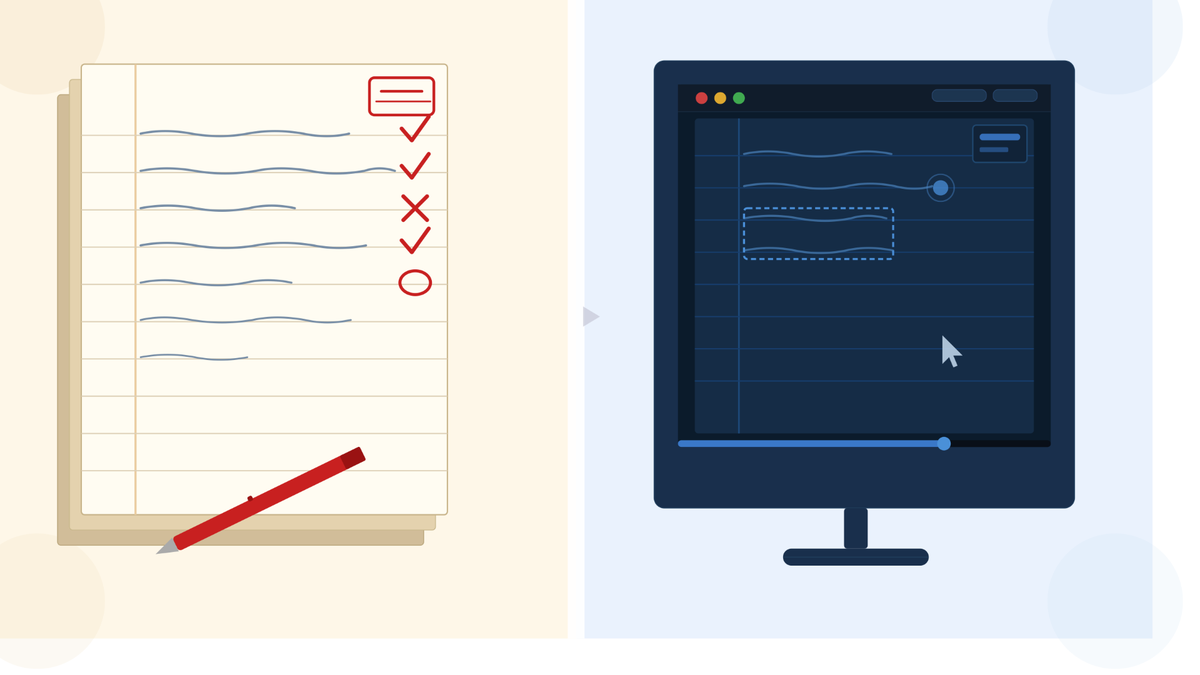
The Central Board of Secondary Education (CBSE) reported a 3-point drop in Class 12 pass rates to 85.20% in 2026, coinciding with the introduction of its new On-Screen Marking (OSM) system, which critics argue may have negatively impacted evaluator performance and fairness. Studies and practical challenges, including screen fatigue and legibility issues, suggest the system’s rapid implementation may have led to inconsistencies in marking, prompting calls for a re-evaluation of the approach.
The Central Board of Secondary Education (CBSE) announced Class 12 results on May 13, 2026, revealing a 3-point decline in pass rates to 85.20% from 88.39% the previous year. The drop has sparked concerns over the board’s newly introduced On-Screen Marking (OSM) system, which replaced traditional paper-based evaluation. The OSM system, launched in February 2026, scans handwritten answer sheets and presents them digitally to evaluators for assessment. The CBSE framed the shift as a modernization effort to improve efficiency and transparency, but critics argue the system may have introduced unintended consequences. Research from a 2010 British Journal of Educational Technology study found greater variability in on-screen marking compared to paper, particularly when evaluating longer, more complex essays. The study’s authors warned that such variability could worsen with larger groups of examiners, as is the case with CBSE’s system, which involves tens of thousands of teachers marking lakhs of answer sheets—many for the first time. Practical challenges further complicate the transition. Poor scan quality can obscure handwritten answers, making evaluation difficult, while screen fatigue and the cognitive load of navigating a new interface may have reduced evaluator performance. The CBSE’s abrupt implementation left little time for examiners to adapt, raising questions about whether the system was rolled out too quickly without adequate preparation or testing. Digital evaluation offers benefits like improved traceability and reduced logistics, but the abrupt shift has drawn comparisons to past controversies, such as the 2017 discontinuation of marks moderation, which also faced backlash. Experts suggest the CBSE should conduct an A/B test—comparing on-screen and paper-based marking for a statistically significant sample—to assess fairness and consistency before fully embedding the system. The decline in pass rates, combined with these challenges, has led to calls for the CBSE to reconsider its approach. While the OSM system may ultimately improve efficiency, its rapid and large-scale rollout appears to have introduced inconsistencies that warrant further review.
This content was automatically generated and/or translated by AI. It may contain inaccuracies. Please refer to the original sources for verification.