Why deformable materials are physical AI’s real manufacturing test
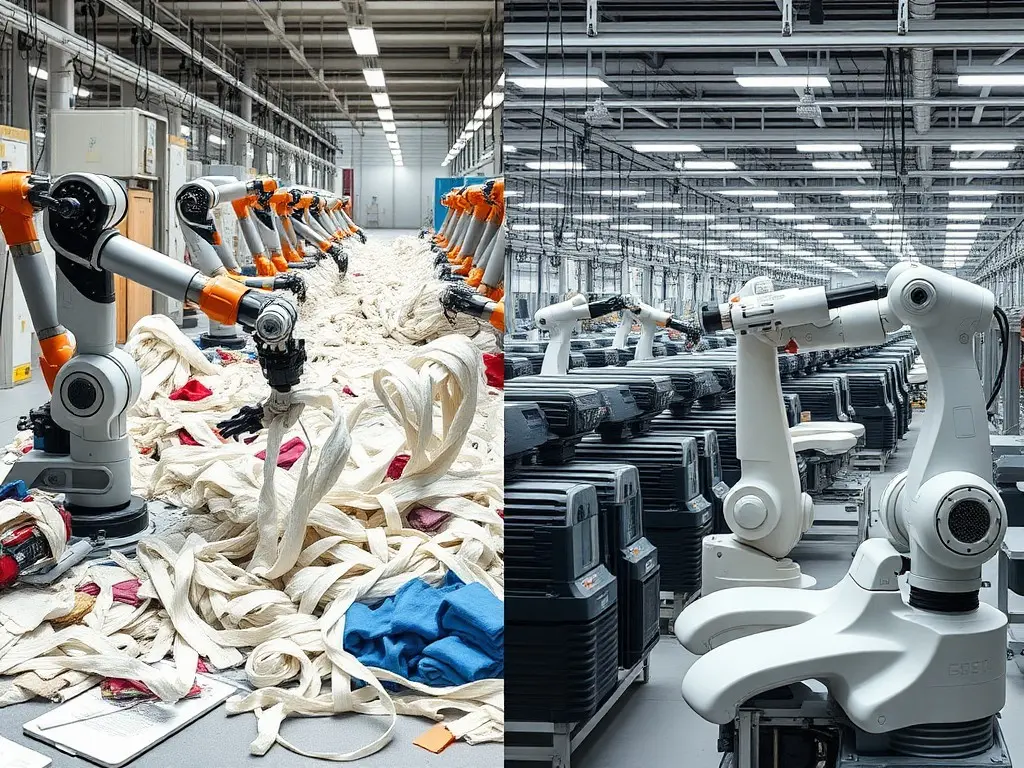
The apparel industry remains largely reliant on human labor due to the challenges of handling deformable materials like fabric, despite advances in robotics and automation. Redesigning manufacturing processes around what robots can control, rather than just automating existing workflows, is key to overcoming these challenges.
The apparel industry's reliance on human labor persists due to difficulties in handling deformable materials like fabric. Traditional automation excels at rigid tasks, but fabric's unpredictable behavior poses a challenge. Advances in vision, simulation, and robot intelligence are moving towards deployment, but the bar for commercialization is high. To overcome this, manufacturing processes are being redesigned around what robots can control, treating garments as forms to be shaped and bonded rather than pierced and stitched. This approach introduces constraint and consistent reference geometry, making learning-based manipulation more reliable. By doing so, it creates a more controlled environment for perception, planning, and learning to generalize.
This content was automatically generated and/or translated by AI. It may contain inaccuracies. Please refer to the original sources for verification.