Why existing vaccines won’t help this Ebola outbreak
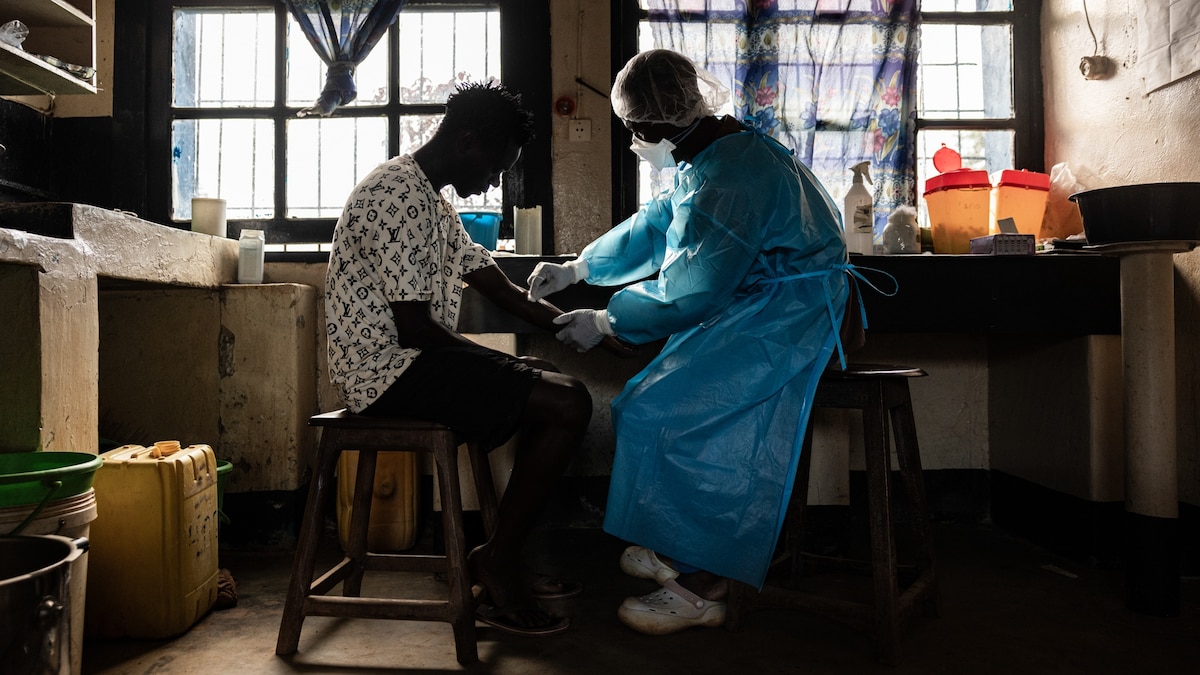
The current Ebola vaccine, Ervebo, developed for the Zaire strain, is ineffective against the Bundibugyo species driving a deadly outbreak in the Democratic Republic of the Congo, prompting urgent efforts to fast-track new vaccine candidates. Scientists are racing to develop alternatives, as existing vaccines fail to prevent transmission of this rare strain, which shares key structural differences in its glycoprotein coat." "article": "The Democratic Republic of the Congo is battling a severe Ebola outbreak caused by the rare Bundibugyo species, but existing vaccines—including the VSV-based Ervebo—do not reliably protect against it. Ervebo, developed for the Zaire strain responsible for the 2014 West African epidemic, targets the virus’s glycoprotein coat, which triggers an immune response. However, Bundibugyo’s glycoprotein structure differs enough to evade the vaccine’s effectiveness, leaving officials scrambling for alternatives. The original Ebola vaccine research began in the 1990s when scientists, including Thomas Geisbert and Heinz Feldmann, modified a livestock virus (VSV) to display Ebola’s glycoprotein. This approach proved successful in mice and later monkeys, leading to Ervebo’s creation during the 2014 outbreak. Yet, despite its success against Zaire, the vaccine fails to curb Bundibugyo transmission, as confirmed by global health authorities. With no approved vaccine for Bundibugyo, the Coalition for Epidemic Preparedness Innovations (CEPI) has fast-tracked three experimental candidates to address the crisis. These prototypes aim to replicate the glycoprotein-based strategy but tailor it to Bundibugyo’s unique structure. Officials warn that delays in development could worsen the outbreak, which has already strained the DRC’s healthcare system. The challenge lies in Bundibugyo’s glycoprotein variations, which are less recognizable to the immune system than Zaire’s. Immunologist Erica Ollman Saphire likened these proteins to ‘ornaments’ on a virus, emphasizing their role in vaccine design. Without a targeted solution, containment efforts remain limited, forcing researchers to balance speed with scientific precision. The World Health Organization and partners are stockpiling vaccines but face logistical hurdles in deploying them for Bundibugyo. Meanwhile, the DRC’s outbreak underscores gaps in global preparedness for lesser-known Ebola strains. Experts stress that only a new, strain-specific vaccine can halt the spread before the crisis deepens.
The Democratic Republic of the Congo is battling a severe Ebola outbreak caused by the rare Bundibugyo species, but existing vaccines—including the VSV-based Ervebo—do not reliably protect against it. Ervebo, developed for the Zaire strain responsible for the 2014 West African epidemic, targets the virus’s glycoprotein coat, which triggers an immune response. However, Bundibugyo’s glycoprotein structure differs enough to evade the vaccine’s effectiveness, leaving officials scrambling for alternatives. The original Ebola vaccine research began in the 1990s when scientists, including Thomas Geisbert and Heinz Feldmann, modified a livestock virus (VSV) to display Ebola’s glycoprotein. This approach proved successful in mice and later monkeys, leading to Ervebo’s creation during the 2014 outbreak. Yet, despite its success against Zaire, the vaccine fails to curb Bundibugyo transmission, as confirmed by global health authorities. With no approved vaccine for Bundibugyo, the Coalition for Epidemic Preparedness Innovations (CEPI) has fast-tracked three experimental candidates to address the crisis. These prototypes aim to replicate the glycoprotein-based strategy but tailor it to Bundibugyo’s unique structure. Officials warn that delays in development could worsen the outbreak, which has already strained the DRC’s healthcare system. The challenge lies in Bundibugyo’s glycoprotein variations, which are less recognizable to the immune system than Zaire’s. Immunologist Erica Ollman Saphire likened these proteins to ‘ornaments’ on a virus, emphasizing their role in vaccine design. Without a targeted solution, containment efforts remain limited, forcing researchers to balance speed with scientific precision. The World Health Organization and partners are stockpiling vaccines but face logistical hurdles in deploying them for Bundibugyo. Meanwhile, the DRC’s outbreak underscores gaps in global preparedness for lesser-known Ebola strains. Experts stress that only a new, strain-specific vaccine can halt the spread before the crisis deepens.
This content was automatically generated and/or translated by AI. It may contain inaccuracies. Please refer to the original sources for verification.