Why India’s Opposition parties should be worried about the cockroach movement
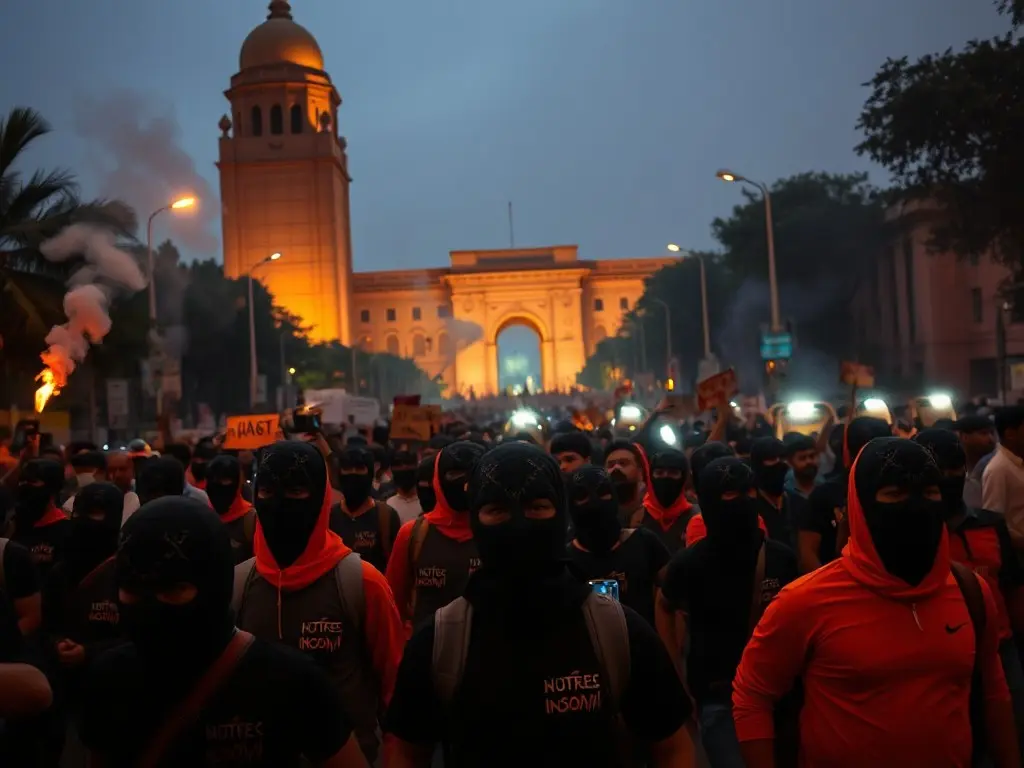
A Gen Z-led movement called the Cockroach Janata Party staged a protest in New Delhi on June 7, demanding the resignation of India’s education minister amid examination scandals, after its online satire of a Supreme Court comment comparing jobless youths to cockroaches gained 19 million Instagram followers in a week. The government, facing criticism over its handling of dissent, granted swift clearance for the protest while accusing foreign forces of involvement and speculating about the movement’s authenticity as the ruling Bharatiya Janata Party (BJP) consolidates power across 22 of India’s 28 states." "article": "A protest unlike any other unfolded in New Delhi on June 7, as hundreds of supporters of the Cockroach Janata Party gathered wearing cockroach masks. The movement, which began as an online satire after India’s Chief Justice compared jobless youths to cockroaches, exploded into a viral phenomenon with 19 million Instagram followers in under a week—outpacing the ruling Bharatiya Janata Party (BJP). The protest’s founder, a Boston University student, returned to Delhi to lead the demonstration, demanding the resignation of India’s education minister over examination fiascos like paper leaks and misgrading. Despite initial uncertainty, authorities granted permission within minutes, likely to avoid confrontation as crowds swelled. The BJP government has dismissed the movement as a foreign-backed conspiracy, while critics question whether the protest was engineered to weaken opposition forces. However, the movement’s rapid growth reflects broader disillusionment with political parties, including India’s opposition, amid a perceived crisis of representation in democracies worldwide. The protest follows the BJP’s recent electoral victories, which have solidified its dominance over 22 of India’s 28 states, covering 73% of the country’s geography and 78% of its 1.45 billion population. Analysts suggest the movement symbolizes deeper frustrations beyond the ruling government, including institutional decay and a lack of democratic accountability. The movement’s success also mirrors global trends, such as Hungary’s anti-government meme movements, where disaffected youth reject traditional politics. While the BJP frames the protest as a threat, its viral appeal underscores a generational disconnect from established political systems, raising questions about the future of democratic engagement in India.
A protest unlike any other unfolded in New Delhi on June 7, as hundreds of supporters of the Cockroach Janata Party gathered wearing cockroach masks. The movement, which began as an online satire after India’s Chief Justice compared jobless youths to cockroaches, exploded into a viral phenomenon with 19 million Instagram followers in under a week—outpacing the ruling Bharatiya Janata Party (BJP). The protest’s founder, a Boston University student, returned to Delhi to lead the demonstration, demanding the resignation of India’s education minister over examination fiascos like paper leaks and misgrading. Despite initial uncertainty, authorities granted permission within minutes, likely to avoid confrontation as crowds swelled. The BJP government has dismissed the movement as a foreign-backed conspiracy, while critics question whether the protest was engineered to weaken opposition forces. However, the movement’s rapid growth reflects broader disillusionment with political parties, including India’s opposition, amid a perceived crisis of representation in democracies worldwide. The protest follows the BJP’s recent electoral victories, which have solidified its dominance over 22 of India’s 28 states, covering 73% of the country’s geography and 78% of its 1.45 billion population. Analysts suggest the movement symbolizes deeper frustrations beyond the ruling government, including institutional decay and a lack of democratic accountability. The movement’s success also mirrors global trends, such as Hungary’s anti-government meme movements, where disaffected youth reject traditional politics. While the BJP frames the protest as a threat, its viral appeal underscores a generational disconnect from established political systems, raising questions about the future of democratic engagement in India.
This content was automatically generated and/or translated by AI. It may contain inaccuracies. Please refer to the original sources for verification.