Why Jeff Bezos thinks the next AI revolution will happen in factories, not offices
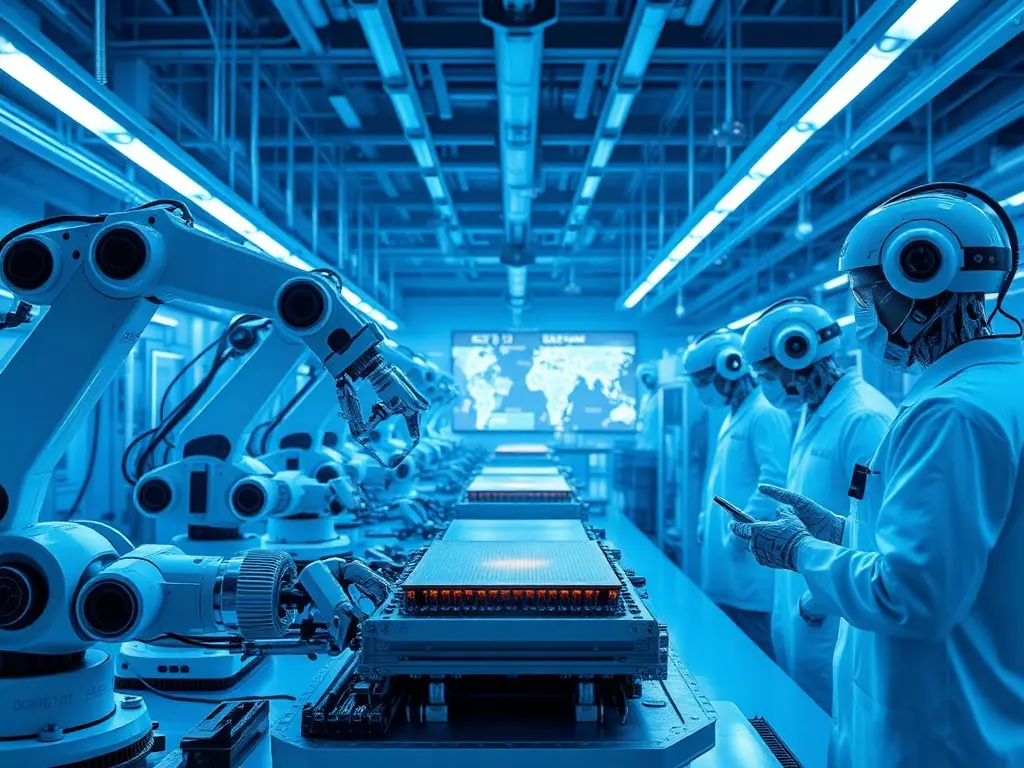
Jeff Bezos and his company Prometheus argue that the next AI revolution will focus on factories and engineering labs rather than offices, aiming to accelerate product development like jet engines and semiconductors. They propose an 'artificial general engineer' AI system to shorten design-to-manufacturing cycles, potentially cutting timelines from over a decade to just one year without displacing jobs.
Jeff Bezos believes the next major AI breakthrough will occur in factories and engineering labs rather than office-based tasks like coding or writing. Current AI systems like ChatGPT excel at knowledge work but lack the ability to handle complex physical-world engineering challenges, such as designing jet engines or semiconductors, which require deep understanding of physics, materials, and manufacturing processes. Prometheus, a company backed by Bezos, envisions an 'artificial general engineer' AI system capable of optimizing end-to-end product development. Traditional processes for creating advanced products—like a modern jet engine, which takes over a decade and thousands of engineers—could be drastically shortened, potentially reducing timelines to just one year. The goal is to accelerate the 'dream-build loop,' transforming ideas into real-world products faster than ever. The company sees applications across industries, including aerospace, semiconductors, batteries, and solar manufacturing. Vik Bajaj, a key figure at Prometheus, argues that AI could streamline complex manufacturing processes, some dating back centuries, while also creating new opportunities rather than eliminating jobs. Faster innovation would increase demand for engineers and manufacturing workers, improving productivity and living standards. Bezos and Bajaj reject the notion that AI advancements in engineering will lead to widespread job losses. Instead, they predict productivity gains will drive economic growth and new industries. The focus remains on leveraging AI to solve real-world engineering challenges that current language models cannot address, marking a shift from digital to physical innovation.
This content was automatically generated and/or translated by AI. It may contain inaccuracies. Please refer to the original sources for verification.