Why ‘storm chasers’ are needed on the ground during typhoons
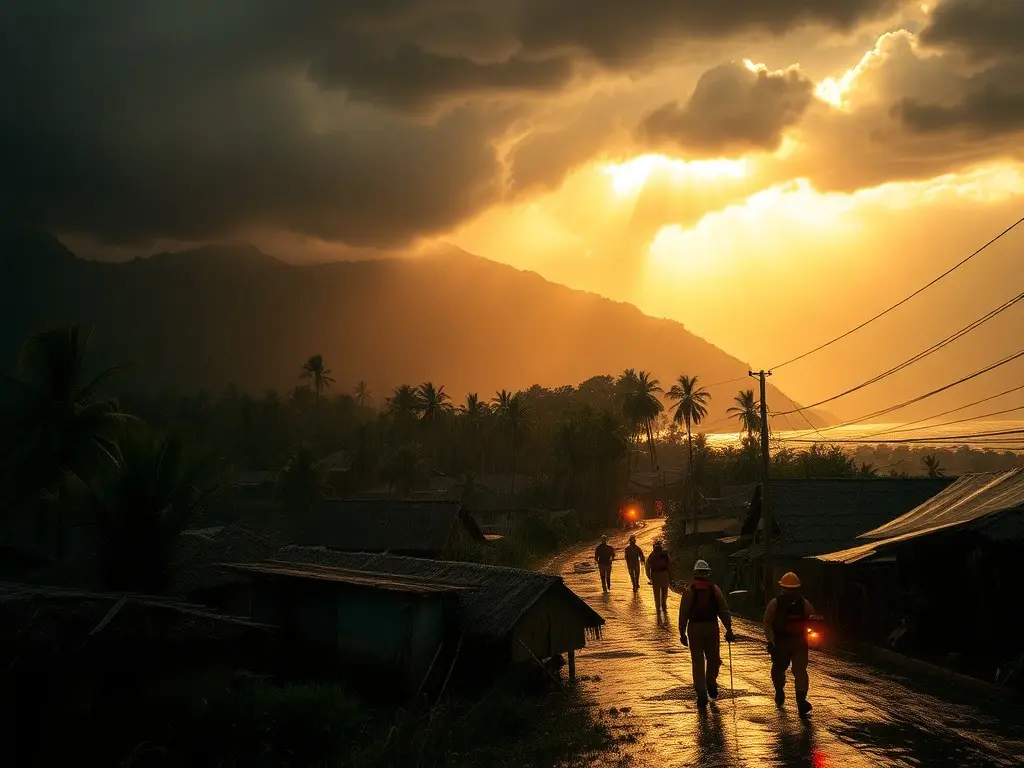
The Philippine Atmospheric, Geophysical and Astronomical Services Administration (DOST-Pagasa) relies on storm chasers to complement weather stations during typhoons, as automated systems struggle with localized, real-time data in complex topographies. Teams like those led by Wilfredo Tuazon and Marco Polo Ibañez provide ground truth observations, nowcasting, and community impact assessments to refine forecasts and warnings for areas like Barangay Sabang, Baler, Aurora, during events such as Super Typhoon Uwan in November 2025.
The Department of Science and Technology-Philippine Atmospheric, Geophysical and Astronomical Services Administration (DOST-Pagasa) declared the onset of the rainy season, prompting reliance on weather forecasts for typhoon tracking. While Pagasa’s network of manual and automated stations monitors temperature, rainfall, wind, humidity, and atmospheric pressure, these systems have limitations in real-time, localized observations, especially in complex terrains like coastal communities. To address this gap, Pagasa deploys storm chasers—specialized teams of meteorologists—during typhoons. Unlike office-based forecasters, storm chasers like Wilfredo Tuazon, Marco Polo Ibañez, and Lean Michael Malabanan work onsite to gather ground truth data. Their role includes assessing storm impacts, such as storm surges, and validating forecasts against real-time conditions in areas like Barangay Sabang, Baler, Aurora. Storm chasers provide hourly updates to forecasters, enabling nowcasting—predictions for the next three to six hours—to refine warnings. Tuazon, the team coordinator, noted that teams of five to seven members, including leaders and instrumentalists, enhance situational awareness by observing community responses and adapting advisories accordingly. During Super Typhoon Uwan in November 2025, the storm chaser team documented conditions firsthand, bridging the gap between satellite data and localized impacts. Their work ensures that weather agencies deliver accurate, actionable information tailored to vulnerable regions, improving disaster preparedness. The teams also study how communities interpret and act on weather alerts, helping Pagasa refine communication strategies. By combining field observations with technological monitoring, storm chasers play a critical role in mitigating typhoon risks in the Philippines.
This content was automatically generated and/or translated by AI. It may contain inaccuracies. Please refer to the original sources for verification.